Trump leaves CBDC ban housing bill in limbo before midnight deadline
The housing bill could still become law without Trump’s signature unless he formally vetoes it before the deadline.
By Dev Ramirez · Crypto Correspondent
· 3 min read
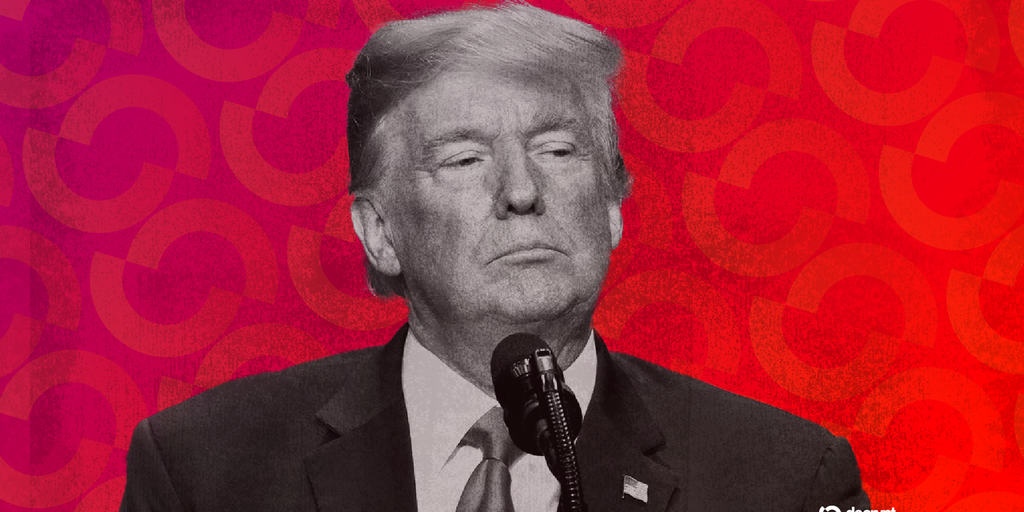
President Donald Trump said Thursday he will not sign a bipartisan housing bill that includes a temporary ban on a U.S. central bank digital currency, a policy closely watched by crypto investors and privacy advocates. The catch: under the process described in the Constitution, the bill can still become law without his signature unless he vetoes it before midnight Friday while Congress remains in session.
Trump wrote on Truth Social that he would not sign the housing legislation, calling the decision a protest over the Senate’s failure to pass the SAVE America Act, a voting restrictions bill he has supported for months. Republican congressional leaders have repeatedly said that measure has little chance of passing, according to Decrypt.
The bill at issue is the 21st Century ROAD to Housing Act. Its main goal is to encourage more homebuilding in the U.S. by cutting regulations, while also restricting institutional investors’ ability to buy residential housing, according to Decrypt.
Lawmakers added crypto language earlier this year that would bar the Federal Reserve from issuing a central bank digital currency, or CBDC, through the end of 2030. A CBDC is a government-issued digital version of a national currency. In the U.S., that would mean a digital dollar issued by the central bank rather than by a private company or blockchain network.
Why the signature may not decide the bill
A president can sign a bill into law, veto it, or allow it to become law without a signature after 10 days, excluding Sundays, if Congress is still in session. Decrypt reported that the 10-day deadline expires at the end of Friday.
A White House spokesperson declined to tell Decrypt whether Trump plans to veto the bill before the deadline and referred questions to Trump’s Truth Social post.
If Trump sends a formal veto before midnight, the bill would go back to Congress. Lawmakers would then need a two-thirds vote in both chambers to override him. The bill previously passed by wide margins: 85-5 in the Senate and 358-32 in the House, according to Decrypt.
The crypto angle
The CBDC ban has drawn support from crypto and privacy advocates, who argue that a government-run digital dollar could give federal officials new ways to monitor Americans’ financial transactions, according to Decrypt.
The Federal Reserve has continued to study CBDC technology. The central bank has also said it would not launch one without approval from Congress, according to Decrypt.
For investors, the bill is a reminder that crypto policy can move through legislation that is not mainly about crypto. A housing bill aimed at construction rules and residential property ownership could end up shaping the future of a digital dollar, depending on whether Trump vetoes it before the deadline.
This story draws on original reporting from Decrypt.