Amazon satellite phones plan would add 5,105 satellites by 2028
Amazon asked the FCC to approve 5,105 satellites for phone service, setting up a deeper satellite-connectivity race with SpaceX.
By Jordan Bell · Startups & Deals Reporter
· 3 min read
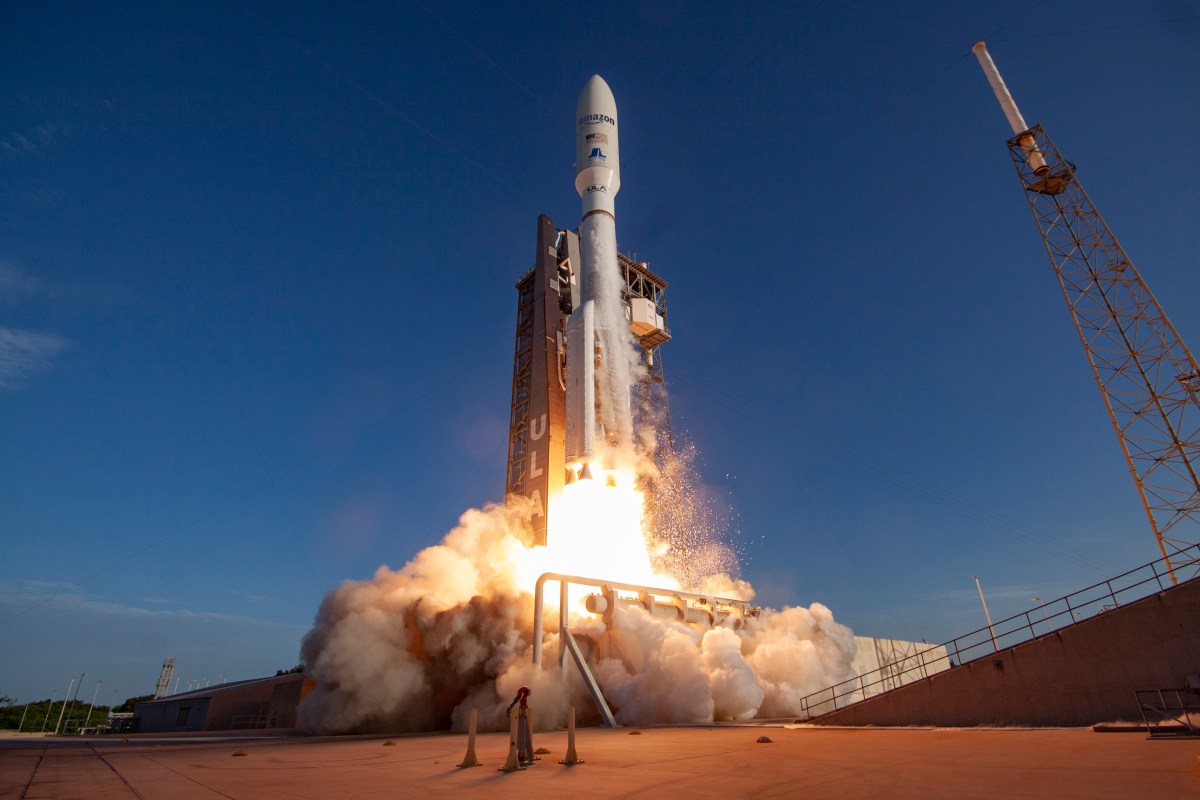
Amazon satellite phones are moving from idea to regulatory paperwork. The company has applied to the Federal Communications Commission for permission to run a 5,105-satellite network that would connect directly to mobile phones, with launches planned to begin in 2028, according to the FCC filing cited by TechCrunch.
For everyday investors, the filing matters because it puts Amazon more directly into one of SpaceX’s most visible growth markets: satellite internet and phone connectivity. The business is still early, and current services can be limited, but Amazon’s balance sheet gives it room to keep funding a long buildout.
What is Amazon's satellite phone plan?
Amazon wants to use satellites to connect mobile phones when regular cell towers are unavailable. Satellite-to-mobile service means a phone can link to satellites above Earth instead of relying only on nearby ground-based cellular equipment.
The plan follows Amazon’s acquisition of Globalstar’s satellite operations several months earlier, TechCrunch reported. Globalstar provides emergency connectivity for Apple iPhones and service for Internet-of-Things devices, a term for connected hardware such as sensors and other machines that send data over networks.
Amazon’s FCC filing showed that the company intends to use Globalstar’s radio spectrum, according to TechCrunch. Radio spectrum is the range of wireless frequencies that companies use to send signals, and access to the right spectrum is a key input for mobile service.
The filing also indicates that Amazon plans to tie the new phone-focused network into Leo, its broadband internet satellite network, TechCrunch reported. That could let Amazon offer a broader satellite-connectivity package rather than treating phone links and internet service as separate businesses.
How this compares with SpaceX
SpaceX already has a lead in satellite internet and satellite-to-mobile service, according to TechCrunch. The company is also spending heavily to expand its mobile satellite ambitions: SpaceX plans to pay $20 billion for spectrum from EchoStar, a strategy described in its IPO filings as one of its key growth efforts.
Amazon’s move could make the competitive map more complicated. SpaceX has the operational advantage of an existing launch business and satellite network, while Amazon has the financial capacity to keep investing through a long development cycle.
The market demand is still uncertain. TechCrunch noted that most satellite-to-phone services currently offer limited bandwidth, which makes them more useful for text messages or emergencies than for full mobile internet use.
T-Mobile CEO Srini Gopalan, whose company uses SpaceX satellites for customer connectivity, said at a May conference that customer usage remained small. “Just to give you an example, we look at our data in May, and satellite usage is 0.0002% of our total network usage. That’s three zeros,” Gopalan said, according to PCMag. “We’re seeing it largely focused on the national parks.”
Amazon still has a launch problem
Amazon’s biggest practical obstacle is getting satellites into orbit. Unlike SpaceX, Amazon does not operate its own rocket fleet.
The company had expected to rely on Blue Origin, Jeff Bezos’ space company, for launches. But Blue Origin’s New Glenn rocket has been delayed and is now grounded after a May anomaly destroyed its launch pad, TechCrunch reported.
That setback has already affected Amazon’s broader satellite timeline. The company requested an extension to an FCC deadline tied to building out its network, according to TechCrunch.
Amazon remains behind SpaceX in deployment, but it has substantial resources. TechCrunch reported that Amazon had $255 billion in current assets on its books at the end of April. Current assets are resources a company expects to use or convert to cash within a year, and that financial cushion could help Amazon absorb the high upfront costs of building a satellite network.
This story draws on original reporting from TechCrunch.