AMD Helios AI rack targets Nvidia in data center AI systems
AMD says Helios will ship later this year, with Microsoft, OpenAI, Meta, Oracle and Anthropic among planned customers.
By Theo Nakamura · Staff Writer
· 3 min read
AMD Helios AI rack is the company’s clearest push yet into the high-end data center systems market that Nvidia has dominated. For everyday investors, the news matters because AI spending is shifting from individual chips to full rack systems that cloud companies and AI labs can install at scale.
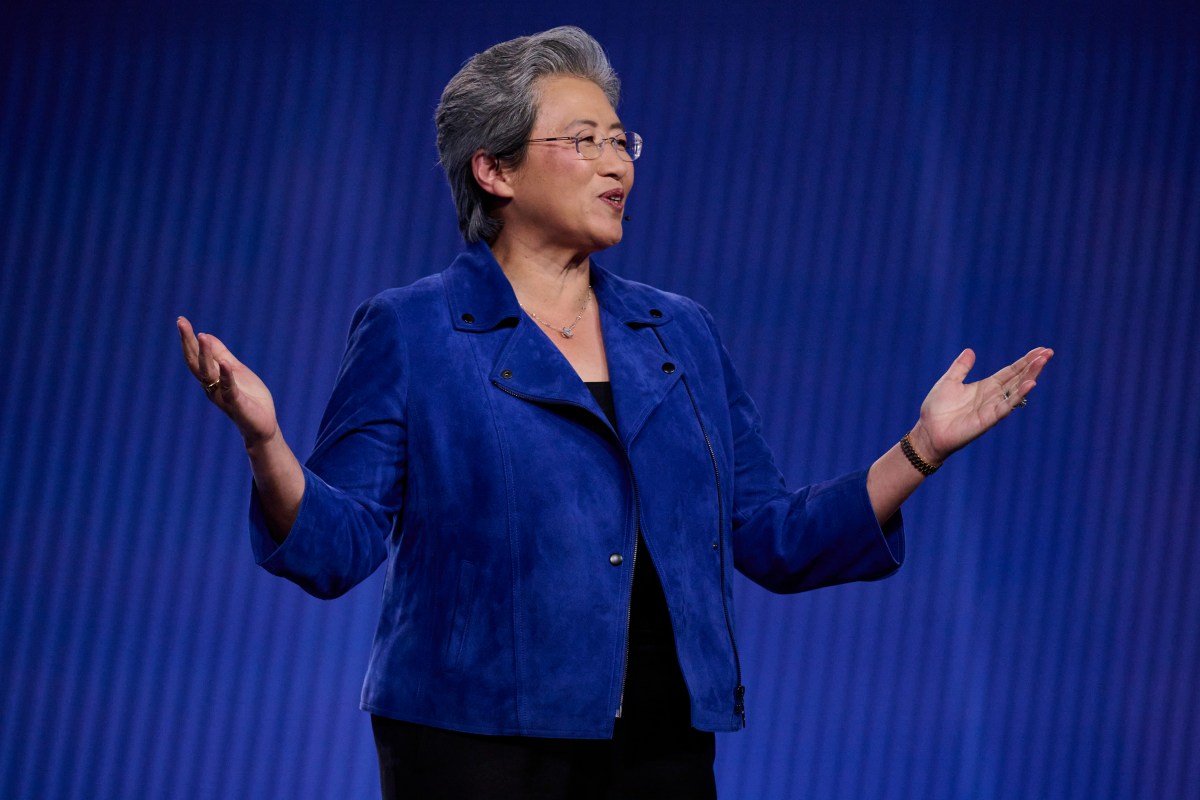
AMD Chair and CEO Lisa Su presented Helios at the company’s Advancing AI conference in San Francisco on Thursday. AMD said the rack-scale system is scheduled to begin shipping to customers later this year and is designed for the heavy computing needs of major AI developers.
Helios brings together many processors inside one data center unit. That matters because training and running large AI models requires thousands of chips working together, with the system’s networking, memory and power setup affecting how much useful computing work customers get.
What is AMD Helios AI rack?
AMD Helios is a rack-scale AI system, meaning it combines multiple processors into a single high-performance data center rack rather than selling chips one server at a time. These systems are used to train AI models and run AI applications that need large amounts of parallel computing.
Su described Helios as AMD’s top-performance AI rack offering and said it was built for the most demanding frontier AI models at large scale. AMD said leading AI companies plan to deploy the system at gigawatt scale, a term used for very large data center projects measured by power capacity.
The customer list is central to AMD’s pitch. AMD said OpenAI, Meta, Oracle, Anthropic and Microsoft have plans to use Helios. Microsoft CEO Satya Nadella said Monday, according to CNBC, that Microsoft would add Helios to its Azure cloud infrastructure. AMD and Anthropic also announced a strategic partnership Wednesday to deploy up to two gigawatts of GPUs through the new rack system.
How AMD is positioning Helios against Nvidia
Nvidia has been the leader in AI rack systems with products including Vera Rubin and Grace Blackwell. AMD is trying to compete more directly by selling the full rack setup, which can give customers a ready-made system for data centers rather than a collection of separate components.
The Register reported that Helios beats Nvidia’s Vera Rubin system on several performance measures. AMD has framed the launch around full-stack compute, which refers to offering more of the hardware and software pieces needed to run AI workloads, instead of competing only on one chip.
AMD also introduced Venice-X, a data center CPU aimed at high-computing workloads. The chip is expected to launch in 2027, according to AMD-related launch coverage cited by Tom’s Hardware.
Why AI accelerators are becoming a bigger market
Su said AMD now expects the AI accelerator market to reach about $1.4 trillion by 2030. An AI accelerator is a chip, often a GPU, built to speed up machine-learning tasks that would be slower or less efficient on a traditional processor.
Su tied that demand to the growth of agentic AI, which means systems that can break a task into steps, use tools, access data and keep working toward an answer. She said those workloads require many GPUs because each request can involve repeated reasoning and tool calls.
Su also said GPUs are expected to account for most of the AI accelerator market because AI algorithms are still changing and programmable chips are useful when workloads keep shifting. For AMD, Helios is a bet that customers spending heavily on AI infrastructure want another large-scale supplier alongside Nvidia.
This story draws on original reporting from TechCrunch.