Billion-dollar startup rounds now dominate venture funding
Crunchbase data shows 60% of global startup funding in 2026 has gone to rounds of at least $1 billion, led by AI megadeals.
By Theo Nakamura · Staff Writer
· 3 min read
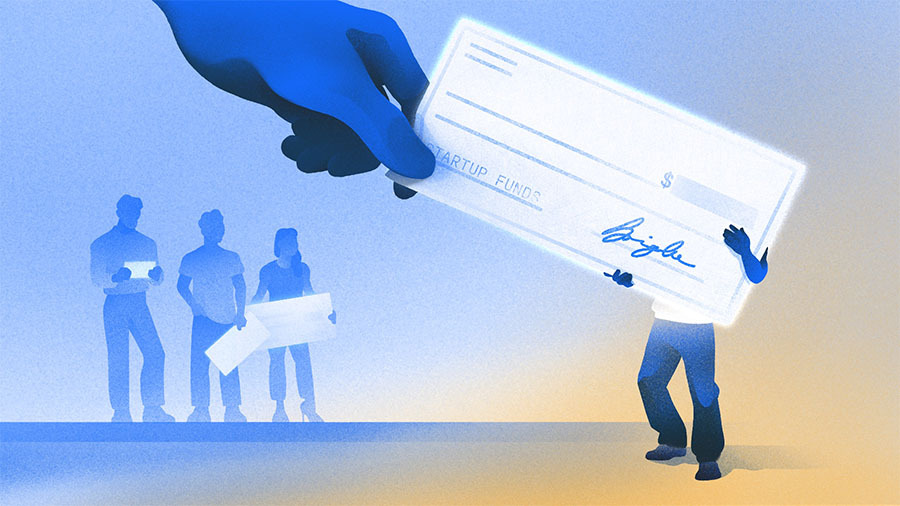
Venture funding is concentrating in the biggest private companies, with rounds of $1 billion or more taking 60% of global startup investment so far in 2026, according to Crunchbase data. For retail investors, that shift matters because today’s private megadeals can set the valuation backdrop for future public listings, including AI names that have already filed confidentially to go public.
A funding round is a financing event where a private company raises money from investors, often in exchange for equity. Crunchbase said about $320 billion in global startup funding across stages has gone into billion-dollar-plus rounds this year, helping push first-half global funding to record levels.
The concentration is even sharper in the U.S. Crunchbase data shows that 73% of U.S. startup funding in 2026 has gone to rounds of at least $1 billion. Of the $290 billion invested in those large U.S. deals, more than half came from just two rounds tied to AI companies OpenAI and Anthropic.
More megadeals, not just larger checks
Crunchbase said billion-dollar-plus rounds represented a minority of funding in earlier years, with one major exception: the first quarter of 2025, when OpenAI raised $40 billion.
The number of large rounds is also climbing. U.S. startups have closed 23 known rounds of $1 billion or more so far in 2026, according to Crunchbase. That already matches 2025, which Crunchbase described as a record year, with roughly five months still left in 2026.
Most of these deals are later-stage rounds or corporate financings, Crunchbase said. Later-stage funding usually goes to more mature private companies that have already raised earlier capital, while corporate financing refers to funding structured around a company’s broader balance sheet rather than an early startup launch. Only two billion-dollar-plus rounds this year, for Prometheus and World Labs, were seed or early-stage deals, according to Crunchbase.
What earlier billion-dollar rounds show
Billion-dollar venture rounds are still a relatively recent feature of startup finance. Crunchbase identified Uber’s $1.2 billion Series D in 2014 as the first U.S. example. Series D means a company has already raised several prior institutional funding rounds.
In the following three years, several other companies raised 10-figure rounds, including SpaceX, Airbnb, Lyft, SoFi, Snap, Grail, WeWork, Fanatics and Argo AI.
Crunchbase said most of those companies later went public and reached valuations above the levels set in their earlier megadeals. It cited SpaceX, listed with a recent market cap of $1.6 trillion, Uber at $148 billion and Airbnb at $87 billion as the strongest outcomes in that group.
The record was mixed. Crunchbase noted that Argo AI and WeWork performed poorly after their large financings, while Grail had uneven results. Fanatics stayed private and, according to Crunchbase, continues to thrive.
The next test is larger. Crunchbase said Anthropic and OpenAI have moved the discussion from billion-dollar rounds to financings measured in the tens of billions, or even above $100 billion. Both companies have filed confidentially to go public, according to Crunchbase, which could give public-market investors a clearer read on how those private valuations hold up.
This story draws on original reporting from Crunchbase News.