Black founders face a tougher seed-to-Series A test in AI, VCs say
Black Ops VC co-founders argue AI lowers startup launch costs, but Black founders still need larger seed rounds to reach Series A milestones.
By Jordan Bell · Startups & Deals Reporter
· 4 min read
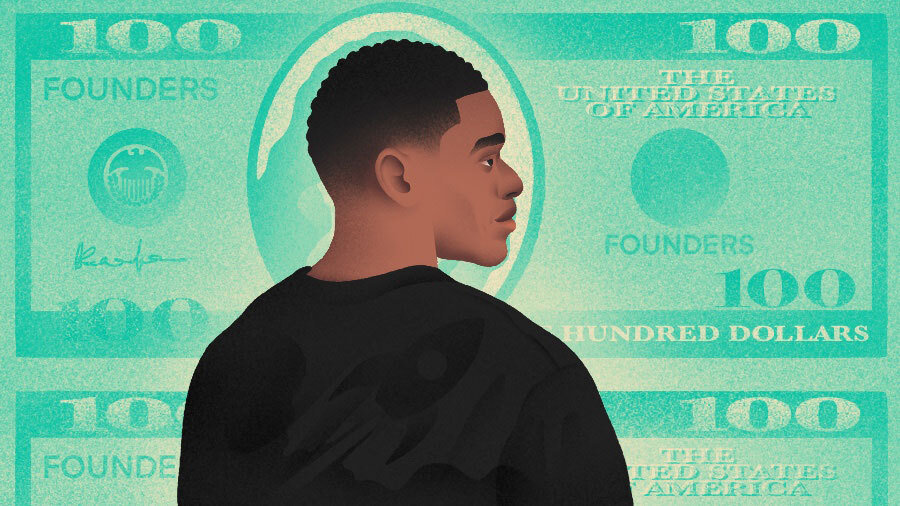
AI may make it cheaper to start a software company, but James Norman and Sean Green of Black Operator Ventures say it has not made it cheaper to turn one into a venture-scale business. Their argument lands in a market where Black founders still receive a tiny share of U.S. venture dollars, making the seed-to-Series A gap a bigger hurdle for retail investors to understand when tracking the startup market.
Norman and Green, co-founders of early-stage venture firm Black Operator Ventures, also known as Black Ops VC, wrote in Crunchbase News that the main funding challenge for Black founders is shifting. Access to a first check still matters, they said, but the larger issue is whether founders can raise enough seed capital to hit the metrics that Series A investors now expect.
Seed funding is the early money a startup raises after it has an initial idea or product. Series A is typically the next major institutional round, when venture firms look for evidence that a startup can grow into a much larger company.
AI changes the cost curve, but not every cost
Norman and Green said AI tools let small teams build products faster, automate parts of operations and do work that once required far larger staffs. That lowers the cost of creating software and getting a product into the market.
They argued that the savings do not erase the cost of scaling. Startups still need money to win customers, hire experienced employees, build sales and marketing operations, and produce the revenue and growth data that later-stage investors want to see.
In their view, AI has made seed capital more valuable because investors are less impressed by a polished concept and more focused on proof. That proof can include recurring revenue, customer retention, capital efficiency and repeatable growth. Recurring revenue means sales that come in on a regular schedule, while customer retention measures whether customers keep using and paying for a product.
Crunchbase data shows a sharp funding gap
The funding backdrop remains difficult. Crunchbase reported that U.S. startups with at least one Black founder raised $942 million in venture funding in 2025, equal to 0.32% of all U.S. venture capital invested that year.
Crunchbase said that was among the lowest shares in years and far below 2021, when Black founders raised $5.2 billion during the investment surge that followed George Floyd’s murder.
Crunchbase also reported signs of improvement in 2026, with Black-founded startups raising about $643 million by late May. That marked the strongest quarter since mid-2022, according to Crunchbase, though the total was helped by a small number of unusually large deals, including a $350 million AI financing.
Norman and Green said the broader pattern is still underrepresentation. They argued that many Black founders raise incomplete seed rounds, leaving them with too little operating room to reach the benchmarks needed for institutional Series A funding.
Why partial seed rounds can hurt
The venture market has become more demanding between seed and Series A, according to Norman and Green. They said investors now want clearer proof of product-market fit, revenue growth and efficient operations before writing larger checks. Product-market fit means a company has evidence that customers want its product enough to keep using or buying it.
For founders with limited seed funding, that can create a loop of constant fundraising. Norman and Green said founders may spend months trying to extend their runway, or the time a startup can operate before running out of cash, instead of focusing on customers, hiring and product work.
They said oversubscribed seed rounds, where investor demand exceeds the amount a startup originally planned to raise, can now be more than a status signal. Extra capital can help Black founders handle slower funding markets, invest when growth opportunities appear and avoid returning to investors every few months.
Norman and Green said the goal is not just more investment in Black founders, but enough capital for those founders to reach the milestones that unlock later institutional funding. In the AI era, they argued, the companies with staying power will be those with enough resources to keep building after launch.
This story draws on original reporting from Crunchbase News.