Ditto AI matchmaking sends college users on weekly planned dates
Ditto uses text-based AI onboarding and weekly date assignments instead of swiping, but its early results remain company-reported.
By Jordan Bell · Startups & Deals Reporter
· 3 min read
Ditto AI matchmaking is offering college students a different dating-app routine: text a chatbot, answer questions, then receive one arranged match a week rather than sort through profiles. The approach shifts much of the choice and scheduling work to the service, while leaving open questions about safety and whether its claimed results will hold up independently.
Ditto was founded by Allen Wang and Eric Liu, former UC Berkeley students, according to TechCrunch. Wang told the publication that the founders saw peers becoming frustrated with frequent swiping and small-talk exchanges and wanting more in-person connection. That is an observation from a founder, not evidence that most Gen Z users are leaving conventional dating apps.
How does Ditto AI matchmaking work?
Students join by sending a text to an iMessage number with a code, TechCrunch reported. An AI chatbot then collects basics including a name, gender and date of birth, followed by questions about personality, interests and dating preferences. Some users upload images of celebrity crushes to indicate the kind of person they find attractive.
Rather than pair users only because they like the same activities, Ditto says it looks for personal traits that interests may signal. Wang told TechCrunch that two people with very different hobbies could share qualities such as adventurousness or independence. His contention that the right signals can predict romantic chemistry remains a company claim.
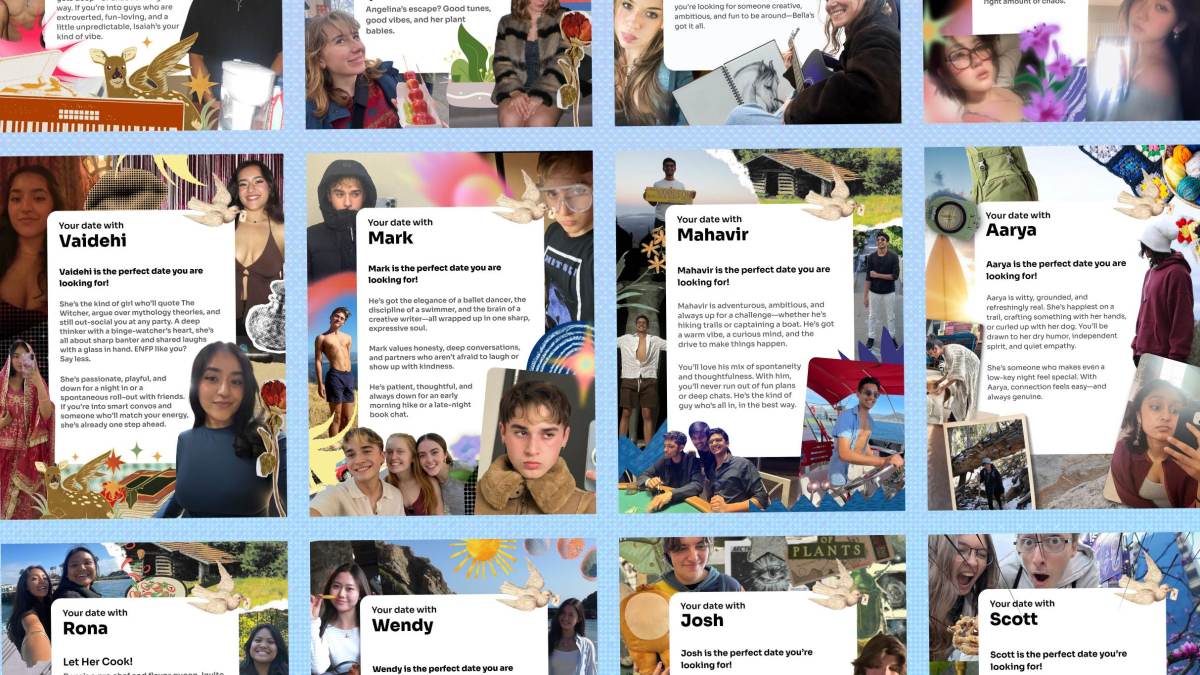
Each Wednesday at 7 p.m., Ditto sends users a proposed match, time and location, according to TechCrunch. The company then asks for feedback after the date and says it uses those responses to refine future recommendations. It also provides a collage-style introduction explaining why it thinks the pair may fit together.
What evidence is there that Ditto is working?
TechCrunch reported that Ditto has 150,000 signups. Wang said roughly 20% of matches made through the service result in a date. Those figures have not been independently verified in the reporting.
A July report from the New York Post said Ditto claimed to have arranged more than 12,000 dates and that 92% of paired participants wanted a second date. The report did not provide the dates, methodology or an outside verification for those measures, so they should be viewed as company-reported performance figures rather than established outcomes.
The product’s appeal is straightforward: it removes profile browsing, opening messages and some date planning. It also compresses the path from an algorithmic suggestion to an in-person meeting. TechCrunch noted that dating services designed to move users quickly into real-world meetings can make it harder to assess a situation’s safety; the available reporting does not detail Ditto’s safety practices.
For now, Ditto is a specific experiment in AI-led dating, not proof of a generational shift away from swiping. The useful tests will be whether users keep returning, whether matches lead to durable relationships, and how the company handles safety as it expands.
This story draws on original reporting from TechCrunch.