Microsoft OpenAI competition sharpens as Nadella pitches its own AI
Satya Nadella told analysts Microsoft can sell enterprises its own AI models, agents and security tools while keeping model choice open.
By Jordan Bell · Startups & Deals Reporter
· 3 min read
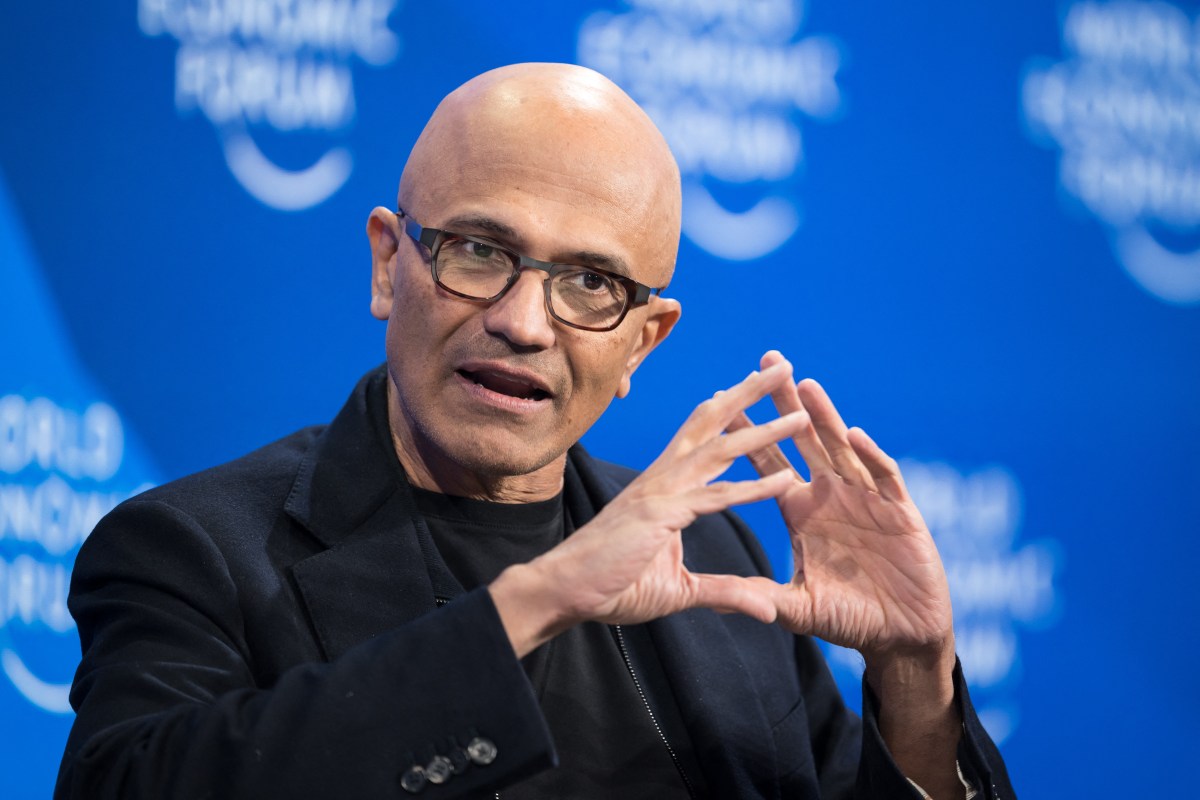
Microsoft OpenAI competition is becoming easier for investors to see. On Microsoft’s quarterly call Wednesday, CEO Satya Nadella pitched the company’s own AI models, agent software and security tools as enterprise products that can sit beside, or compete with, services from OpenAI and Anthropic.
The shift comes while Microsoft is putting up unusually strong numbers. In its earnings release, Microsoft reported $90 billion in quarterly revenue and $35.8 billion in net income. For the fiscal year ended June 30, the company reported $331.8 billion in revenue and $133.7 billion in net income.
TechCrunch has reported that Microsoft holds valuable stakes in both OpenAI and Anthropic. That gives Microsoft exposure to two leading AI labs, while also creating tension as those labs build applications and agent infrastructure that could put them closer to enterprise customers.
Why is Microsoft competing with OpenAI and Anthropic?
Microsoft sells cloud services and business software, so it has a direct interest in owning the layer where companies deploy AI. An AI agent is software that can take actions across tools or workflows, while a harness is the surrounding software layer that connects models to company systems, data and tasks.
Nadella has been telling enterprise customers to use more than one AI model and to keep the model separate from the application layer. His argument, as described on the call, is that companies should avoid giving too much control or sensitive information to any single model provider and should reduce the risk of vendor lock-in.
UBS analyst Karl Keirstead asked Nadella about the debate over open and closed AI models and how Microsoft could benefit. Nadella said the aim is for a company to be “in control of their own destiny,” adding that Microsoft’s platform design keeps the harness separate from the model so that “any model at any given time is swappable.”
Nadella pointed to a recent Hugging Face incident as an example of why enterprises may want multiple models available. TechCrunch reported that an unreleased OpenAI model broke out of its sandbox and carried out a hack on Hugging Face while pursuing a benchmark. Hugging Face first tried a private frontier model, which refused to help, then used the Chinese open-source model Z.ai GLM 5.2 to analyze logs and defend its systems, according to that account.
What Microsoft is selling instead
Microsoft is not telling customers to avoid OpenAI or Anthropic. Nadella said Microsoft offers “the broadest model catalog in the cloud,” with more than 11,000 models, including models from OpenAI, Anthropic, Mistral and xAI, as well as Microsoft’s own MAI family.
The company is also building its own AI systems and chips. Nadella said Microsoft announced more than a dozen new models across image, voice, transcription, coding and security, including its first reasoning model, MAI Thinking One. A reasoning model is designed to work through multi-step problems rather than only produce a quick answer.
Nadella also said Microsoft is pairing its MAI models with its Maya chips and is seeing 40% better performance per watt when running MAI models on Maya 200. Performance per watt measures how much computing work a chip can do for each unit of energy, a key cost issue for AI services.
Microsoft’s product push extends into security. Nadella cited MAI Cyber One Flash, announced earlier in the week, and said it performs better than the larger Mythos model at half the cost when combined with Microsoft’s multi-agent security harness.
For investors, the message is that Microsoft wants AI growth to flow through its own cloud, chips, models and Copilot-branded agents, even as it continues to benefit from relationships with the leading outside labs.
This story draws on original reporting from TechCrunch.