Northrop Mission Robotic Vehicle launches ahead of planned 2027 satellite servicing
Northrop launched its robotic satellite servicer and three propulsion pods, with its first planned pod installation on Optus set for 2027.
By Theo Nakamura · Staff Writer
· 3 min read
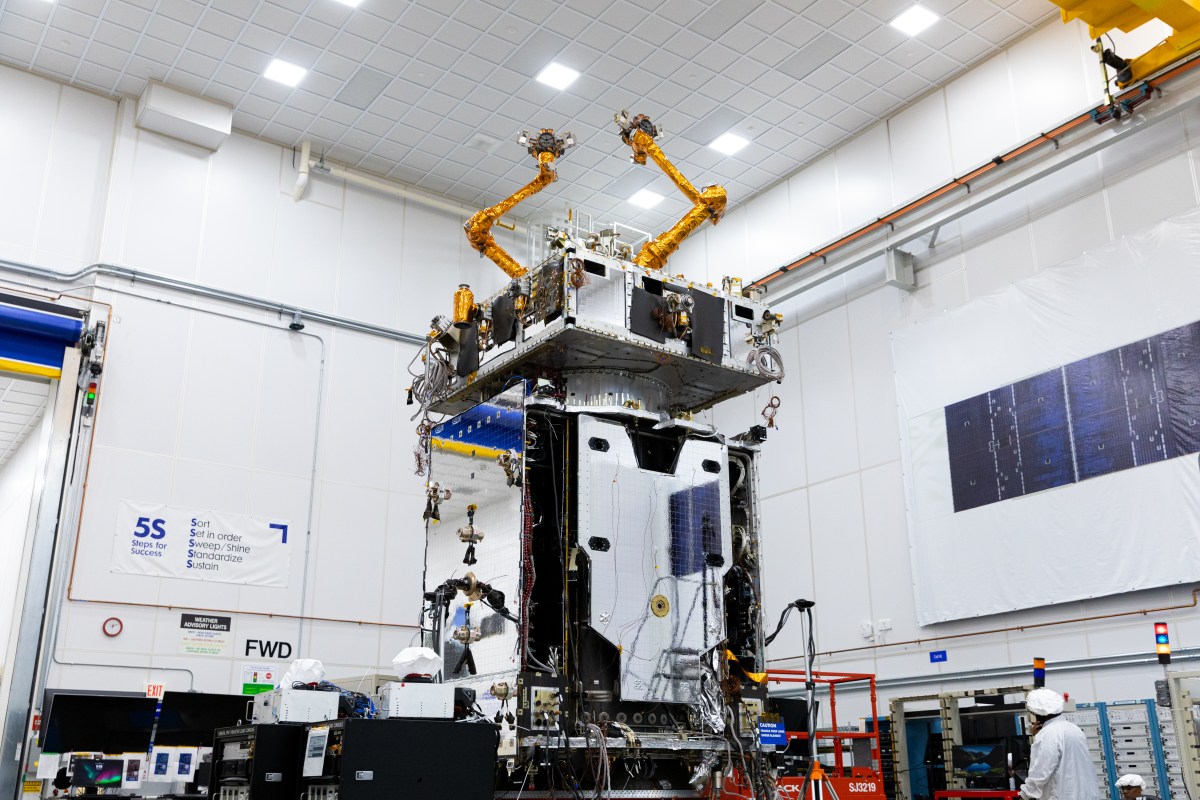
Northrop Grumman’s Mission Robotic Vehicle, or MRV, launched July 21 with three Mission Extension Pods aboard a SpaceX Falcon 9 from Cape Canaveral Space Force Station, according to the company. The Northrop Mission Robotic Vehicle is headed toward geosynchronous orbit, but its first robotic pod installation has not happened yet: TechCrunch reported that an attachment to an Optus communications satellite is planned for 2027.
The mission offers a different way to keep an aging satellite working after it nears the end of its fuel supply. Satellites can remain useful even when they lack enough propellant to maintain their intended position, TechCrunch reported. Northrop’s system is designed to add propulsion rather than replace the entire spacecraft.
How does Northrop’s Mission Robotic Vehicle work?
The MRV is the robotic servicing spacecraft. It carries two robotic arms intended to approach a customer satellite and install a Mission Extension Pod, or MEP. The MEP is a smaller propulsion module that satellite operators buy and are intended to keep permanently attached to their own spacecraft, according to TechCrunch.
That division of labor is the main change from Northrop’s earlier Mission Extension Vehicles, or MEVs. An MEV docks with a geostationary satellite nearing fuel depletion and uses its own thrusters and fuel while connected, Northrop says. When that service ends, the MEV can undock and move to another client. Under the newer model, the MRV is intended to install the customer-owned pod and then be available for another servicing mission.
Northrop says its two MEVs have already demonstrated the earlier approach. MEV-1 first docked with Intelsat IS-901 in February 2020, completed a five-year mission in April 2025 and docked with another client the following month. MEV-2 docked with Intelsat IS-1002 in April 2021, according to the company.
What is planned for the Optus satellite?
The first planned MEP installation involves an Optus satellite launched in 2009 with a 15-year design life, TechCrunch reported. A Northrop MEV had been attached to the satellite for more than a year before separating this month to make room for the planned replacement system. In 2027, the MRV is scheduled to use its robotic arms to attach an MEP to that satellite.
The operation requires more than adding a spare part. The vehicles must autonomously approach each other and connect safely while operating in orbit. Northrop says the robotic-arm payload came from DARPA’s Robotic Servicing of Geosynchronous Satellites program and was built by the U.S. Naval Research Laboratory.
The MRV is also designed for refueling in orbit, Northrop says. The company describes inspection, repair, upgrades, relocation, disposal and assembly as future services the vehicle could support. Those are prospective capabilities, while the 2027 Optus pod attachment will be the first planned robotic installation in this mission.
This story draws on original reporting from TechCrunch.