Sila raises $300 million to grow Washington battery materials plant
The battery materials startup plans to scale production of silicon-carbon anode material for more than 100,000 electric vehicles.
By Theo Nakamura · Staff Writer
· 3 min read
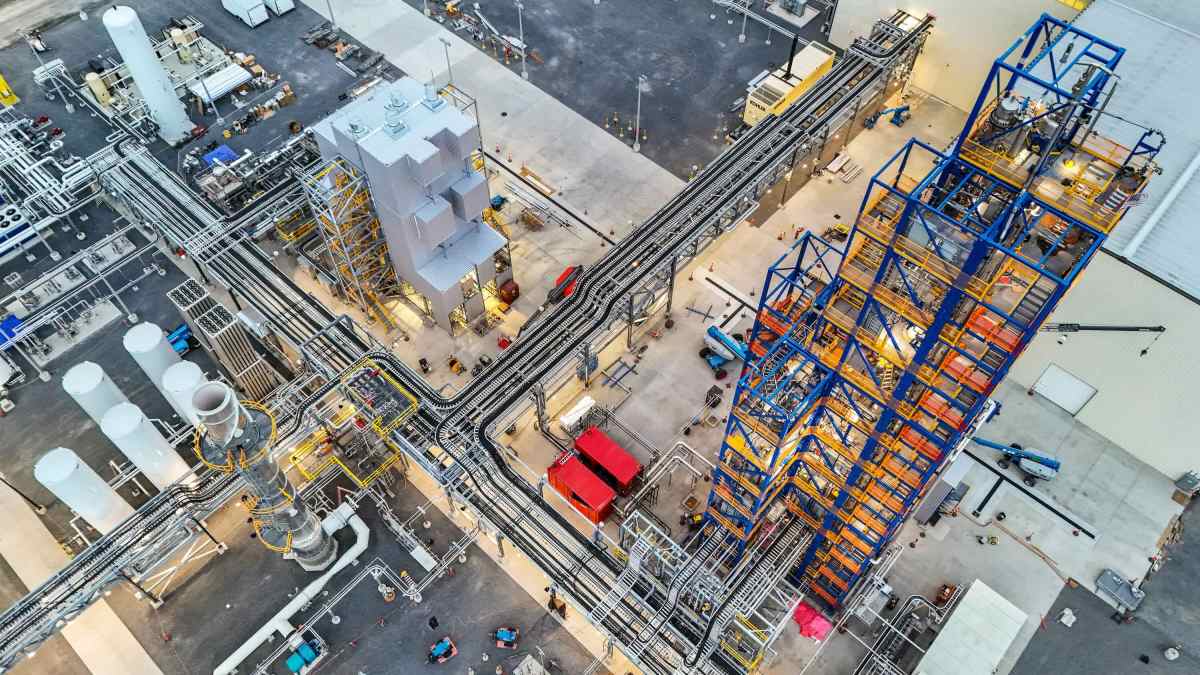
Sila has raised $300 million to expand its Moses Lake, Washington, factory, a fresh private-market bet on the battery supply chain while U.S. electric-vehicle sales are softer than last year. For investors watching autos, batteries and grid power, the deal points to where capital is still flowing: materials that can make batteries store more energy and rely less on China-linked supply chains.
The company said Tuesday that the funding will help it increase output of its silicon-carbon anode material. Anode material is a key ingredient inside a lithium-ion battery, the type used in most EVs and many energy storage systems.
Sila says its material can hold up to 40% more energy than conventional graphite anodes and can also support faster charging. The company has spent 15 years developing the technology, and founder and CEO Gene Berdichevsky previously worked at Tesla, where he was the company’s seventh employee.
Why the supply chain angle matters
Most lithium-ion batteries use graphite anodes today. Benchmark Minerals Intelligence says Chinese companies control roughly three-quarters of the graphite anode supply chain, a concentration that has pushed automakers outside China to look for materials that may be less exposed to tariffs and supply constraints.
Sila already has supply agreements with Mercedes and Panasonic, according to prior company announcements cited by TechCrunch. It also sells to consumer electronics makers, including Whoop, as well as drone manufacturers and satellite companies.
The company began producing material at the Moses Lake plant in September. The site currently can make up to 2 gigawatt-hours of silicon-carbon anode material, a measure of battery energy capacity. After the expansion, Sila says the factory will be able to produce tens of gigawatt-hours a year, enough material for more than 100,000 EVs.
EV demand is mixed, but batteries have more than one market
The raise comes during a choppier period for U.S. EV demand. Cox Automotive data cited by TechCrunch shows U.S. EV sales are down this year compared with 2025, when demand rose before tax credits expired. Globally, the picture is stronger: Benchmark Minerals Intelligence says EV sales increased 27% year over year.
Batteries are also being pulled into another fast-growing use case: grid-scale energy storage. TechCrunch reported that energy storage systems are taking a larger share of lithium-ion battery demand as electricity use rises, including from AI data centers.
Those battery packs can provide backup power, reduce peak demand charges and help make solar and wind power available for more hours of the day, according to TechCrunch. That gives battery materials companies another demand stream beyond passenger vehicles.
The new financing was led by Atreides Management and Sutter Hill Ventures. Participants included 8VC, Bessemer Venture Partners, Matrix Partners, and funds and accounts advised by T. Rowe Price Associates Inc. Sila had raised about $1.3 billion before this round, according to PitchBook.
This story draws on original reporting from TechCrunch.