Synthesia adds AI roleplay tool to test workplace training
The British startup is adding live AI practice sessions to help companies measure whether employee training changes behavior.
By Jordan Bell · Startups & Deals Reporter
· 3 min read
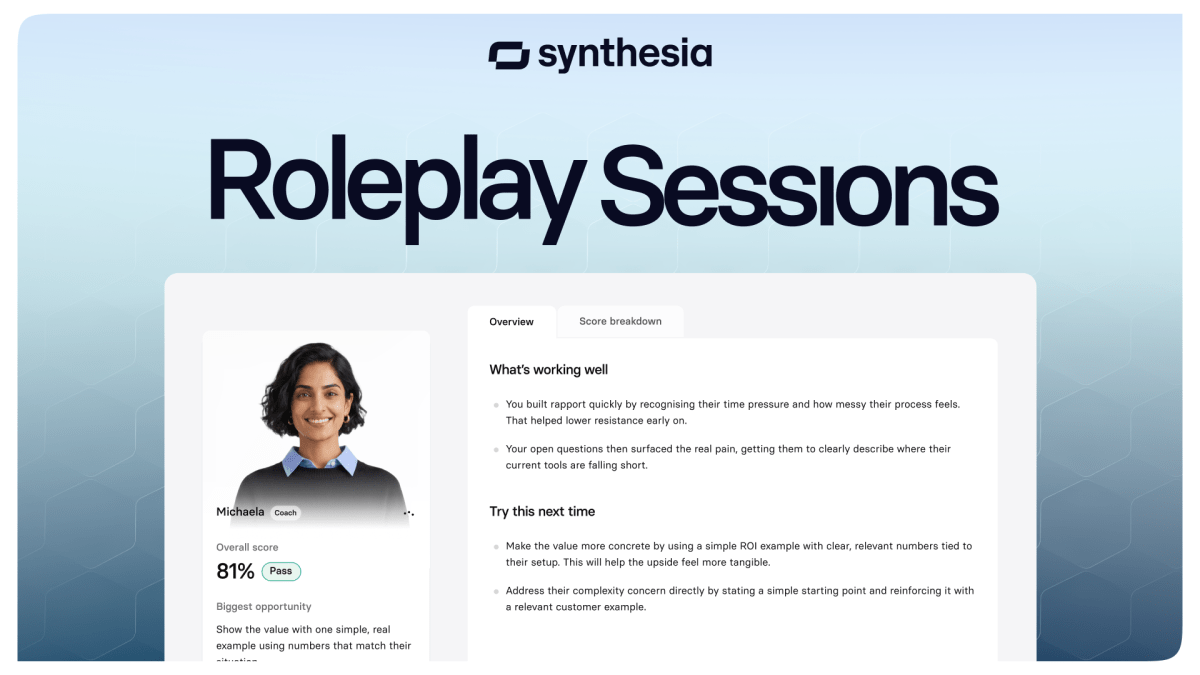
Synthesia launched a new enterprise training product Wednesday that lets workers rehearse tough workplace conversations with an AI avatar. For investors tracking enterprise AI, the move points to a sharper question across the sector: can AI tools prove they improve business performance, rather than just produce polished demos?
The British startup’s new product, called Roleplay Sessions, is designed for scenarios such as sales pitches, performance reviews and customer complaints, according to TechCrunch. Employees speak with an AI avatar that responds in real time, challenges them and then grades the interaction against a rubric, meaning a structured scoring guide.
Roleplay Sessions is the first product in a broader “Sessions” platform that Synthesia plans to extend into other areas, including job interviews and candidate screening, TechCrunch reported.
From training videos to measured practice
Synthesia became known for software that helps companies create AI-generated training videos quickly and at lower cost than traditional corporate training production. The new product shifts the company further into interactive training, where the focus is less on making content and more on showing whether employees can apply it.
Synthesia points to learning research suggesting that many corporate training programs explain or demonstrate a skill but do not necessarily change behavior. The company’s argument is that employees learn more effectively when they practice a task and receive feedback.
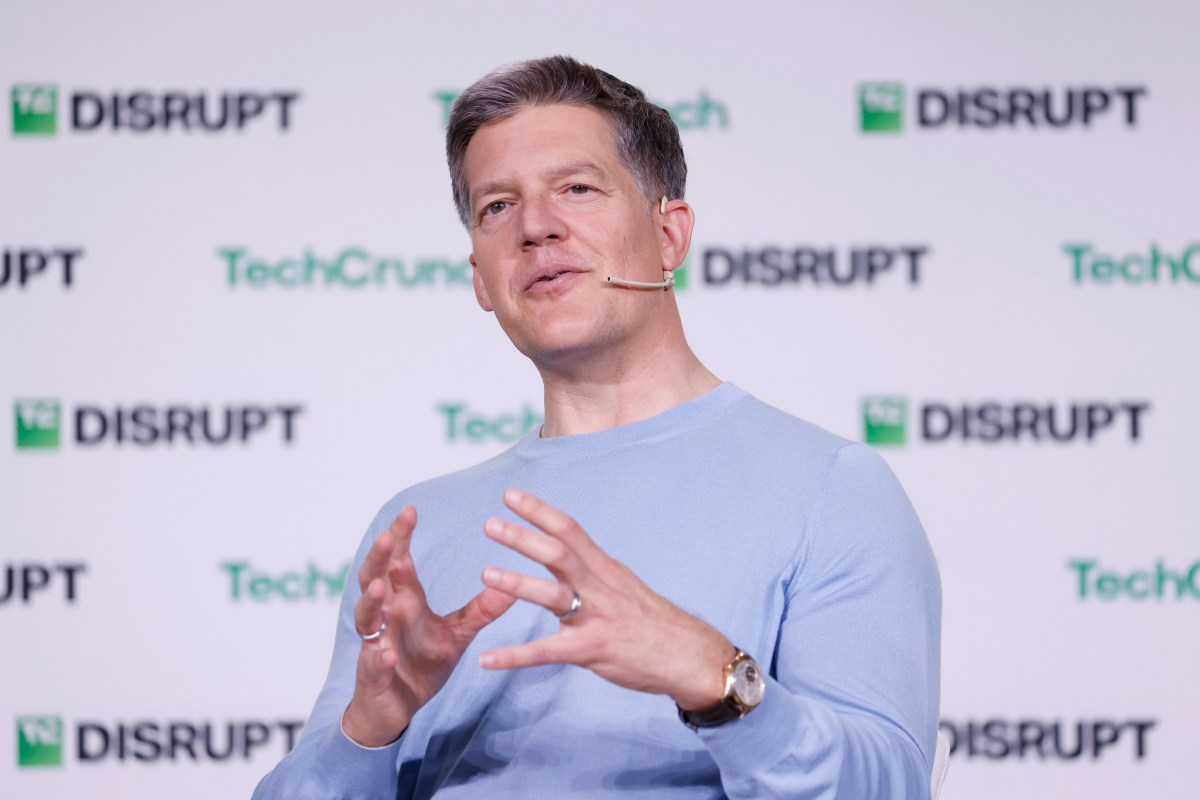
“Video performs way better than text or sending out a document,” Synthesia CEO and co-founder Victor Riparbelli told TechCrunch. “But for most things, we learn the best by actually practicing something rather than just reading it.”
That shift matters in enterprise AI because companies are under pressure to justify software spending. A tool that can produce usage data, scores and team-level analytics may be easier for managers to tie to workplace outcomes than a content generator alone.
Why Synthesia is adding analytics
TechCrunch reported that Synthesia’s avatar and voice technology are proprietary, while OpenAI provides the underlying reasoning intelligence. By adding scoring systems, training rubrics and performance analytics, Synthesia is trying to position itself as more than an AI avatar vendor.
Riparbelli told TechCrunch that executives are showing strong interest in mapping employee talent in ways that were difficult before. He said a company could have an entire sales team train with an AI role player and then receive detailed data on how that sales organization is performing.
A Synthesia spokesperson told TechCrunch the company already has several early Roleplay customers using the product in scaled commercial rollouts. The spokesperson described them as one of the three largest companies in Europe by market capitalization, one of the top five Fortune 100 companies and one of the world’s largest recruitment companies.
The most common early use cases are sales training and leadership development, Riparbelli said. That includes practicing product sales and difficult conversations, with much of the training focused on soft skills.
Companies can build their own Roleplay programs on Synthesia’s platform or work with Synthesia consultants on custom versions, according to TechCrunch. Those custom programs can use a customer’s existing training materials and company context.
Roleplay Sessions is available as an enterprise product for now. Riparbelli told TechCrunch the company wants to bring it to small businesses, prosumers, meaning advanced individual users, and possibly educational institutions in the next few months as inference costs fall. Inference costs are the computing expenses tied to running an AI model after it has been trained.
This story draws on original reporting from TechCrunch.