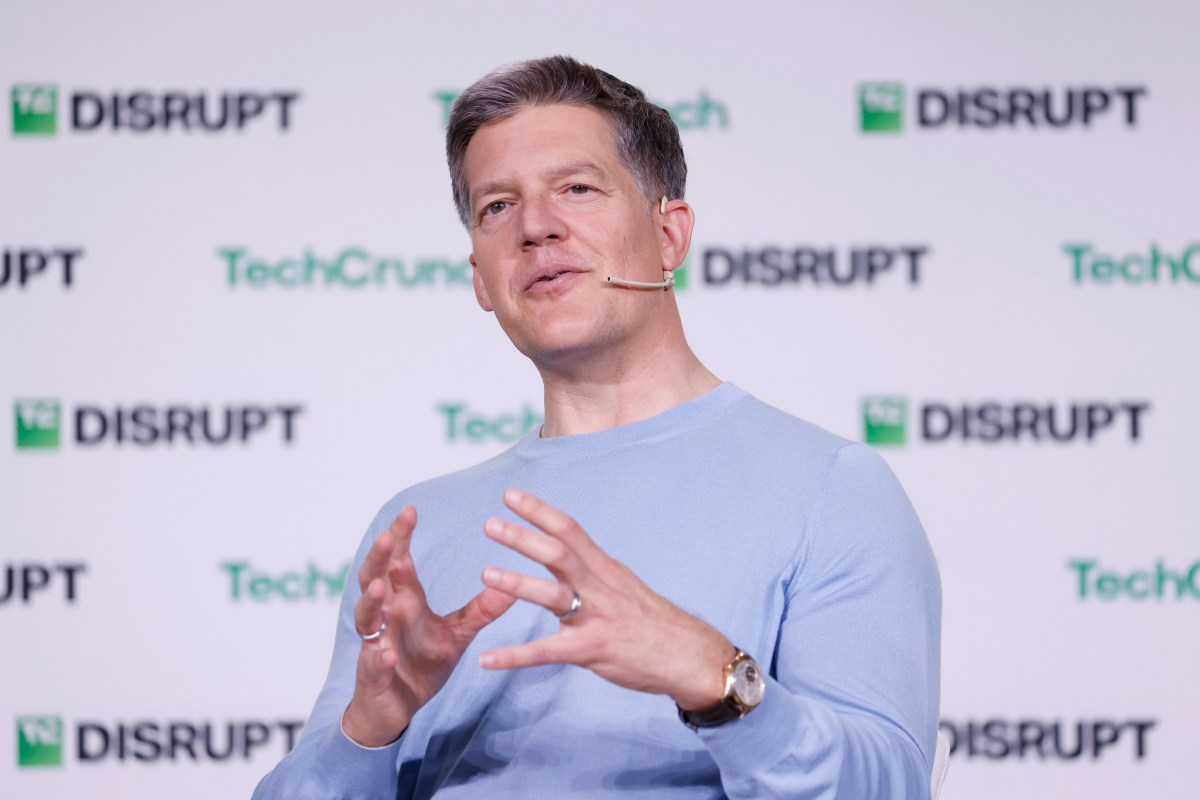
Vanessa Larco’s Premise VC backs seed founders with an AI cost test
Former NEA partner Vanessa Larco says Premise VC targets early technical founders and looks for AI products that are faster, cheaper or easier.
By Jordan Bell · Startups & Deals Reporter
· 4 min read

Vanessa Larco’s Premise VC is built around a clear bet: the earliest startup rounds now reward focused investors who can make founders a priority. For retail investors watching where the next public tech companies may come from, her view offers a useful read on how venture money is being steered in the AI era.
Larco, a former partner at New Enterprise Associates, started Premise VC in early 2025 with Mercedes Bent, according to Crunchbase News. The firm focuses on pre-seed and seed rounds, the first institutional funding stages for many startups, and writes checks from $500,000 to $3 million, Larco told Crunchbase News.
Before forming Premise, Larco spent nearly eight years at NEA, where she served on the investment committee and led deals across enterprise software, developer tools and consumer technology, according to Crunchbase News. Her investments included Evident, Kindred, Cleo, Greenlight and Mejuri. She also served as a board observer at Robinhood before its 2021 initial public offering, Crunchbase News reported.
Larco told Crunchbase News that large multi-billion-dollar funds can still invest early, but small checks are less central when a fund must deploy several billion dollars. Founders, she said, have become more aware of whether an investor’s check is meaningful enough to make them a top priority.
Why did Vanessa Larco start Premise VC?
Larco pointed to a shift in founder behavior, including lessons from the Silicon Valley Bank collapse. She told Crunchbase News that when SVB was failing, founders urgently called investors for help with payroll, and many learned where they ranked inside large portfolios.
That experience, Larco said, helped make specialized early-stage funds more attractive, including for first-time founders who hear stories through startup communities, WhatsApp groups and shared networks. Premise was designed for that customer, she told Crunchbase News, with the fund treated like a product that had to match what founders actually wanted.
The firm mostly invests where Larco and Bent have strong networks, including San Francisco, New York and Atlanta, because their process depends on close diligence. Larco said Premise may speak with founders one to three times a day for three to five days, while also doing reference checks and informal background calls.
How does Vanessa Larco pick AI startups?
Larco told Crunchbase News that Premise weighs founder potential more heavily than the first idea in a pitch deck, since early startup plans often change over time. She and Bent use seven founder attributes, and they look for founders who are world-class in at least two of them, supported by specific examples and reference feedback.
One attribute Larco named is being “urgently dissatisfied.” She described it as a founder’s unusually high standard and relentless push toward a goal, not ego. People who have worked with those founders often say they were pushed to do more than they thought possible, she told Crunchbase News.
For AI companies, Larco’s practical screen is whether the product is faster, cheaper or easier than what customers use today. She said the best startups should ideally deliver on at least two of those three. A modest discount may not be enough, but a product that cuts a major task from hours to minutes can change customer behavior, she told Crunchbase News.
Larco is not opposed to AI “wrappers,” meaning products built on top of existing AI models through application programming interfaces, or APIs. Her concern is whether founders understand the technical trade-offs well enough to switch among open-source, closed, Google or other models when cost or performance changes.
She compared criticism of AI wrappers to early doubts about Amazon Web Services, noting that many significant companies were later built on cloud infrastructure. In her view, the stronger long-term defenses for AI startups still come from workflows, customer data, network effects and integrations, rather than owning the underlying model.
Larco also told Crunchbase News she remains interested in consumer software and fintech despite investor pullbacks in those categories. AI is changing consumer behavior, she said, and categories that other investors avoid can become worth studying when new demand appears.
This story draws on original reporting from Crunchbase News.