Jim Cramer urges investors not to exit stocks during market selloff
Jim Cramer said unpredictable inflation, rate and war signals make it hard to time an exit and re-entry into stocks.
By Dev Ramirez · Crypto Correspondent
· 3 min read
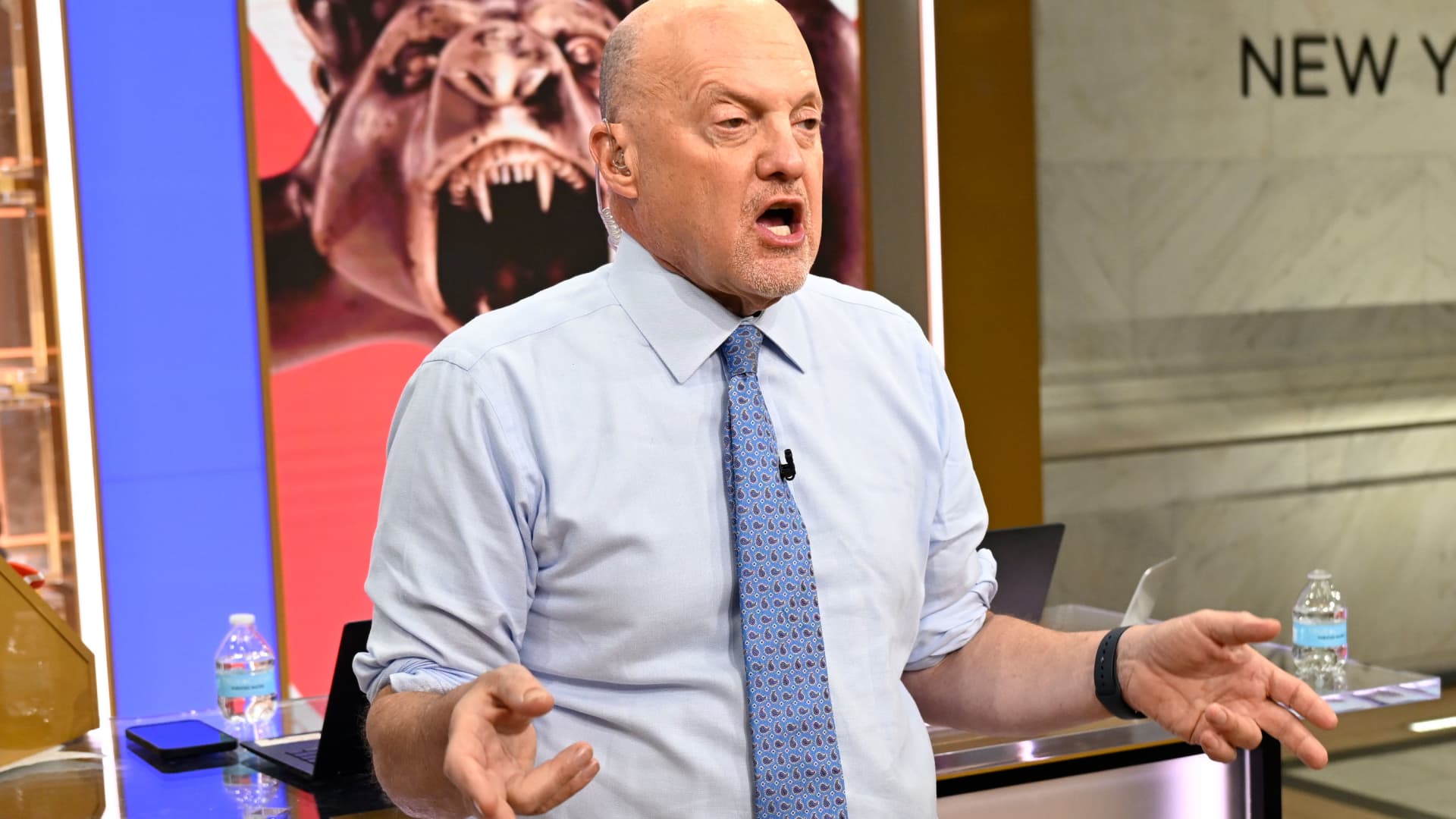
Jim Cramer’s view on the market selloff was to avoid giving up on stocks after a rough Wednesday session, arguing that investors who exit during volatility could miss a rebound. For everyday investors, his point was about the risk of trying to sell at the right time and then get back in before gains return, not a prediction of the market’s next move.
The CNBC host made the comments as the S&P 500 fell just over 1%, the Nasdaq dropped 1.9% and the Dow Jones Industrial Average finished slightly lower, CNBC reported. Cramer said uncertainty around inflation, interest rates and the war with Iran had made the near-term direction of stocks exceptionally difficult to judge.
Why does Jim Cramer say not to give up during a market selloff?
Cramer’s central concern was market timing. That means selling investments during a decline and attempting to repurchase them before prices recover. In his view, an investor who steps aside may be unable to return before the relatively small number of strong trading days that can account for a large share of a market’s gains.
CNBC cited a JPMorgan analysis that compared two hypothetical S&P 500 investors between 2005 and 2024. It said a person who invested $10,000 but missed the index’s 10 best trading days would have ended with less than half the wealth of someone who stayed fully invested. The study was presented by CNBC as an illustration of the risk Cramer described, rather than evidence that the market will rise on any particular day.
Cramer said the backdrop had made it hard to maintain conviction. September consumer prices rose 0.6% from the previous month, slightly exceeding expectations, according to CNBC. Treasury yields initially moved higher after the report, then reversed even as oil prices continued to climb. Cramer pointed to those moves as an example of conflicting signals confronting investors.
He said a conclusion to the war with Iran could lower oil prices sharply and reduce inflation pressure without further Federal Reserve action. That was Cramer’s assessment, not a confirmed outcome or forecast.
Why were earnings not lifting every stock?
Company results also did not produce a clear market read, Cramer said. Morgan Stanley reported what CNBC described as a decent quarter, yet its shares fell nearly 3%. ASML reported strong earnings and rising demand, but its stock gave up early gains and closed down 4% as semiconductor shares sold off.
Those examples do not establish why investors bought or sold either stock. They do show why Cramer characterized the session as difficult to interpret: positive corporate updates coincided with broad declines while inflation, Fed-policy expectations and the war remained unsettled.
Cramer’s comments are market commentary, not individualized investment advice. His argument was that unpredictable conditions can make an exit-and-re-entry strategy especially difficult, even for investors who correctly identify a period of market stress.
This story draws on original reporting from CNBC.