Trump plans primetime speech centered on election claims
The president is set to address the nation at 9 p.m. ET as he pushes voting-law changes before the November midterms.
By Theo Nakamura · Staff Writer
· 3 min read
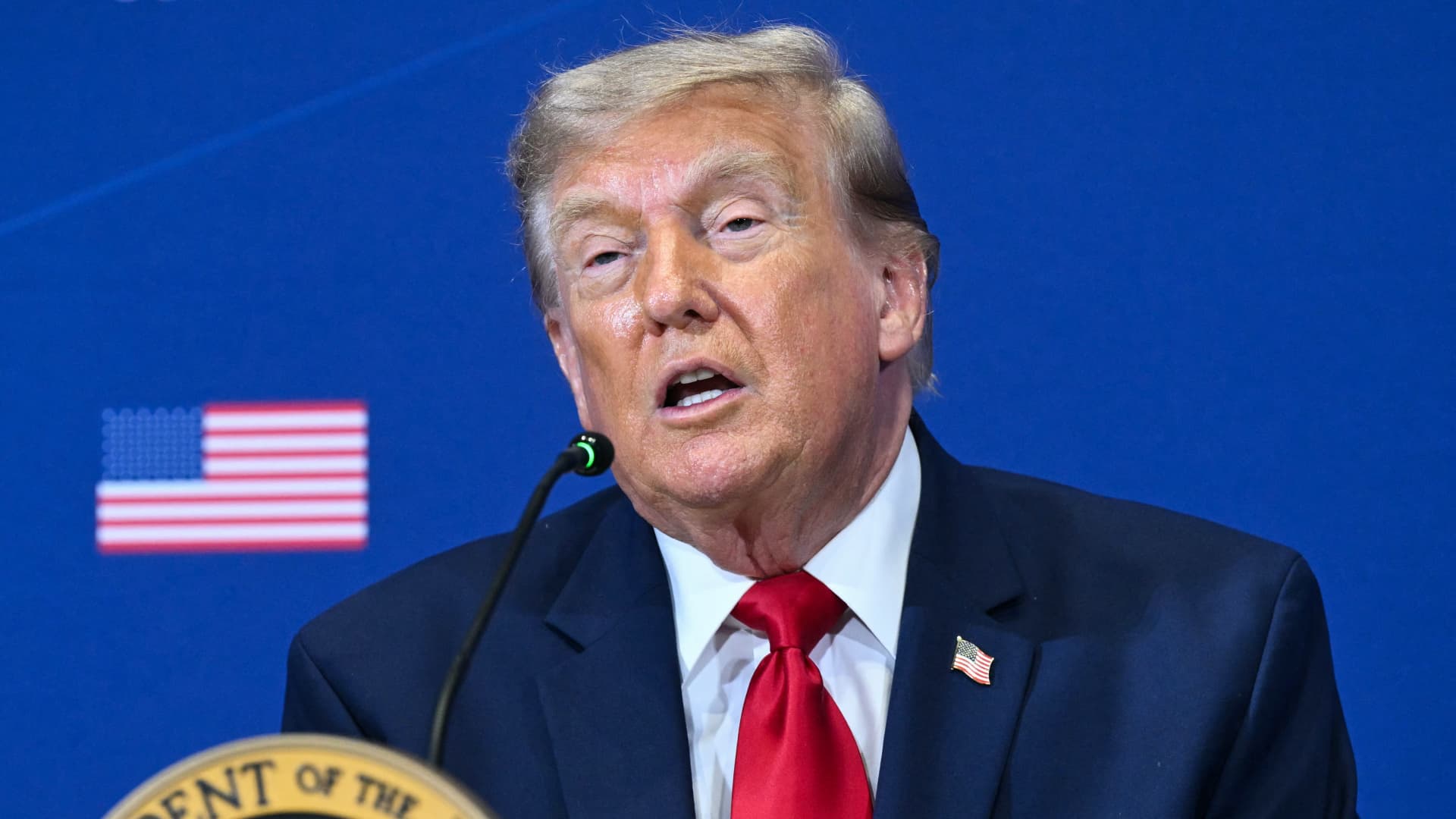
President Donald Trump is scheduled to deliver a national address Thursday at 9 p.m. ET focused on U.S. elections, putting voting rules back at the center of the political fight before the November midterms. For investors, the stakes are less about one speech and more about control of Congress, which shapes taxes, spending, regulation and the federal budget.
The address comes as Trump and Republican allies press for changes to election law while polling cited by CNBC shows Democrats favored to retake the U.S. House. Republicans are trying to keep control of both chambers, but the party in the White House has historically struggled in midterm elections, and polls cited by The Washington Post show weak public views of the economy, the Iran war and Trump himself.
Trump has offered few details about the speech. At the White House on Tuesday, when asked about it, he said the country needed to “shape up” and added that there is no country without “free and fair elections.”
White House spokeswoman Karoline Leavitt declined to preview the remarks for CNBC. She said anonymous sources were speculating about the address and that “nobody knows yet” what Trump will ultimately say.
What Trump is expected to say
Administration officials told MS NOW that Trump is expected to again make false claims about the 2020 presidential election, which Joe Biden won, and to accuse foreign adversaries including China of election influence operations. Trump has repeatedly claimed without evidence that the 2020 election was stolen from him and has made similar allegations about some races Republicans later lost.
The speech will be Trump’s first formal national address since early April, according to CNBC. In that earlier address, Trump said the Iran war was close to ending, though the conflict is still continuing.
In a Monday interview on Newsmax, Trump pointed to the Los Angeles mayoral primary as an example of what he called a rigged election. The Associated Press reported that Trump had made baseless claims of widespread ballot fraud in that race before his preferred candidate, former reality TV figure Spencer Pratt, officially lost.
The voting bill behind the fight
Trump has urged Congress to pass the SAVE America Act, a bill that would require photo identification to vote and proof of citizenship to register, among other provisions. A voter registration rule sets what documents people must provide before they can be added to voter rolls.
Supporters frame the bill as a way to stop noncitizen voting. Opponents say it would keep eligible voters from casting ballots, especially low-income voters and people of color, according to CNBC.
Federal law already bars noncitizens from voting in U.S. elections. The Bipartisan Policy Center has said available data show very few ballots are cast by noncitizens.
CNBC reported that Trump has made the bill his top election priority and has refused to sign other legislation until the measure reaches his desk. House allies have also held up other bills while trying to advance the measure, though CNBC reported that it does not have enough votes to pass Congress.
Broader election pressure
Trump’s election efforts extend beyond legislation. After Biden’s 2020 victory, Trump and his allies brought dozens of legal challenges to state vote counts. Those cases did not overturn results, and no credible evidence emerged showing fraud sufficient to change the outcome.
The campaign to undo the 2020 result led to the Jan. 6, 2021, attack on the U.S. Capitol, when Trump supporters entered the building and lawmakers temporarily fled. Trump later pardoned or commuted sentences for virtually all defendants involved in the riot, according to CNBC.
CNBC also reported that the Justice Department has sued several states seeking detailed voter registration data, arguing it needs the information to enforce federal election laws. More than a dozen of those cases have been dismissed by federal judges, according to the Campaign Legal Center.
This story draws on original reporting from CNBC.


