Xi casts China as AI partner for developing countries
At Shanghai’s World AI Conference, Xi promised AI training for developing nations and criticized security policies that restrict tech access.
By Maya Okafor · Markets Writer
· 3 min read
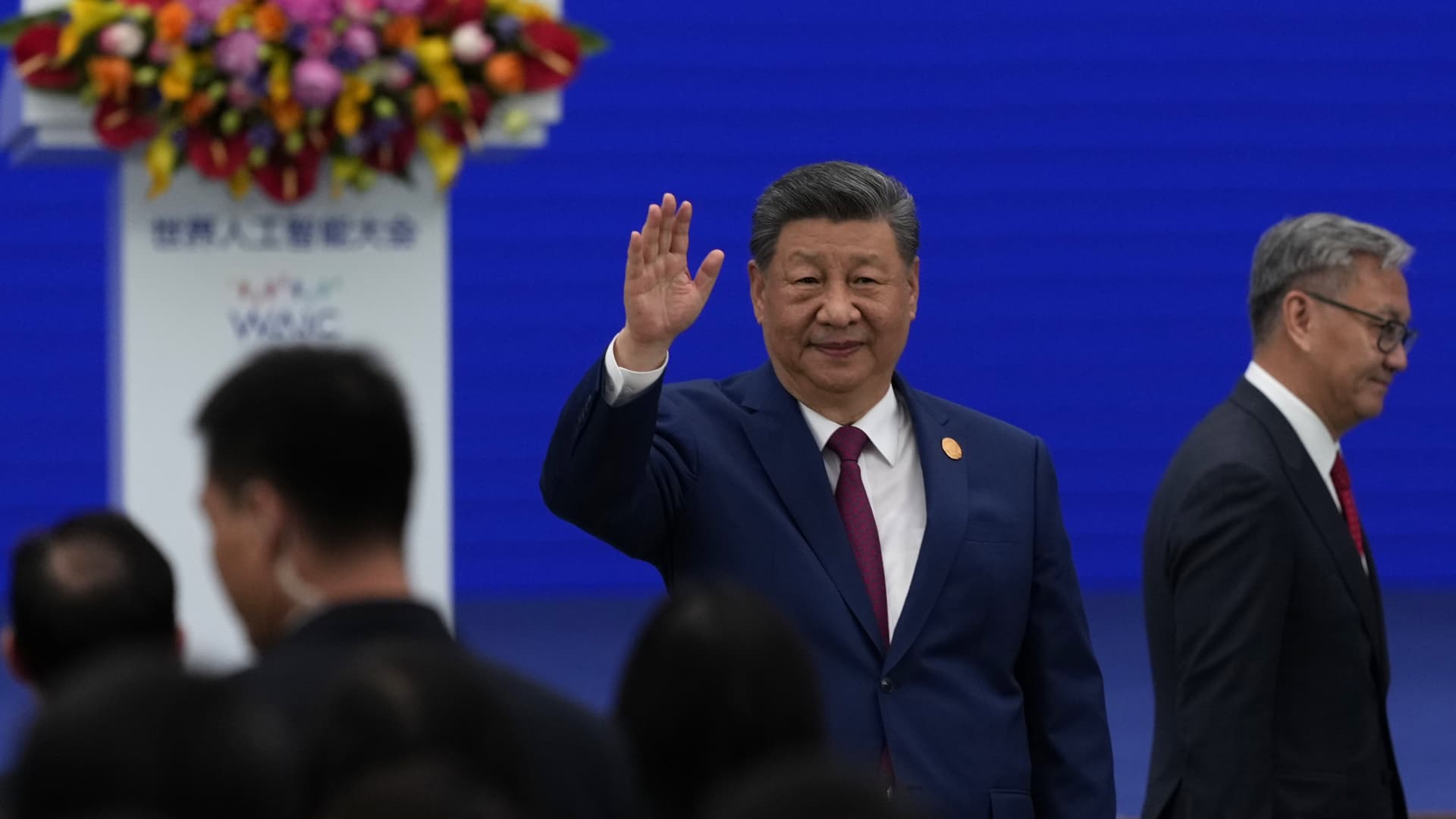
Chinese President Xi Jinping used a major AI conference in Shanghai to present China as a technology partner for developing economies. For investors, the message lands in the middle of a broader fight over chips, data centers and who gets access to the hardware needed to build artificial intelligence systems.
Speaking Friday at the World AI Conference, Xi said China will offer developing countries 5,000 spots in AI training and seminar programs over the next five years, according to CNBC. He also said Beijing will expand AI cooperation with groups including the Association of Southeast Asian Nations, the League of Arab States, the African Union and BRICS.
AI training matters because advanced models need both skilled engineers and powerful computing systems. Countries that can train workers, build data centers and access high-end chips are better positioned to develop domestic AI tools rather than depend entirely on foreign platforms.
Xi framed that effort as a shared project. According to a Google translation of his Mandarin speech, he said China is willing to work with others to address the opportunities and challenges created by AI development with “a more open attitude, more pragmatic actions, and a longer-term vision.”
He also said AI development should be a “symphony of international cooperation,” rather than a “solo performance” by one country, according to the translated remarks.
The speech followed an agreement by 29 countries in Shanghai to create the World Artificial Intelligence Cooperation Organization, known as WAICO, according to Chinese state media outlet Xinhua. Xinhua said the new organization will be based in Shanghai.
Security concerns remain central
Xi also called for AI to stay “secure and controllable” and remain under human control, according to CNBC. In plain terms, AI governance refers to the rules and safeguards governments and companies use to manage risks from AI systems, including safety, misuse and accountability.
Xi warned against extending national security arguments too far in AI policy or putting one country’s security above another’s, according to CNBC. He did not identify a specific country in those comments.
The United States has already used export controls against China in advanced technology. Export controls are government rules that restrict certain products from being sold abroad, often for national security reasons.
The U.S. Commerce Department placed Huawei on its Entity List in 2019 during President Donald Trump’s first term, according to a federal notice cited by CNBC. The Biden administration added restrictions in 2022 aimed at limiting China’s ability to buy advanced computing chips and produce advanced semiconductors, citing national security risks, according to the Bureau of Industry and Security.
Chip access is the market pressure point
Those restrictions have affected Nvidia, one of the most closely watched companies in the AI trade. Nvidia said in its annual report that it could not create and deliver a competitive data center product for China that satisfied both Beijing and Washington.
“As of the end of fiscal year 2026, we were effectively foreclosed from competing in China’s data center computing/compute market,” Nvidia said in the filing. The company added that the limits helped competitors build larger developer and customer ecosystems that could challenge it globally.
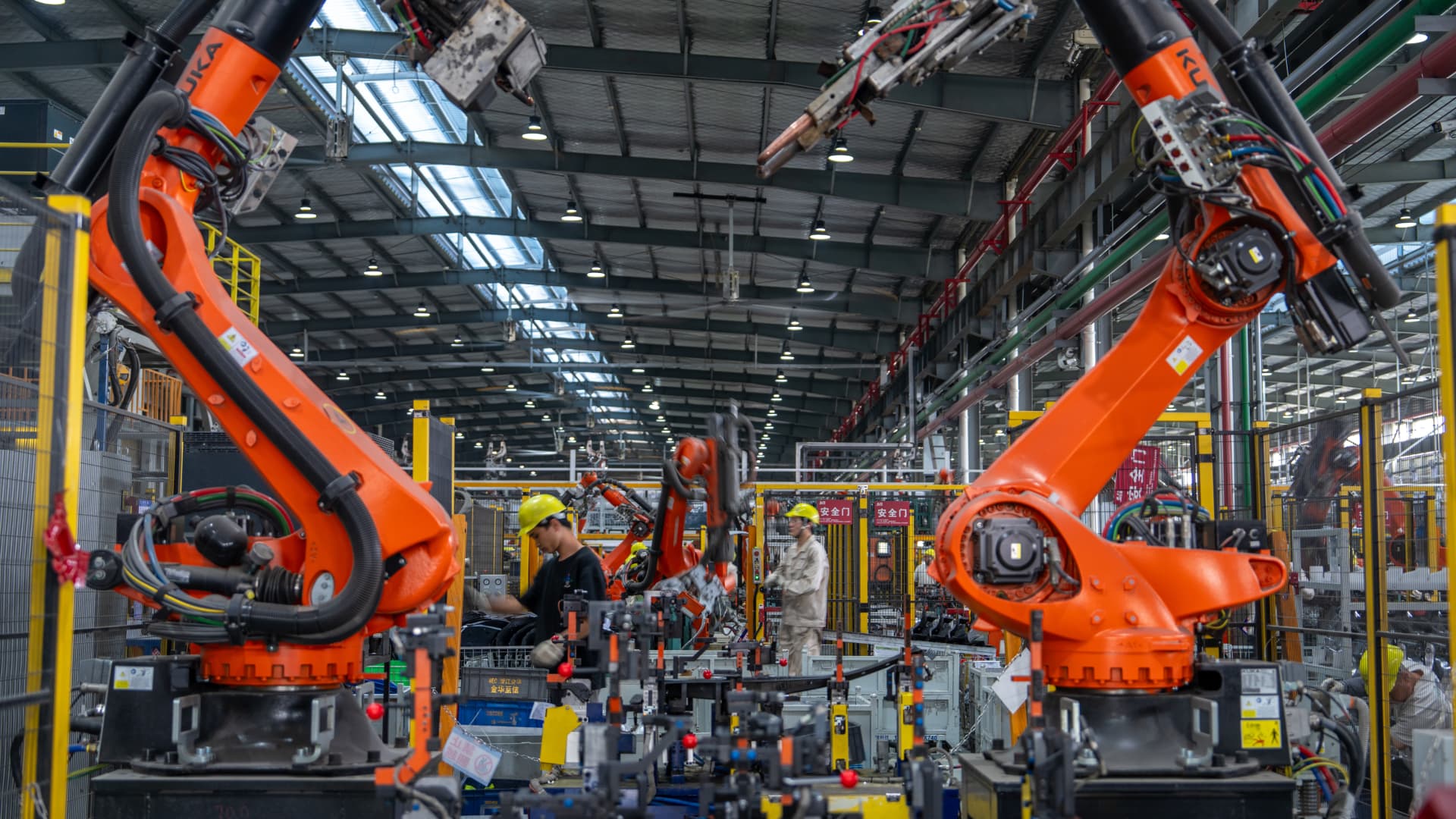
Huawei showed its Atlas 950 SuperPoD supernode at the Shanghai event, according to CNBC. Huawei said the system is designed to connect multiple chips to increase computing power and address the needs of large data center construction and large-scale model training.
That is the business backdrop to Xi’s remarks: AI leadership depends on software talent, international standards and access to computing power. China’s latest pitch links all three, while the U.S. restrictions show how national security policy can reshape where major chip companies can compete.
This story draws on original reporting from CNBC.