Bank of Korea widens digital won pilot to 500,000 users
South Korea’s central bank will expand Project Hangang in September, adding banks, payment features and government subsidy tests.
By Theo Nakamura · Staff Writer
· 3 min read
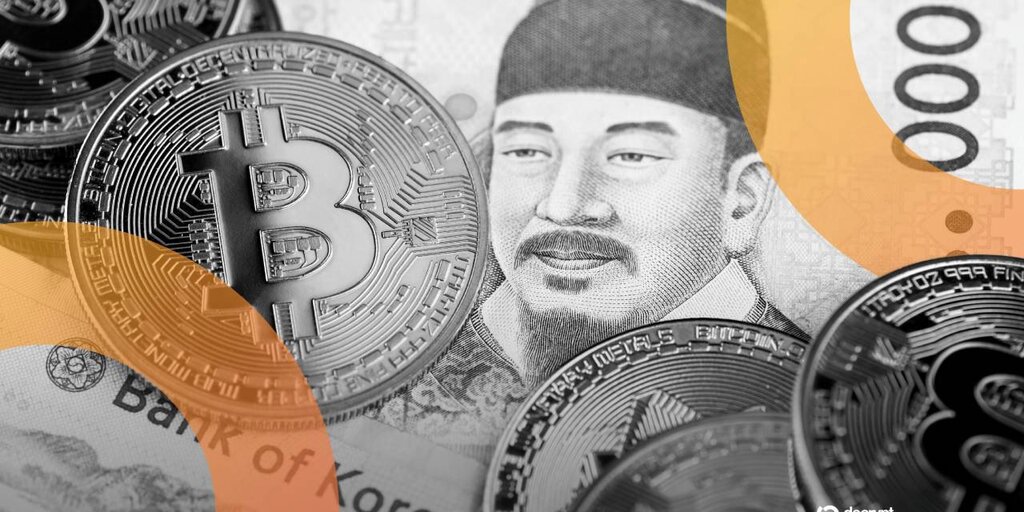
The Bank of Korea is preparing a much bigger test of digital money, with as many as 500,000 people allowed to use bank-issued deposit tokens in live payments. For everyday investors, the move matters because it shows a major economy testing whether blockchain-based payments can work inside the banking system rather than outside it.
The central bank will begin the second phase of Project Hangang in September, according to a Yonhap News Agency report. The program is South Korea’s central bank digital currency project, commonly called a CBDC. A CBDC is digital money issued or backed by a central bank, unlike private crypto tokens or stablecoins issued by companies.
Yonhap reported that nine banks will take part in the next stage, up from seven in the first phase. The Bank of Korea plans to raise the user ceiling to 500,000 and test deposit tokens in real-world transactions, including government subsidy payments.
What changes in phase two
The first trial ran from April through June 2025, according to the Bank of Korea and the HRF CBDC tracker. During that period, 81,000 people opened wallets, seven banks participated and 12,000 merchants were involved. The test processed 114,880 transactions, but only 42% of wallet holders made a payment.
The next version adds features that look more like everyday banking. According to Yonhap and the Bank of Korea’s project details, users will be able to make person-to-person transfers, approve payments with fingerprint biometrics, set up automatic top-ups from linked bank accounts, use recurring payments, receive cash receipts and earn interest.
The government subsidy test is a key addition. The pilot will use programmable deposit tokens, meaning the digital money can carry rules about where, when or how it can be spent. That could let public agencies distribute targeted benefits through wallets while limiting use to approved merchants, purposes or time periods.
That design also raises the stakes for policy makers. A programmable payment tool could reduce manual audits and fraud in subsidy programs, but it also gives the central bank and participating institutions more technical control over restricted public funds.
How the system works
The Bank of Korea is not testing a retail CBDC that citizens hold directly from the central bank. Instead, it issues a wholesale CBDC, which is digital central bank money used between financial institutions to settle payments behind the scenes.
Commercial banks then issue deposit tokens to customers. These tokens represent bank deposits on a blockchain-based system, so users interact with their bank rather than holding a direct claim on the central bank. Kim Dong-seop, head of the Bank of Korea’s Digital Currency Planning Team, described the model to Business Korea as a middle ground between a CBDC and a stablecoin.
The structure matters for banks, payment companies and merchants. If deposit-token payments can settle quickly and cost less than card transactions, the test could put pressure on card network fees. The pilot is designed to examine that possibility in live use, according to the project details reported by Yonhap.
The original seven participating banks were KB Kookmin, Shinhan, Hana, Woori, Nonghyup, Industrial Bank of Korea and BNK Busan. Yonhap reported that Gyeongnam Bank and iM Bank will join for phase two.
The HRF CBDC tracker said banks had collectively spent about 30 billion to 35 billion won building infrastructure for the first phase. Unlike the first trial, the second phase will not have a fixed end date, according to Yonhap.
This story draws on original reporting from Decrypt.