Meta facial recognition patent describes cameras that label actions
Meta’s published patent application outlines face identification and action-tagged clips, but it does not show a product launch.
By Theo Nakamura · Staff Writer
· 3 min read
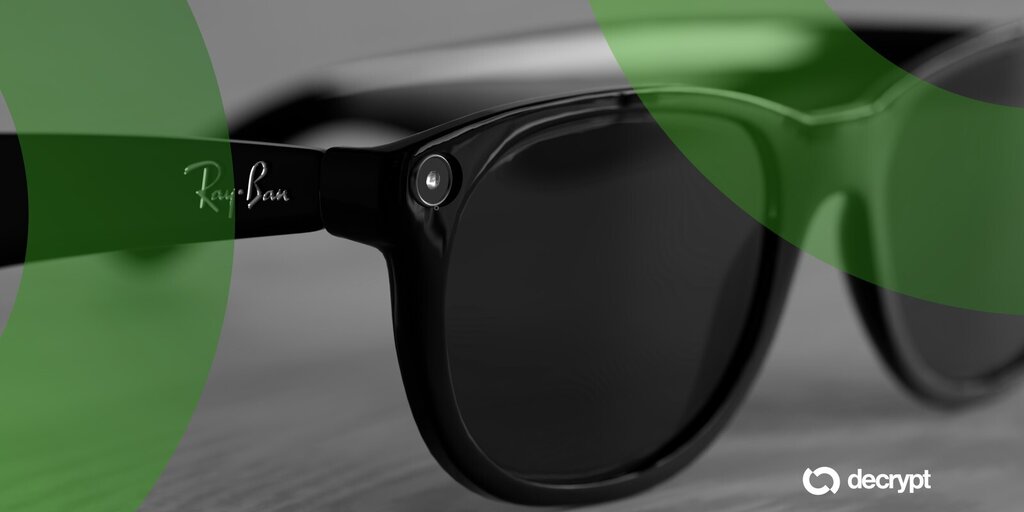
Meta’s facial recognition patent application describes a camera system that could identify people in footage, detect what they are doing and create clips associated with those people or actions. For investors and users watching Meta’s wearable ambitions, the key distinction is that the document is a published application, not a granted patent or an announced product.
The application, US 2026/0238876 A1, names Meta Platforms Technologies, LLC as applicant. Patentlyze lists it as filed on February 4, 2026 and published on August 13, 2026. The case was listed as “Docketed New Case - Ready for Examination,” meaning the available evidence does not establish that its claims have been approved.
What does Meta’s facial recognition patent application describe?
The filing lays out a workflow in which one or more cameras gather live or recorded sensory data. A facial-recognition component identifies people in the cameras’ field of view, while another part of the system determines actions involving one or more of those people, according to the abstract reproduced by Patentlyze.
The system would then generate media files associated with a recording of a person, a detected action, or both. Those files could be sent to a client device, including a phone or headset, according to reporting by Decrypt and Patentlyze’s summary of the application.
In practical terms, the proposed system could turn a large set of video into material that is easier to retrieve by person or activity. Rather than reviewing a full recording, a user could potentially call up clips tied to the system’s labels. The filing describes that capability; it does not demonstrate how accurately it would work in real settings.
Does this mean facial recognition is coming to Meta glasses?
No conclusion about a consumer rollout follows from the application. Decrypt reported that the applicant is the Meta entity that holds the company’s research-and-development and hardware intellectual property, and that the document’s illustrations include a glasses wearer. But the materials do not show that this system has been built into Ray-Ban Meta glasses, Quest headsets or another Meta product.
Patent applications often describe potential technical approaches before, or without, a commercial release. They also do not establish regulatory approval. Investors should treat the filing as evidence of an area Meta is seeking to protect intellectually, rather than confirmation of a product roadmap.
Why could the filing draw privacy scrutiny?
Facial recognition is technology that seeks to identify a specific person from an image or video, rather than merely detect that a person is present. Combining it with action detection could create a searchable record of who appeared in footage and what the system concluded they were doing.
Decrypt noted that Democratic senators had previously raised concerns about real-time face identification in smart glasses, including risks involving stalking and harassment. Those concerns are context for the technology described in the application, not evidence that Meta is currently operating the proposed system.
The documented facts are narrower: Meta Platforms Technologies has published an application for a camera-and-AI system with face identification, action detection and clip generation. Whether it advances through examination, becomes a product or appears in consumer hardware remains unestablished by the filing.
This story draws on original reporting from Decrypt.