Mira Murati’s Thinking Machines releases open AI model Inkling
Thinking Machines Lab’s first model is open-weight, multimodal and aimed at developers building AI agents that use external tools.
By Sofia Marchetti · Columnist
· 3 min read
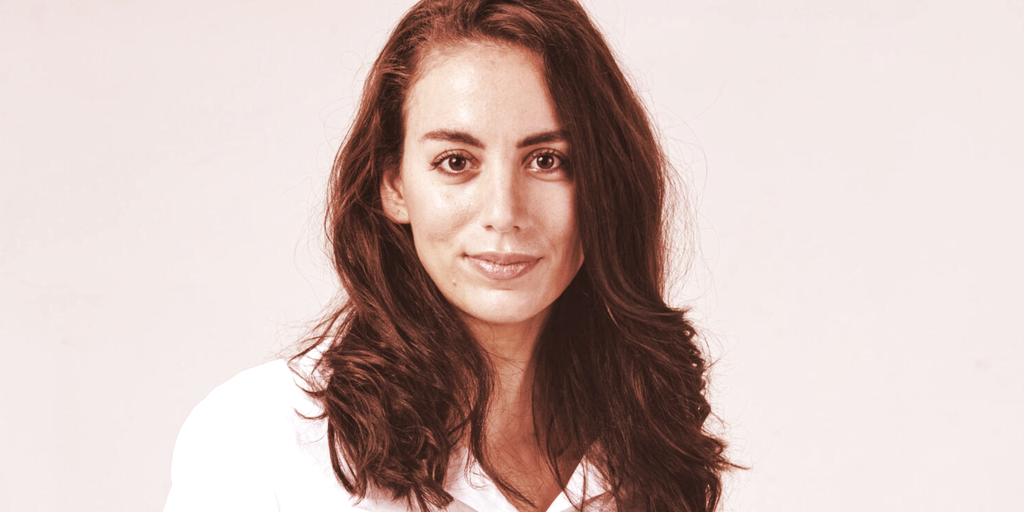
Mira Murati’s AI startup Thinking Machines Lab has released its first model, Inkling, giving developers free access to the model weights under an Apache 2.0 license. For investors tracking the AI trade, the launch adds a new open-weight contender from a heavily funded startup led by a former OpenAI executive.
Thinking Machines said Inkling was trained from scratch and can handle text, images and audio. “Open weights” means the internal numerical values that make the model work are available for others to download, inspect and fine-tune, rather than being locked behind a closed service.
Murati wrote on X that Inkling was “trained from scratch,” with weights open and fine-tuning available through Tinker, Thinking Machines’ cloud platform. Fine-tuning means adapting an existing model with a narrower dataset so it performs better on a specific job.
What Thinking Machines built
Inkling is a mixture-of-experts model, according to Thinking Machines. That architecture uses only part of the full network for a given prompt, which can make a very large model more efficient when it runs.
The model has 975 billion total parameters, with 41 billion active for each task. Parameters are the learned settings inside an AI model that shape how it processes inputs and generates outputs. Thinking Machines also said Inkling supports a 1 million-token context window, which is the amount of material the model can consider at once, equal to roughly 750,000 words.
The company said Inkling was pretrained on 45 trillion tokens across text, images, audio and video. Tokens are chunks of data, often words or parts of words, that models use during training and when responding to prompts.
The model weights are available on Hugging Face under an Apache 2.0 license, according to the company. That license is widely used in open-source software and generally allows commercial use, modification and redistribution under its terms.
Where Inkling scored well
Inkling’s strongest reported result is in agent-style work, where an AI system uses tools to complete tasks. On MCP Atlas, a benchmark that measures how reliably an AI agent completes real-world tasks through Model Context Protocol, Inkling scored 74.1%, according to the company.
Model Context Protocol is an open standard for connecting AI assistants to outside tools and services. Thinking Machines’ reported score puts Inkling nearly 30 percentage points ahead of Nvidia’s Nemotron 3 Ultra and makes it the top-performing Western open-weight model on agentic tool use, according to the company’s benchmark comparison.
Chinese models GLM 5.2 and Kimi K2.6 still lead Inkling on several key benchmarks, according to the same comparison cited by Decrypt.
Murati’s post-OpenAI move
Murati left OpenAI in September 2024 after serving as chief technology officer. During OpenAI’s November 2023 leadership crisis, the company’s board named her interim CEO after firing Sam Altman. Altman returned five days later, and Murati went back to the CTO role before leaving roughly 10 months later.
She founded Thinking Machines Lab in February 2025. The startup later raised $2 billion at a $12 billion valuation in July 2025, in a round led by Andreessen Horowitz and joined by Nvidia, Accel, ServiceNow, Cisco, AMD and Jane Street, TechCrunch reported at the time.
The New York Times later reported that Thinking Machines explored a new round at a $50 billion valuation in November 2025, before those talks collapsed by January 2026.
This story draws on original reporting from Decrypt.