Thai central bank flags unusual stablecoin trades in finance crackdown
Thailand’s central bank is screening large stablecoin flows as regulators widen a push against illicit finance, cash movements, gold trading and mule accounts.
By Dev Ramirez · Crypto Correspondent
· 3 min read
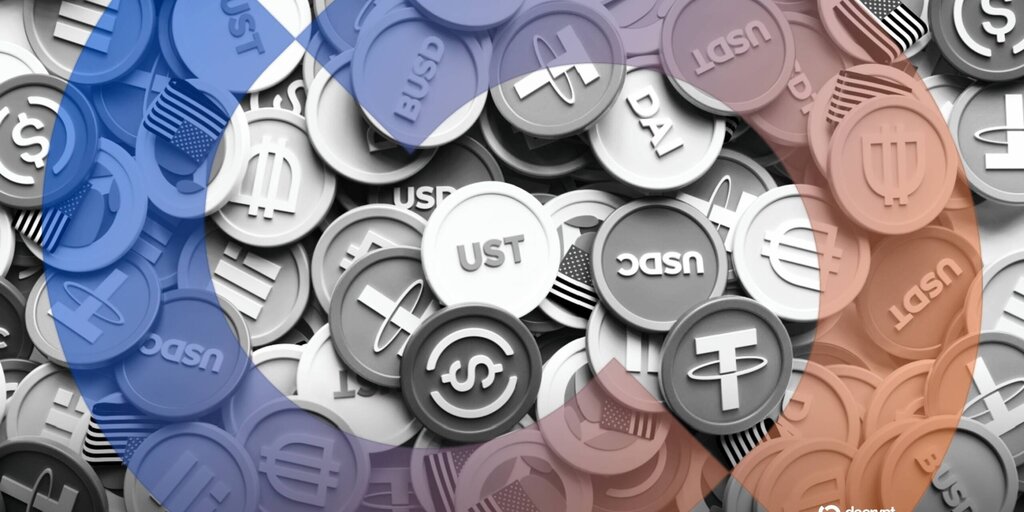
Thailand’s central bank is using data tools to look for unusual stablecoin activity, putting crypto transfers inside a broader push against illicit finance. For everyday crypto investors, the move matters because stablecoins such as Tether’s USDT are a core bridge between cash and digital assets, and closer screening can affect how regulators treat large flows.
Bank of Thailand Governor Vitai Ratanakorn said the central bank has started reviewing abnormally large stablecoin transactions, with a focus on USDT, according to Thai outlet Thansettakij. Early checks have identified transactions that appear intended to avoid disclosure rules or move money outside standard bank transfer channels, he said, according to the report.
A stablecoin is a crypto token designed to track the value of another asset, often the U.S. dollar. USDT is the largest stablecoin and the most widely used trading pair on crypto exchanges, according to CoinGecko. That makes it useful for legitimate trading, but also attractive for people trying to move value quickly across platforms.
The Bank of Thailand does not directly oversee digital assets. That role sits with Thailand’s Securities and Exchange Commission, so the central bank is coordinating with the SEC, which has authority to decide what action, if any, follows from the findings.
Cash, gold and mule accounts are also in focus
The stablecoin checks are part of a wider campaign against what Thai officials call the “grey economy,” a term used for financial activity that sits outside normal reporting and oversight. Vitai described the effort as a longer campaign using several controls at the same time, according to Thansettakij.
Since April, banks in Thailand have been required to verify the purpose of cash withdrawals of 5 million baht, or about $150,000, and above. The central bank said that rule has reduced large cash withdrawals by about 35%, according to the report.
Thailand is also preparing tighter checks on large cash deposits. Starting in the fourth quarter, people depositing 5 million baht or more in cash may have to explain where the money came from, according to Thansettakij.
Regulators are also looking at high-value banknote exchanges and gold trading. Officials observed cases where buyers ordered gold through an app in the morning and picked it up from shops later that day, according to the report. Suspicious activity is now sent to Thailand’s Anti-Money Laundering Office, and monthly gold withdrawals have dropped from about 4,000 kilograms to around 700 kilograms.
Banks have also closed thousands of “mule” accounts linked to online gambling, according to Thansettakij. Mule accounts are bank accounts used by someone other than the real controller of the funds, often to receive or pass along money connected to fraud or illegal activity.
Crypto crime cases have drawn scrutiny
Thailand’s enforcement agencies have been pursuing several crypto-related crime cases. Thai police recently traced a romance-scam laundering network in which one wallet moved more than $122.5 million over 10 months through cross-chain swaps, according to Interpol’s Operation First Light.
Investigators have also expanded a probe into a $300 million Chinese laundering network tied to crypto mining, and authorities seized $8.6 million in illegal mining rigs linked to scam operations, according to prior reports cited by Decrypt.
The latest stablecoin screening shows Thai authorities are treating crypto flows as part of the same financial-control problem as cash, gold and online gambling accounts. The next step depends on Thailand’s SEC, which regulates the digital-asset market and can act on referrals from the central bank.
This story draws on original reporting from Decrypt.