Europe drought on Rhine and Danube disrupts power and freight
Controlled Danube blasts in Romania and record-low Rhine levels show how drought can raise power and transport risks.
By Sofia Marchetti · Columnist
· 3 min read
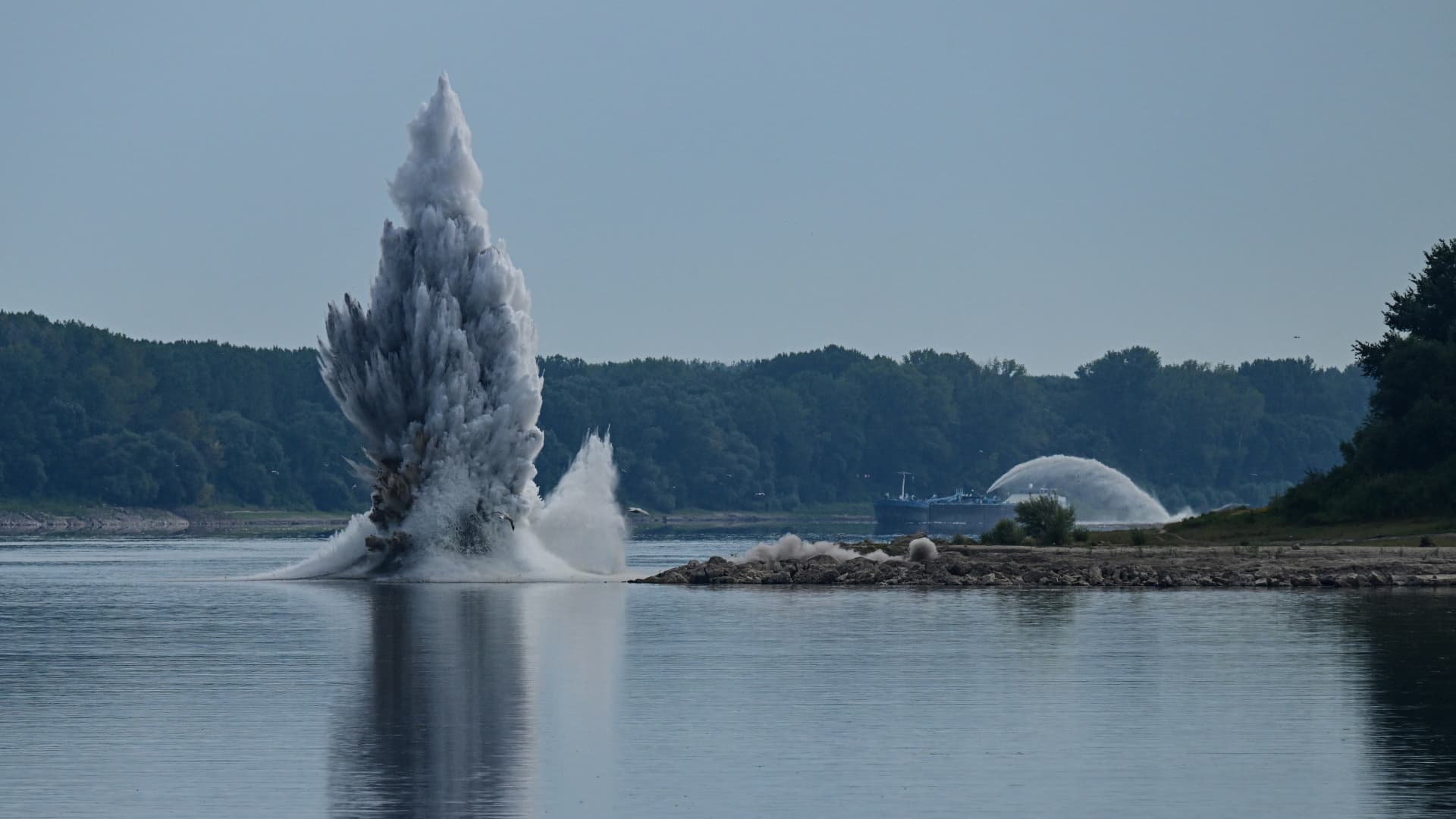
The Europe drought Rhine Danube disruption has reached a point where Romanian authorities reportedly used controlled underwater blasts near Izvoarele to improve the flow of Danube water toward the Cernavodă nuclear plant’s cooling systems. For investors, the immediate concern is the link between low river levels and higher costs: rivers carry freight and supply water used by power producers and industry.
CNBC reported that Romania deployed naval forces for the operation after exceptionally low Danube levels put pressure on the plant’s cooling-water access. The Wall Street Journal separately reported that a Romanian government effort used explosives to improve water flow from the drought-hit river.
How do low Rhine and Danube levels affect the economy?
A river can remain open to shipping while becoming much less useful. Shallow water means barges must take lighter loads to avoid running aground. That reduces cargo moved per voyage, lifting the cost of transporting each unit of goods. CNBC reported that low-water surcharges and freight costs rise sharply under those conditions.
On the Rhine, the water gauge at Kaub, a key point for traffic headed toward southern Germany and Switzerland, reached 24 centimeters in early August, according to CNBC, which cited Bloomberg’s reporting of official data. CNBC said 78 centimeters is the critical navigation level there. Vessels can travel below that threshold, but with reduced loads.
The Rhine is a central route for German trade and industrial supply chains. The Wall Street Journal reported that companies in Germany’s industrial regions were curbing production and struggling to move goods. Separately, Berenberg economist Felix Schmidt told CNBC that some businesses had built inventories or shifted certain shipments to rail and road as the recurring risk of low water became more familiar.
Power generation is also exposed
Low water affects electricity in two main ways. Nuclear plants that draw river water may have less water available to cool their systems, while hydropower facilities need adequate flows to turn turbines. CNBC reported that low Danube levels had threatened operations at Hungary’s Paks nuclear plant and forced Serbia to reduce hydropower generation.
Reporting on individual reactor operations varies in detail, but The Guardian reported that Paks had cut output and that Romania had shut a reactor unit at Cernavodă for safety reasons. Liz Saccoccia, water-security lead at the World Resources Institute, told CNBC that reduced generation at nuclear and hydropower facilities was increasing the risk of blackouts and costly electricity imports. That is a risk assessment, not evidence that such imports have already occurred.
What could it mean for Germany’s growth?
The economic figures currently cited are projections, rather than recorded losses. Stefan Kooths of the Kiel Institute for the World Economy told CNBC that Rhine disruption could shave as much as 0.2% from German gross domestic product in the third quarter. He estimated lost value added of roughly €1 billion to €2 billion if constrained transport capacity persists.
Across the Danube corridor, Saccoccia told CNBC that low levels had also blocked some crop shipments and prevented cruise vessels from reaching ports including Budapest. The episode followed heat and drought, but the available reporting does not establish that climate change caused this specific event.
This story draws on original reporting from CNBC.