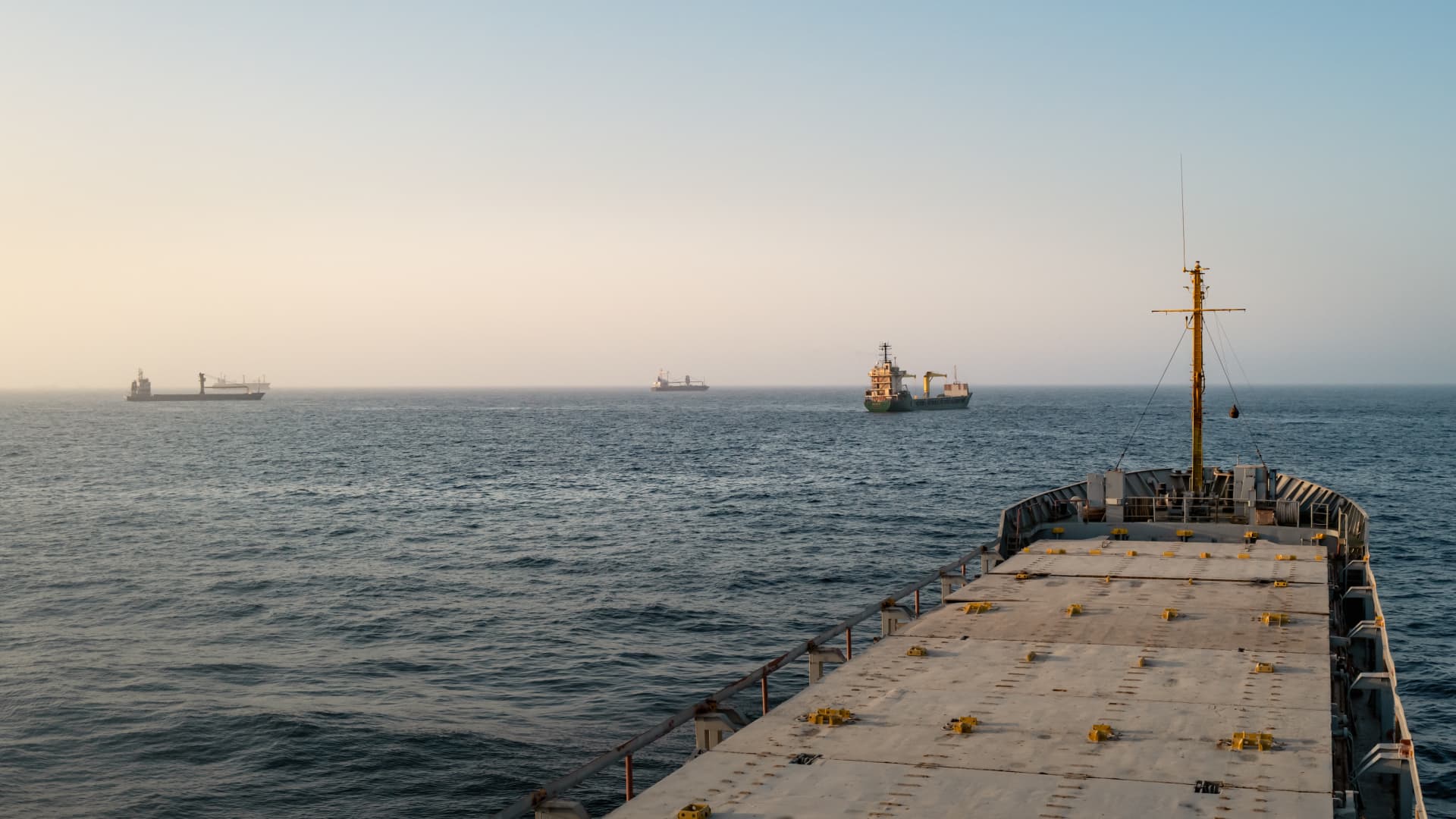
Three Iranian tankers leave Hormuz blockade as oil trade waits on deal
Kpler data showed nearly 5 million barrels of Iranian crude moving out as shipowners weigh a possible reopening of the Strait of Hormuz.
By Priya Nair · Economy Reporter
· 3 min read
Three Iranian-linked tankers carrying nearly 5 million barrels of crude have moved beyond the U.S. Navy blockade around the Strait of Hormuz, according to shipping data from Kpler. For everyday investors, the move matters because Hormuz is a key oil chokepoint, and even a partial reopening could affect crude supply, tanker demand and shipping costs.
Kpler said two supertankers, the Diona and Hero 2, crossed the blockade perimeter with a combined 3.8 million barrels of Iranian crude. Both vessels are owned by the National Iranian Tanker Company and are under U.S. sanctions, according to the U.S. sanctions listing cited by CNBC.
A third Iran-linked tanker carrying 1 million barrels of Iranian crude also left the blockade line Wednesday, Kpler said. CNBC reported that these were the first outbound shipments of this kind in two months.
Why Hormuz is central to the oil story
The Strait of Hormuz is a narrow waterway between the Persian Gulf and the Gulf of Oman. Before the war, about one-fifth of the world’s oil moved through it, according to CNBC.
The strait has been largely shut during the conflict. CNBC reported that the U.S. Navy blockaded Iranian ports, while Iran targeted vessels tied to countries it considered adversaries. That left hundreds of ships stranded and disrupted global energy flows.
The U.S. and Iran signed a memorandum of understanding Monday aimed at ending a nearly four-month war, with a formal signing planned for Friday in Geneva, CNBC reported. A memorandum of understanding is a written framework for an agreement, though it is not the same thing as a final signed pact.
The terms have not been disclosed. Reuters reported that the agreement is expected to reopen the Strait of Hormuz and waive sanctions on Iranian oil sales. The Wall Street Journal reported Tuesday that Washington would permit Tehran to resume sales of oil and fuel once the deal is signed, in exchange for Iranian limits on its nuclear program.
Shipowners move carefully
Michelle Wiese Bockmann, senior maritime intelligence analyst at Windward, said the tanker departures suggest other ships tied to Iranian trade may be getting ready to restart activity.
Some shipowners have begun moving vessels toward Gulf ports in anticipation of restocking demand, CNBC reported. Restocking demand means buyers may need to rebuild fuel and crude inventories after a disruption.
Most operators remain cautious. Lloyd’s List Intelligence said the shipping sector is responding with “wary disbelief” rather than celebration. Its analysts said insurers are keeping war-risk premiums elevated and want solid proof that the route will stay safe. War-risk premiums are extra insurance charges for ships operating in dangerous areas.
Lloyd’s also said some owners of very large crude carriers, known as VLCCs, are positioning ships toward the Middle East Gulf to be early if trade resumes. Windward said dozens of VLCCs were sailing from the South China Sea and across the Indian Ocean toward ports in the United Arab Emirates, where at least 30 ships were already anchored Wednesday.
Traffic is expected to stay limited until the agreement is signed. Tim Wilkins, managing director of tanker association Intertanko, said the U.S. Navy has told the industry that nothing changes until the deal is formally completed.
Kpler estimated that 118 loaded tankers could leave the region within 15 days after signing. The firm said that wave would likely be a one-time release of backed-up ships rather than a sustained return to normal traffic.
Niels Rasmussen, chief shipping analyst at BIMCO, said most shipowners appear to be waiting for more detail before planning fresh Hormuz trips. He said operators want reassurance that passages are permitted and safe before sending vessels through the strait.
This story draws on original reporting from CNBC Economy.