Jobs, housing and Fed flow data crowd Friday’s calendar
December payrolls lead a packed Friday lineup that also includes housing starts, consumer sentiment and the Fed’s Q3 flow of funds data.
By Priya Nair · Economy Reporter
· 2 min read
Investors will get a packed set of U.S. economic updates Friday, led by the December employment report at 8:30 a.m. ET. For everyday investors, the jobs number is the main event because it feeds directly into the market’s read on the economy and the path for interest rates.
Calculated Risk said the consensus forecast calls for 55,000 jobs added in December and for the unemployment rate to fall to 4.5%. A consensus forecast is the market’s baseline expectation before the data lands, so the reaction often depends on how far the actual number comes in above or below that estimate.
The employment report matters because it gives investors a fresh read on labor demand. Payroll growth shows how many jobs employers added, while the unemployment rate measures the share of workers in the labor force who are looking for work and do not have a job. A stronger or weaker reading can change how investors think about consumer spending, company revenue prospects and the Federal Reserve’s next moves.
At 10 a.m. ET, the market will also get housing starts data for September and October, according to Calculated Risk. Housing starts measure the pace of new residential construction, a key signal for homebuilders, building-products companies, mortgage lenders and investors watching housing supply.
The same 10 a.m. slot includes the University of Michigan’s preliminary consumer sentiment index for January, Calculated Risk said. Sentiment readings track how consumers feel about the economy. That matters because consumer spending is a major part of U.S. economic activity, and changes in confidence can color expectations for retailers, restaurants, travel companies and other consumer-facing businesses.
At noon ET, the Federal Reserve is scheduled to release its Q3 Flow of Funds Accounts of the United States, according to Calculated Risk. The report is a broad look at the financial position of households, businesses and other parts of the economy. Investors use it to track balance-sheet trends that can affect borrowing, spending and asset prices.
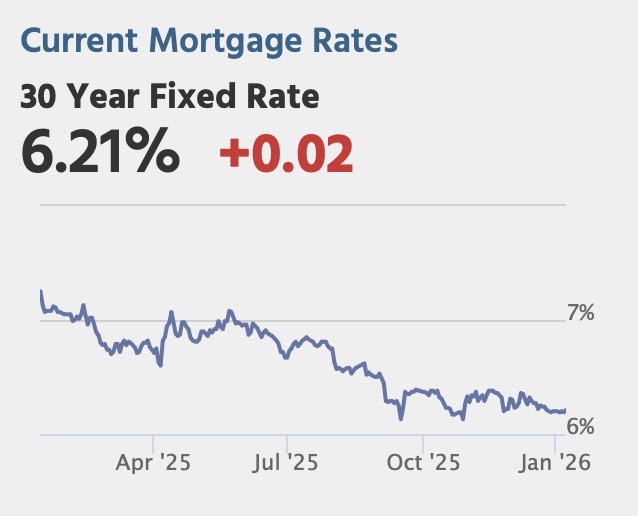
Calculated Risk also noted that mortgage-rate figures shown with its calendar are from Mortgage News Daily and reflect top-tier scenarios. Mortgage rates are a direct pressure point for housing affordability because higher rates raise monthly payments for buyers using loans.
The Friday lineup gives investors a quick cross-section of the economy: jobs, housing, household confidence and financial balances. Each release covers a different part of the same question markets keep asking: how much momentum the U.S. economy carried into the end of 2025 and the start of 2026.
This story draws on original reporting from Calculated Risk.