US trade gap narrowed to $29.4 billion in October
Exports rose and imports fell in October, cutting the US goods and services deficit by $18.8 billion from September, according to federal data.
By Maya Okafor · Markets Writer
· 3 min read
The US trade deficit shrank sharply in October as the country sold more abroad and bought less from overseas. For investors tracking the economy, the move matters because trade flows feed directly into the growth math behind gross domestic product, the broad measure of economic output.
The US Census Bureau and the Bureau of Economic Analysis said the goods and services deficit was $29.4 billion in October. That was $18.8 billion smaller than September’s revised deficit of $48.1 billion.
A trade deficit means imports are larger than exports. In plain English, the US bought more goods and services from the rest of the world than it sold to foreign customers. The size of that gap can swing when companies change orders, consumers shift spending, energy flows move, or policy deadlines affect timing.
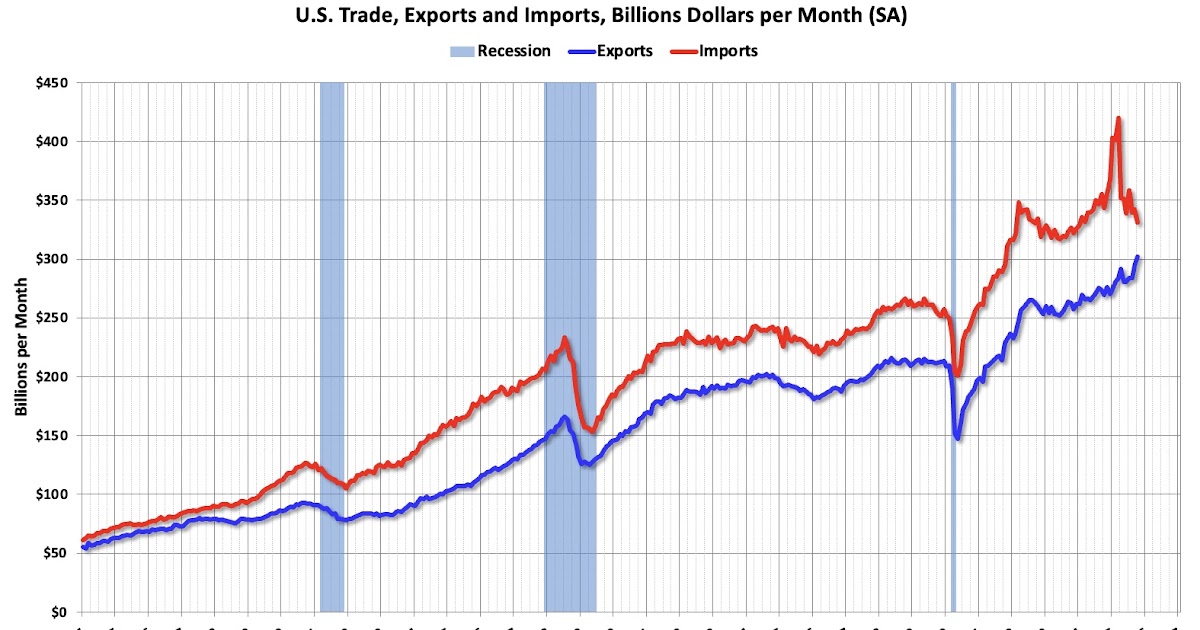
October’s narrowing came from both sides of the ledger, according to the Census Bureau and BEA report. Exports increased to $302.0 billion, up $7.8 billion from September. Imports fell to $331.4 billion, down $11.0 billion from the prior month.
That combination is the cleanest way for the deficit to shrink: more money coming in from exports, less money going out for imports. If only one side moves, the signal can be harder to read. Here, federal data showed exports rising while imports declined.
Exports were higher than a year earlier
Calculated Risk reported that exports were up 12% from a year earlier in October, while imports were down 4% year over year. The blog also noted that imports had climbed sharply earlier in the year as importers moved goods ahead of tariffs.
That tariff timing is useful context for investors looking at monthly trade data. When companies pull imports forward to avoid higher costs, the trade deficit can widen earlier and then narrow later as those shipments fade. Monthly trade reports can therefore reflect timing decisions as well as underlying demand.
The report also separates the total trade balance from petroleum-related trade. Calculated Risk noted that net exports of petroleum products were positive and had been increasing. Net exports means exports minus imports within that category, so a positive figure means the US exported more petroleum products than it imported on a net basis.
China deficit also narrowed
The trade deficit with China declined to $14.9 billion from $28.1 billion a year earlier, according to Calculated Risk. That shows a smaller gap between US imports from China and US exports to China compared with the same month last year.
The October report gives investors another read on how trade, tariffs and global demand are showing up in official data. The headline number was clear: the US trade gap narrowed by nearly $19 billion from September, with stronger exports and weaker imports both contributing to the shift.
This story draws on original reporting from Calculated Risk.