Policy uncertainty is moving together across global markets, study finds
Carlos Medel of the Chilean Central Bank says a shared global factor is driving more policy uncertainty across 28 countries.
By Priya Nair · Economy Reporter
· 3 min read
Global markets may be acting less local than investors expected. A working paper by Carlos Medel of the Chilean Central Bank finds that economic policy uncertainty across 28 countries has become more synchronized, meaning national policy worries are increasingly moving in the same direction at the same time.
For everyday investors, that matters because global diversification can feel less diversifying when the same policy shock is hitting multiple markets at once. Economic policy uncertainty refers to doubt around government decisions, such as trade rules, regulation, fiscal policy or other public-policy choices that can affect companies and consumers.
Medel’s analysis calculates a “common global factor” for economic policy uncertainty. In plain English, that means he separated the part of each country’s policy uncertainty that appears to come from a shared worldwide driver, rather than from domestic politics or local economic conditions alone.
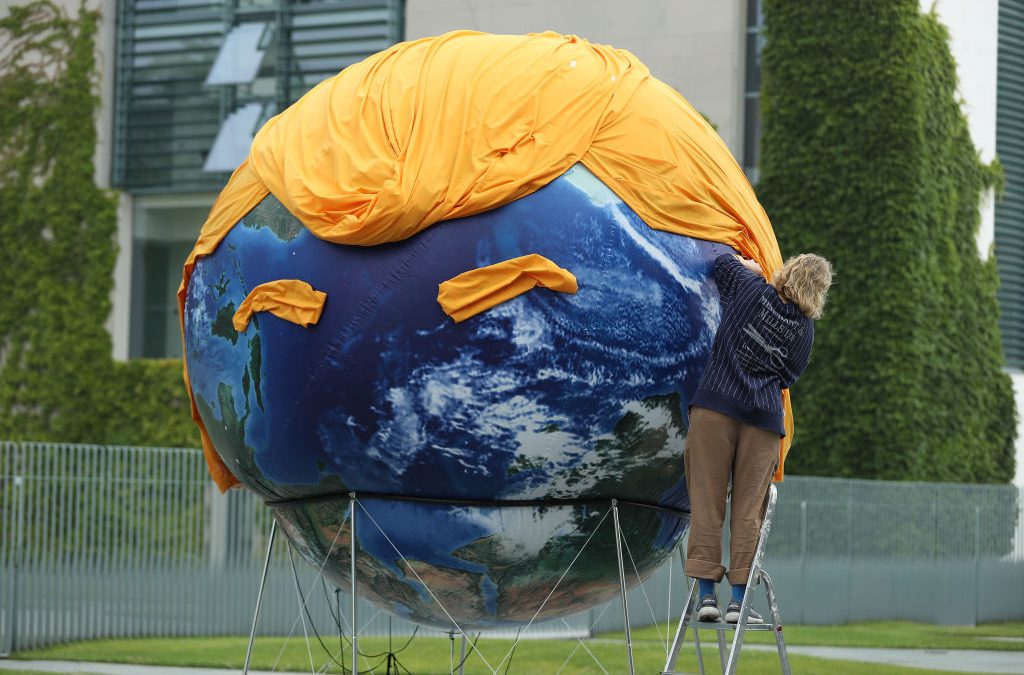
The finding runs against a simple deglobalization story. Recent years have given investors plenty of reasons to expect economies and markets to pull apart: the aftermath of the global financial crisis, the pandemic, uneven lockdown policies, supply-chain disruptions and the trade war started by the Trump administration.
Yet Medel’s work shows that the shared component of policy uncertainty has risen, according to the analysis. The increase took place in late 2024 and early 2025, with the latest peak occurring around March and April 2025.
Global and local forces are both in play
The debate over whether stock markets are mostly global or local has been around for decades. Klement on Investing has previously argued that local models have often been enough for forecasting stock markets, with global variables adding little to the exercise.
The same commentary has also noted that local and global stock-market cycles have shown little long-run correlation, while becoming more aligned during the post-2000 globalization period. That alignment has not moved in a straight line.
After the financial crisis, synchronization weakened because the United States and China recovered more strongly than Europe, according to the commentary. During and after the pandemic, countries also diverged as governments used different lockdown policies and faced different supply-chain problems.
The current finding from Medel points in the other direction for policy uncertainty. Even in a period marked by trade conflict and more domestic-focused policy debates, the data suggest a global influence is again pulling national uncertainty measures together.
What the mechanism means
If one global factor explains more of each country’s policy uncertainty, a shock in one major economy can show up in investor expectations elsewhere. That does not mean every stock market will perform the same way, or that local news stops mattering.
It does mean investors watching international equities may need to separate company fundamentals from the policy backdrop. A tariff fight, regulatory shift or geopolitical policy move can affect earnings expectations through costs, supply chains, currencies and consumer demand, even when the company is listed in another country.
Medel’s paper does not provide a stock-market forecast in the material cited. It shows a stronger common pattern in economic policy uncertainty across the 28-country sample, with the most recent upswing concentrated around late 2024 and early 2025.
This story draws on original reporting from Klement on Investing.