Apple weighs PrismML tech to run bigger AI models on iPhones
PrismML says its compression can make large AI models small enough for recent iPhones, a potential boost for Apple’s privacy-focused Siri plans.
By Jordan Bell · Startups & Deals Reporter
· 4 min read
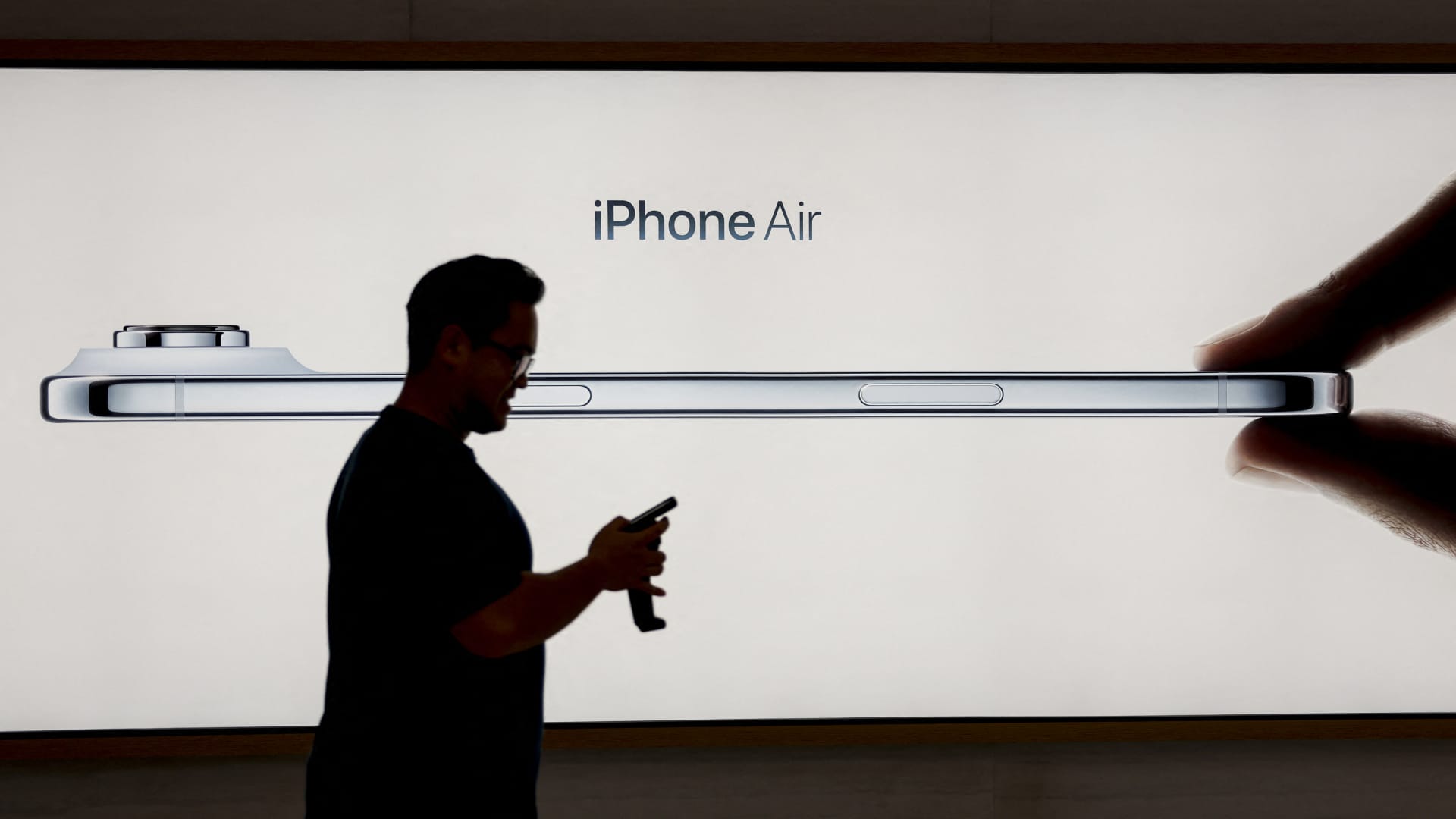
Apple is reviewing technology from PrismML, a Silicon Valley startup that says it can squeeze advanced artificial intelligence models onto an iPhone, PrismML CEO Babak Hassibi told CNBC. For everyday investors, the pitch goes straight to Apple’s AI problem: better assistants usually need more memory, more chips and more cloud computing than a phone can comfortably handle.
PrismML, a spinout from the California Institute of Technology backed by Khosla Ventures, released compressed versions of Alibaba’s open-source Qwen model on Tuesday. The company said it cut the model from about 54 GB to under 4 GB, enough for all 27 billion parameters to run on an iPhone 15 or newer. Parameters are the internal values an AI model uses to process prompts and generate answers.
Hassibi told CNBC that Apple and other companies are testing PrismML’s models for speed, energy use and device performance. He said the Apple discussions are early and the outcome is not clear.
The timing matters for Apple’s broader AI push. CNBC reported that Apple opened the public beta of iOS 27 a day earlier, giving iPhone users wider access to its delayed Siri overhaul. Apple is trying to improve Siri against assistants from OpenAI and Anthropic while keeping more data processing on the device, rather than sending requests to remote servers.
Running AI on the phone can cut response delays, reduce cloud costs, preserve privacy and keep some features working offline. The challenge is that stronger models tend to demand more memory and computing power than smartphones can provide.
How PrismML says the compression works
PrismML says it reduces memory needs by changing how model information is stored. Instead of using 16 bits for each value, its system reduces values to one or three possible states. Hassibi compared the idea to the chip industry’s shift from eight-bit to four-bit computing, taken further.
The startup says its compressed models use 10 to 15 times less memory, answer six to eight times faster and use three to six times less energy than conventional versions on current hardware. Hassibi told CNBC there is a cost: the models tend to lose a few percentage points of overall performance, with factual recall weakening before reasoning, math and coding.
PrismML is making two compressed models available for free for devices including iPhones, MacBooks and Nvidia-powered PCs. Caltech owns the related patents and licenses them exclusively to PrismML, according to CNBC. The company raised a $16.25 million seed round in March from Khosla Ventures and other investors.
What analysts are watching
Carolina Milanesi, president and principal analyst at Creative Strategies, told CNBC that smaller models could help Apple move more advanced work onto the iPhone, including computational photography, video generation and health or fitness features that use sensitive personal information.
Horace Dediu, founder of Asymco, said Apple likely wants most common Siri requests to stay on-device, while sending harder tasks to the cloud. He said local processing can bring lower latency, better privacy and lower licensing and cloud expenses.
Analysts also warned that lab results are not the same as mass-market performance. Tarun Pathak, research director at Counterpoint Research, told CNBC that long prompts, battery drain during multitasking and reliability across many devices will be key tests. Phil Solis of IDC said power use may be the biggest open question if AI features run often or in the background.
The chip-market angle is bigger than Apple. Morgan Stanley estimates Apple’s average dynamic random access memory cost per bit could rise about 190% year over year in fiscal 2027, while NAND costs could rise about 180%. DRAM is working memory, while NAND is storage used in flash drives and solid-state drives.
PrismML says its method could let a cloud model that usually needs eight GPUs run on one. A GPU is a processor often used for AI workloads. Gil Luria of D.A. Davidson told CNBC that compression would not remove the need for chips or memory, but could shift more demand from data centers into phones and other devices.
This story draws on original reporting from CNBC.


