T. rex fossil Gus sells for record $50.1 million at Sotheby’s
The 67-million-year-old specimen topped its estimate and became the priciest dinosaur fossil ever sold at auction, according to Sotheby’s.
By Jordan Bell · Startups & Deals Reporter
· 3 min read
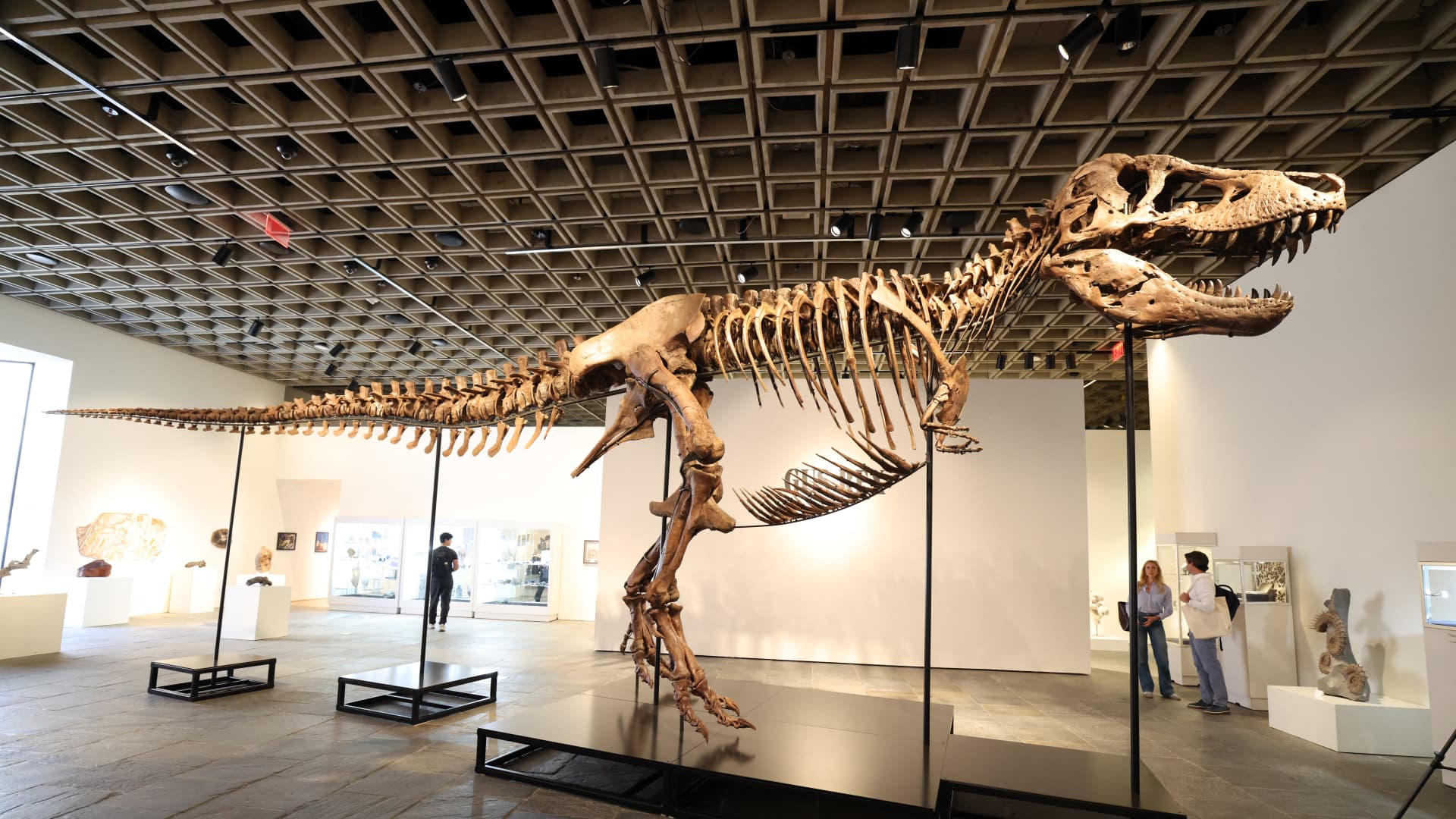
A Tyrannosaurus rex fossil named Gus sold for $50.1 million at Sotheby’s, setting a new auction record for a dinosaur. For investors who track collectibles, the sale shows how far trophy fossils have moved into the same conversation as art, cars and other scarce assets.
Sotheby’s said the T. rex drew a 10-minute contest among seven bidders and finished well above its $20 million to $30 million estimate. The result passed the previous dinosaur auction record: $44.6 million for a Stegosaurus skeleton called Apex, which Sotheby’s sold in 2024 to billionaire hedge fund founder Ken Griffin.
Gus was found on private land in South Dakota and is about 67 million years old, according to Sotheby’s. The auction house described the specimen as one of the most complete dinosaur fossils ever discovered.
By bone count, Gus is about 61% complete and includes 183 fossil bone elements, Sotheby’s said. The mounted skeleton is about 38 feet long and 12.5 feet tall, with a skull measuring 54 inches, making it one of the largest known T. rex fossils, according to the auction house.
Why the fossil market is getting attention
Dinosaur fossils sit in a niche corner of the collectibles market, where prices can depend on rarity, size, condition, provenance and the appetite of very wealthy buyers. A public auction record matters because it gives the market a fresh reference point, even if each fossil is unique and difficult to compare directly.
Sotheby’s framed Gus as an unusually complete and well-preserved specimen. Cassandra Hatton, Sotheby’s vice chairman and worldwide head of science and natural history, said Gus was “not only an exceptional find” but also a specimen that had been “excavated, documented, prepared and cared for with real excellence.”
The fossil also carries signs of the animal’s life. Sotheby’s said Gus showed several injuries, including broken bones that had healed in multiple ribs and gastralia, which are belly ribs, as well as bite marks on several skull bones.
The sale follows other high-profile dinosaur auctions. Christie’s sold a T. rex named Stan for $31.8 million in 2020. Sotheby’s 2024 sale of Apex, the Stegosaurus skeleton bought by Griffin, then pushed the record higher before Gus surpassed it.
Scarce asset, limited safeguards
CNBC reported that dinosaur fossils have become one of the fastest-growing areas of the collectibles market, as wealthy buyers look for rare assets that may hold long-term value and auction houses expand beyond traditional art sales.
That growth comes with concerns. Paleontologists and other experts have warned that the fossil trade has limited safeguards around authenticity and verification, according to CNBC. Those concerns matter because the market combines scientific material with private ownership and high-dollar sales.
The $50.1 million price does not make dinosaur fossils a standard investment category. It does show that top-tier natural history objects can command prices comparable to major works of art when rarity, display value and buyer competition line up in the auction room.
This story draws on original reporting from CNBC.


