Zipline hires Tesla, Waymo and Uber veterans as drone delivery expands
The startup says it has topped 2.5 million commercial deliveries and is adding senior leaders as U.S. volume accelerates.
By Dev Ramirez · Crypto Correspondent
· 3 min read
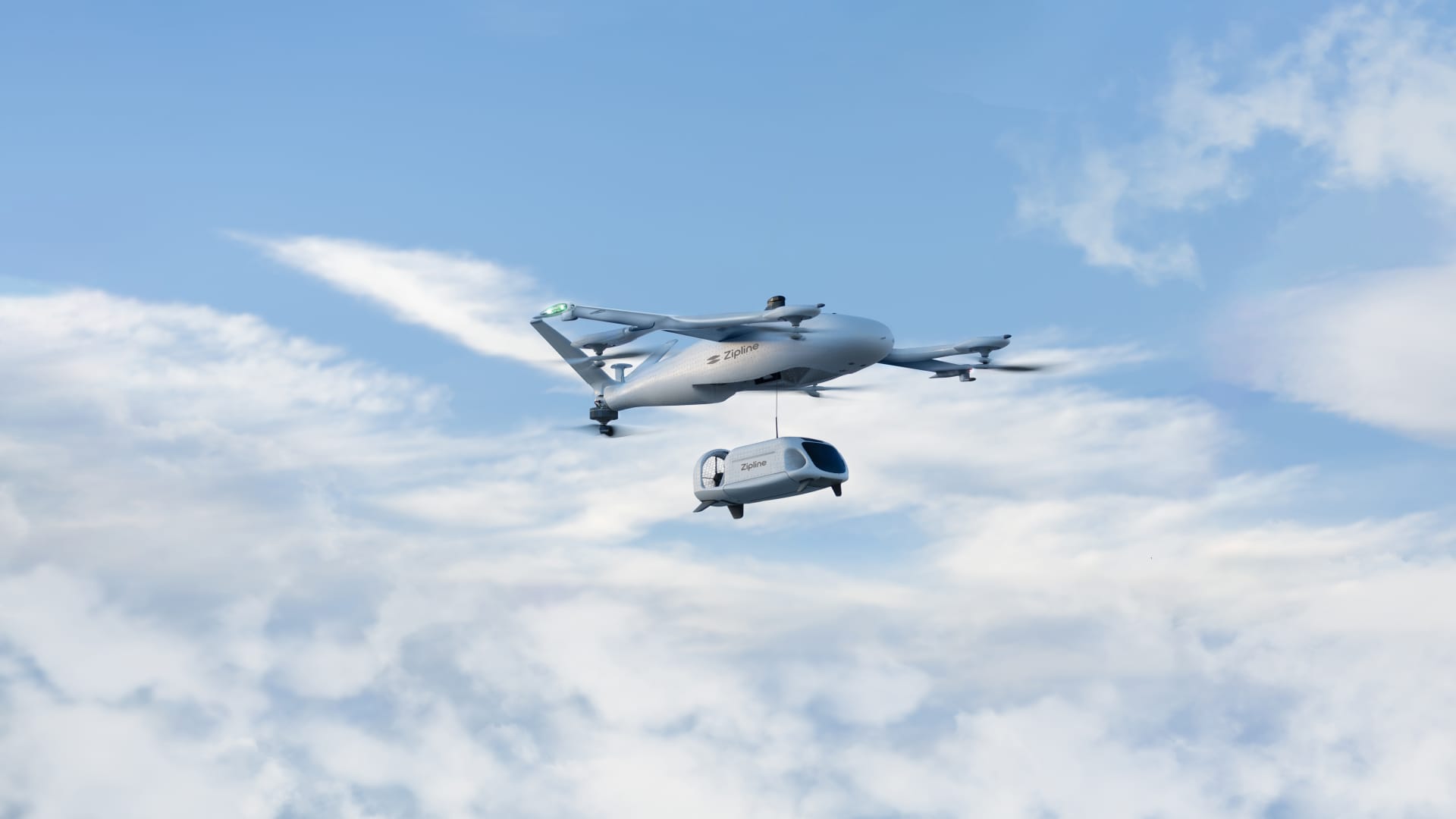
Zipline is adding senior leaders from Tesla, Waymo and Uber as it pushes drone delivery into more U.S. cities. For retail investors watching logistics, retail and autonomous tech, the move points to a private company trying to turn drone drop-offs into a repeatable delivery system, not a one-city trial.
The South San Francisco startup said its fully electric, autonomous drones have completed more than 2.5 million commercial deliveries since the company began about 12 years ago. CEO and co-founder Keller Rinaudo told CNBC that Zipline is now making about one delivery every 20 seconds, compared with roughly one per minute in early 2025.
Zipline’s drones carry packages weighing up to 8 pounds. Customers usually place orders through Zipline’s app, and the drones have delivered medical supplies, including vaccines, blood and anti-venom, along with food orders such as burritos and personal pizzas, according to CNBC.
New executives join as Zipline expands
Sendil Palani, a former Tesla vice president of finance, is joining Zipline this month as chief financial officer. CNBC reported that Palani spent about 17 years at Tesla, where he worked as the electric vehicle maker grew from low-volume production toward mass manufacturing.
Palani told CNBC he sees similarities between Zipline and Tesla, including precision manufacturing and the need to maintain charging infrastructure. Zipline’s South San Francisco factory can produce 24,000 drones a year, according to CNBC.
Zipline is also hiring Kevin Vosen as chief legal officer. Vosen previously worked at Ohalo, an agricultural biotech company, and spent seven years as chief legal officer at Waymo, Alphabet’s autonomous vehicle unit, CNBC reported.
Allen Penn, a former Uber Eats vice president, is joining as head of commercialization and markets. CNBC reported that Penn helped build Uber’s food delivery business and its international ride-hailing operations.
From medical deliveries to U.S. retail networks
Zipline first became known for medical and humanitarian deliveries in Rwanda and Ghana. Rinaudo told CNBC that its Africa business is still growing, including development deals and expansion tied in part to the U.S. State Department.
The company’s U.S. business is now driving most daily volume. Zipline said about 70% of its daily deliveries happen in the U.S., and one million of its total deliveries occurred during the past 12 months.
Its current U.S. partners include Little Caesars, Chipotle, Cleveland Clinic, Walmart and more than 100 small businesses, according to CNBC. In the Cleveland area, Zipline plans this month to start a home health care delivery service with Cleveland Clinic that sends prescriptions to patients’ homes at no added cost at launch.
Zipline gained traction in Dallas last year, where Rinaudo said some orders have arrived in about five minutes. The company is preparing to begin operations in Austin, Houston and Cleveland, though it has not disclosed the next U.S. markets.
Rinaudo told CNBC he expects Zipline’s U.S. business to grow 15 times this year, with expansion into many additional U.S. metro areas and large international markets in 2027.
The company still faces competition. CNBC named Alphabet’s Wing, startups including Flytrex and Matternet, and companies developing cargo drones for military use as rivals or adjacent players. PwC researchers have estimated that the U.S. drone market will grow 65% annually from 2024 through 2034, with delivery volume rising from about 13 million this year to more than 800 million in 2034.
This story draws on original reporting from CNBC.


