Doximity stock surge follows earnings beat, AI-search claims and short covering
Doximity shares more than doubled in premarket trading after earnings, a higher outlook and management’s AI-search economics claim.
By Theo Nakamura · Staff Writer
· 3 min read
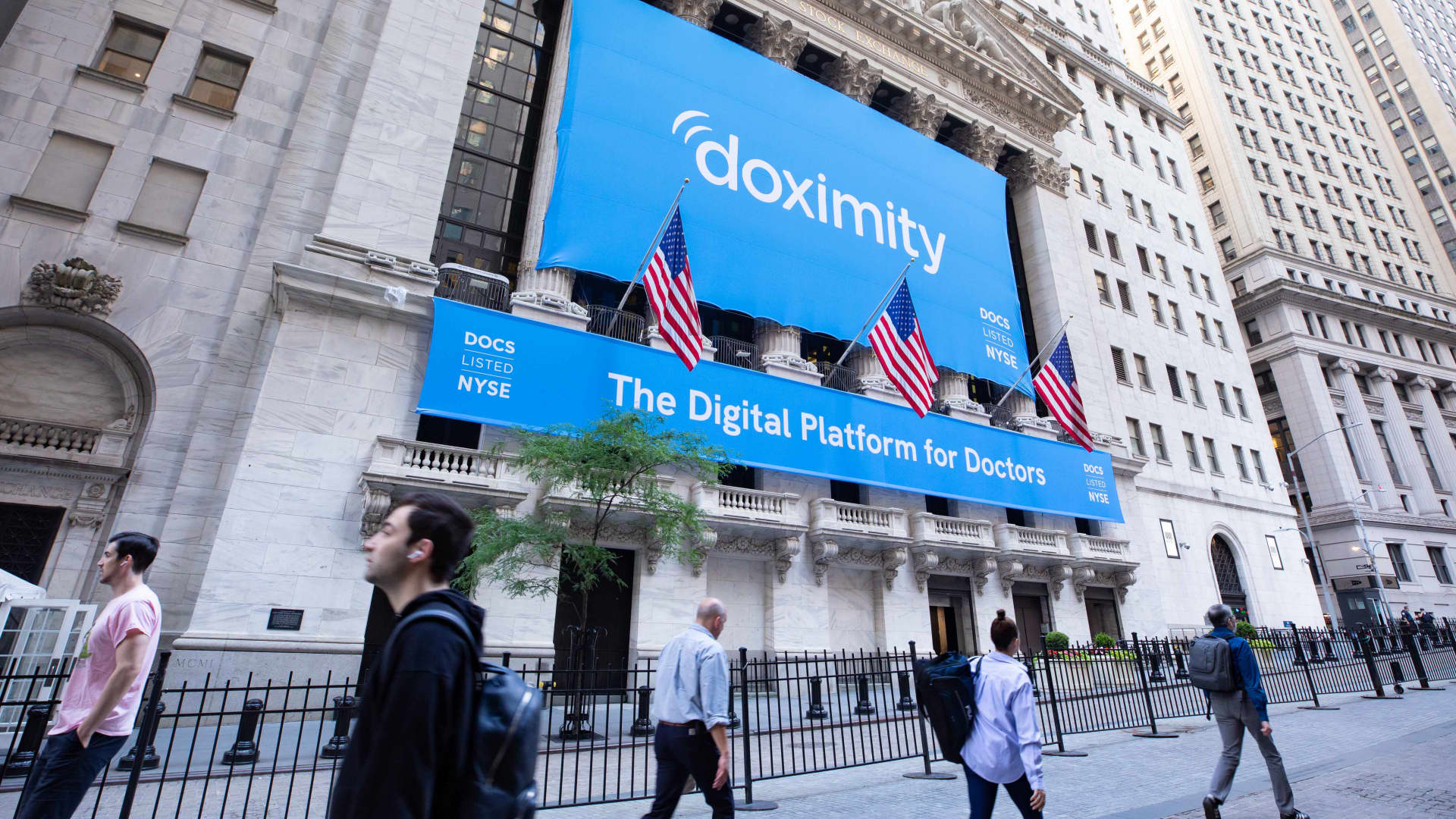
The Doximity stock surge took shares of the digital platform for medical professionals up more than 130% in premarket trading Friday, before the gain eased to 78%, CNBC reported. The move followed better-than-expected quarterly results and a higher revenue outlook, but investors also focused on management’s claims about the early economics of its AI search tool.
For everyday investors, the distinction matters: Doximity reported concrete quarterly numbers, while the potential payoff from AI search remains a company projection that analysts believe is not yet fully included in its forecast.
Doximity reported fiscal 2027 first-quarter revenue of $156.6 million, up 7% from a year earlier, according to its earnings release distributed by Business Wire. It also reported net income of $24.3 million and adjusted EBITDA of $74.8 million. CNBC said revenue and adjusted EBITDA exceeded Wall Street consensus estimates.
The company lifted its fiscal-year revenue outlook by $6 million, or 5%, to a range of $671 million to $681 million, CNBC reported. The quarter covered the period ended June 30, 2026, and results were released after the market closed Aug. 6, according to Doximity’s investor-relations announcement.
Why did Doximity stock surge after earnings?
Chief Executive Jeffrey Tangney told investors on the company’s earnings call that Doximity’s AI search product was generating more than 10 times as much revenue per search as it cost to operate. He also said the operating cost could fall over time as AI models become more efficient.
That is a management assertion, rather than independently verified profitability data. Still, it caught the market’s attention because it suggested a potentially profitable new product category beyond the guidance increase.
Jessica Tassan, an analyst at Piper Sandler, wrote that Doximity’s updated fiscal 2027 forecast did not include a meaningful contribution from the expanding AI commercial pipeline. She characterized management’s outlook for AI-search revenue as conservative. Tangney also said the product had revealed more addressable opportunity in health care and pharmaceuticals than the company had expected.
Michael Cherney of Leerink Partners said the AI-search development supported confidence that Doximity’s increased AI spending could lead to attractive longer-term margins, CNBC reported.
How short selling can intensify a rally
The speed of the premarket move may also reflect stock-market mechanics. FactSet data cited by CNBC showed that about 17% of Doximity shares available for trading had been sold short before the earnings release.
A short seller borrows shares and sells them, expecting to buy them back later at a lower price. When a stock rises sharply, short sellers may buy shares to close those positions. That buying can add demand during an already fast rally. CNBC said short-position unwinds likely added fuel to Doximity’s advance.
Doximity describes itself as a U.S. medical-professional platform and says its network includes more than 85% of U.S. physicians, a company claim. Before Friday’s reaction, CNBC reported that the company had a market value of about $3.7 billion and its shares had fallen 50% for the year.
The extreme move occurred before regular trading began, when trading can be thinner and price swings can be wider. It followed the results and AI-search comments, while short covering likely amplified the rally.
This story draws on original reporting from CNBC.


