Verizon shares fall 8.75% after SpaceX spectrum deal announcement
Verizon, AT&T and T-Mobile sold off after SpaceX announced a spectrum agreement, though FCC review and a network buildout remain ahead.
By Dev Ramirez · Crypto Correspondent
· 2 min read
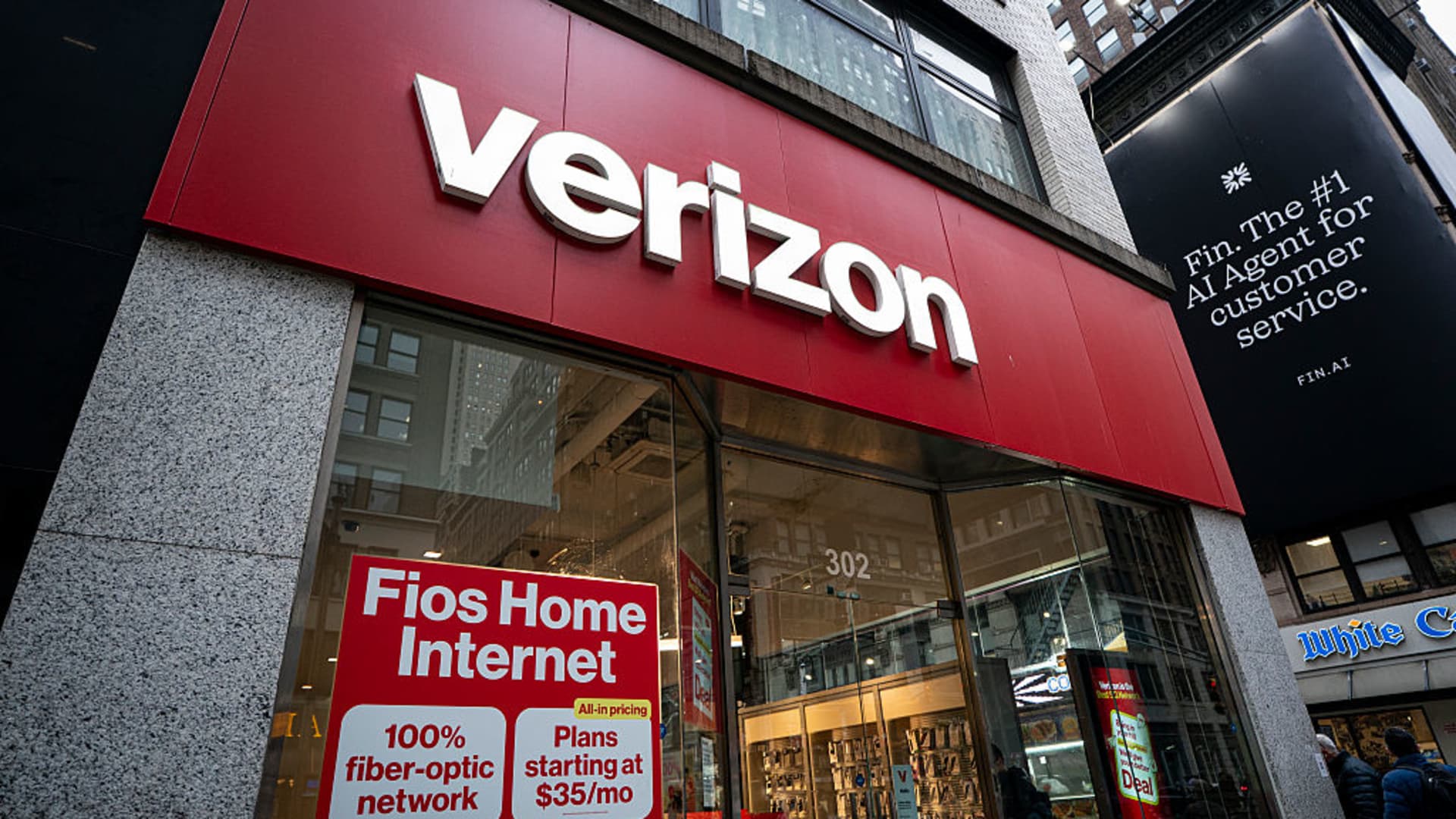
Verizon shares fell 8.75% Friday after SpaceX announced an agreement to acquire a nationwide spectrum portfolio, a move aimed at expanding Starlink into mobile service. The Verizon SpaceX spectrum deal also hit AT&T and T-Mobile, showing how quickly investors reassessed the prospect of another U.S. wireless competitor.
According to CNBC, Verizon recorded its worst day since July 2002. T-Mobile dropped 13.27%, its steepest decline since 2013, while AT&T fell 9.81%, its worst session since 2000.
The market move followed SpaceX's announcement that it had reached an agreement to buy spectrum from Grain Management. SpaceX described the assets as a license portfolio of up to 14 megahertz of paired spectrum in the 800 MHz band. The agreement is not a completed acquisition or a launched mobile network.
Why did Verizon, AT&T and T-Mobile shares fall after SpaceX's deal?
CNBC reported that the selloff came as SpaceX set out to extend Starlink's internet offering into mobile service. For investors, the announcement gave the company a reported spectrum foothold alongside its existing satellite operations, raising questions about how competition could develop in U.S. wireless service over time.
That longer-term possibility is distinct from an immediate change in service. FCC Chair Brendan Carr told CNBC that the agency will oversee approval of the transaction. Carr said more competition in the spectrum market was good for American consumers, while adding that the FCC would not choose market winners and losers.
Carr also said he expected more than $100 billion of spectrum to enter the market over the following two years, according to CNBC. His comments were policy context, not an indication that the SpaceX transaction has received approval.
What still has to happen before SpaceX can expand Starlink Mobile?
Regulatory review is one hurdle. Building a competitive terrestrial network is another. JPMorgan analysts said the transaction made Starlink Mobile's long-term opportunity more credible, but they saw limited near-term risk for established U.S. wireless carriers because such a network would require time, infrastructure and capital.
Evercore ISI analysts took a more optimistic view of SpaceX's position, saying the acquisition gave the company the outline of a network when combined with its satellite capabilities. Both assessments are analyst opinions rather than evidence of a completed network or a specific launch timetable.
For now, the confirmed development is the announced agreement for Grain Management's portfolio, subject to FCC oversight. Friday's sharp declines reflected investor concern about future competition, while the regulatory process and the practical work of building out service remain unresolved.
This story draws on original reporting from CNBC.


