Emergent becomes India’s second AI unicorn in a month
The Bengaluru startup raised $300 million at a $1.5 billion valuation, adding momentum to India’s still-developing AI sector.
By Maya Okafor · Markets Writer
· 4 min read
India has produced its second artificial intelligence unicorn in a month, a fresh sign that investors are paying closer attention to the country’s AI startup scene. For retail investors tracking the global AI buildout, the deal matters because it points to where venture capital sees software growth beyond the U.S. and China.
Bengaluru-based Emergent said Wednesday it raised $300 million in a Series C funding round that valued the company at $1.5 billion. A unicorn is a privately held startup worth at least $1 billion.
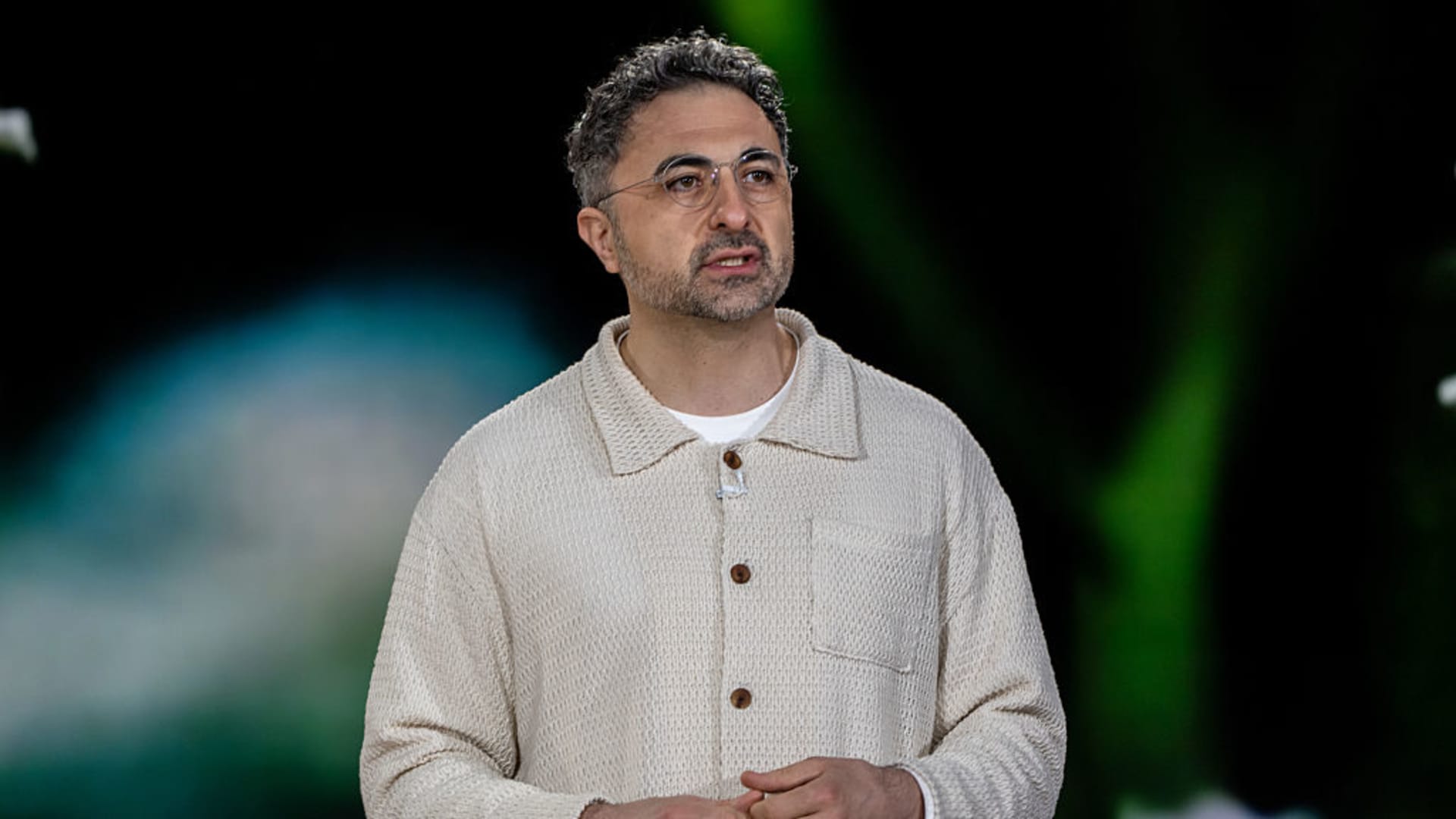
Emergent, launched a year ago, builds tools for so-called vibe coding, a form of AI-assisted software creation aimed at users who are not traditional programmers. Co-founder and CEO Mukund Jha said the company was built for non-technical entrepreneurs and small business owners, and that 70% of its users had no prior coding experience.
The company said about 12 million apps were built on its platform over the past year by small business owners and solo entrepreneurs.
Who backed the round
Bengaluru investment firm Creaegis led the financing, according to Emergent’s release. Claypond, an Indian family office firm, and Sentinel Global, a California-based fund, also joined the round.
Existing investors Khosla Ventures, SoftBank Vision Fund 2, Lightspeed and Y Combinator participated as well.
Emergent’s new valuation follows Sarvam, an Indian full-stack sovereign AI company, reaching a $1.5 billion post-money valuation after a funding round announced one month earlier. Post-money valuation means a company’s estimated value after new investment is added.
Why India’s AI moment is complicated
India is still widely viewed as behind the leading AI powers in key parts of the stack. CNBC reported that the country does not yet make cutting-edge chips domestically, lacks a frontier-scale foundation model comparable with top U.S. or Chinese systems, and has less data center capacity than AI leaders.
A foundation model is a large AI system trained on broad data that other applications can build on. India’s near-term opportunity, according to CNBC’s reporting, is to create application layers on top of foreign foundation models rather than lead every part of the AI supply chain.
That approach has limits. CNBC reported that access to foreign foundation models remains a risk as governments increasingly treat AI as strategically important technology.
Still, analysts cited signs of faster adoption. Deepika Giri, head of research for AI, analytics and data at IDC Asia Pacific, told CNBC that the latest funding rounds fit broader momentum IDC is tracking, including that nearly half of Indian enterprises are testing agentic AI solutions. Agentic AI refers to systems designed to carry out multi-step tasks with less direct human input.
IDC also expects 45% of Indian organizations to use specialized cloud services by 2026 to access computing power, according to CNBC. Compute is the processing capacity needed to train and run AI models, and limited access can slow AI development.
IDC said India has a broad AI accelerator stack across Nvidia, AMD and hyperscaler silicon, according to CNBC. AI accelerators are chips used to speed up AI workloads, while hyperscaler silicon refers to custom chips built by large cloud companies.
Analysts urge caution
Mohammad Hassan, head of APAC dividend forecasting at S&P Global Market Intelligence, told CNBC that Sarvam’s fundraising showed confidence in India’s ability to build intellectual property in indigenous and multilingual AI. He said Emergent’s round underscored the country’s technology talent, but called the developments positive signals rather than evidence of a major shift.
Neil Shah, vice president of research at Counterpoint Research, told CNBC’s “Inside India” that India’s AI ecosystem may need at least three to four years to reach a stage where growth reinforces itself.
Prime Minister Narendra Modi said at a global AI summit in February that he wants India to rank among the world’s top three AI superpowers, CNBC reported. The latest funding rounds give that ambition more investor attention, even as the country still has major infrastructure and model-access gaps to close.
This story draws on original reporting from CNBC.