Fortinet taps Intel foundry for its next security chip
The deal gives Intel CEO Lip-Bu Tan a named outside customer as the chipmaker tries to prove its foundry business can win more work.
By Theo Nakamura · Staff Writer
· 3 min read
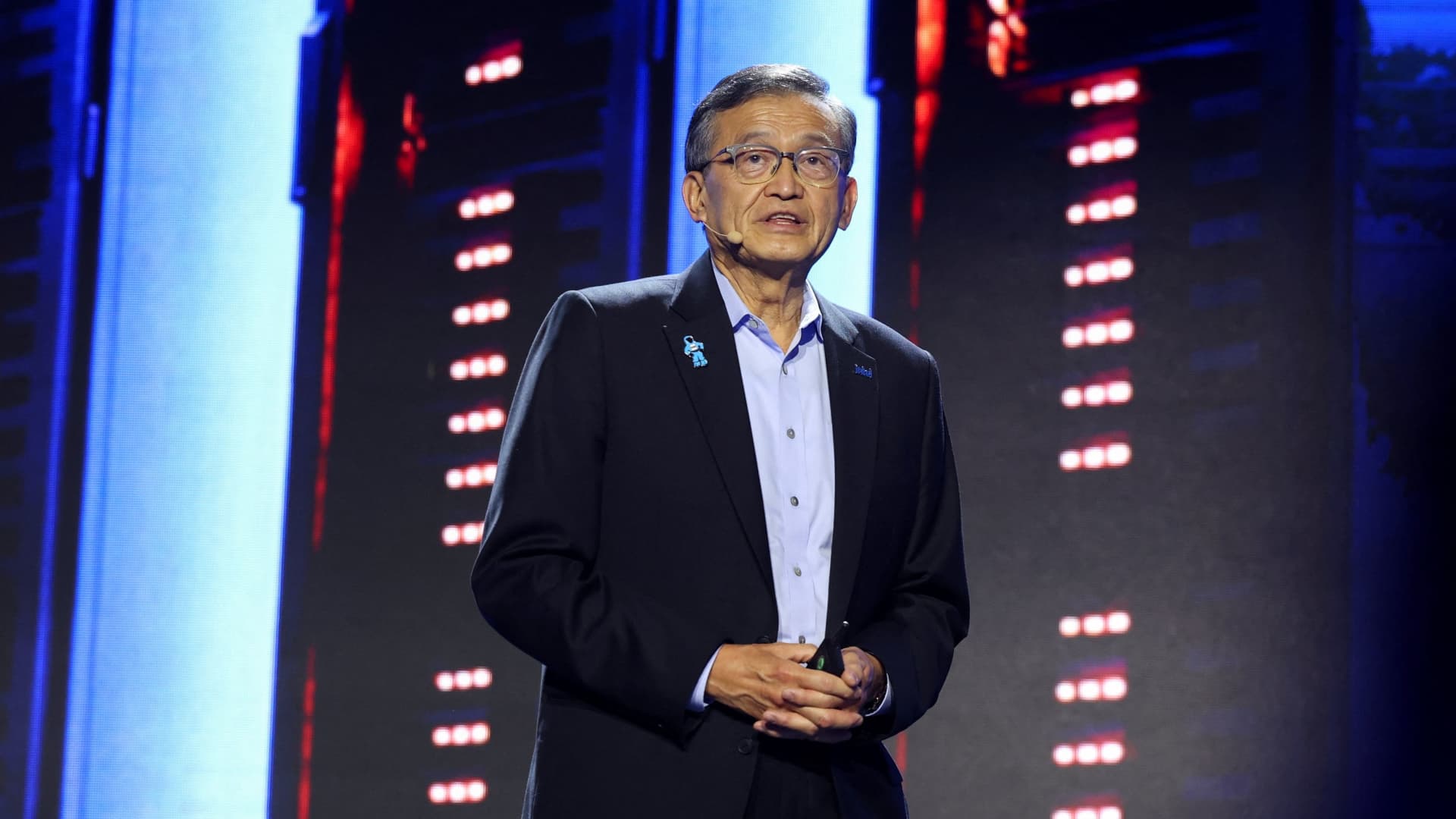
Intel has secured Fortinet as a named customer for its contract chipmaking business, giving investors a concrete example of outside demand for a unit that Intel is trying to turn into a major growth engine. The companies said Tuesday that Fortinet will use Intel’s foundry services to make its next-generation security chip.
A foundry makes chips designed by other companies. That model is central to Intel’s turnaround plan because building advanced chip factories requires heavy spending, and outside customers can help spread those costs beyond Intel’s own processor business.
Fortinet’s chip, called SP6, will be manufactured using Intel 4 technology, an Intel representative told CNBC. Intel 4 is not Intel’s newest manufacturing process. CNBC reported that Intel’s more advanced processes for computer processors are called 14A and 18A, while Intel 4 is older technology used for less complex chips such as application-specific integrated circuits, or ASICs, for networking.
An ASIC is a chip built for a narrow job instead of general computing. For Fortinet, that means silicon designed around security and networking tasks, an area the company has continued to invest in, according to comments on its May earnings call cited by CNBC.
CNBC reported that Fortinet is the first announced corporate foundry customer under Intel CEO Lip-Bu Tan, who took over in March 2025. Tan told CNBC’s Jim Cramer in May that “multiple customers” were working with Intel’s foundry, while also saying his personal policy is not to disclose customer names.
The Fortinet announcement does not answer the biggest question around Intel’s manufacturing ambitions: whether the company can win a major customer for its most advanced technology. Intel said in an April filing that it was still seeking a “significant” customer for its leading manufacturing process as it works to support the high cost of building factories in the U.S. and abroad.
Intel’s largest confirmed foundry customer remains Intel itself, according to CNBC. The U.S. government is also using Intel’s foundry to make defense chips. Under former CEO Pat Gelsinger, Microsoft announced in 2024 that it would work with Intel to manufacture an unspecified processor, and Amazon later said it would use Intel to build a custom artificial intelligence chip. CNBC reported that those deals involved relatively low-volume chips.
Intel has also announced other chip-related relationships. In April, the company said it would help Google design an ASIC called an infrastructure processing unit. CNBC also reported that Intel is helping Tesla and SpaceX build a chip factory called Terafab. President Donald Trump said in June that Apple would use Intel to make chips in the U.S., though CNBC noted that neither Apple nor Intel has officially confirmed such a deal.
For Fortinet, the deal comes as cybersecurity demand remains tied to companies’ need to protect networks and AI-heavy systems. CNBC reported that Fortinet’s stock has more than doubled this year. Intel’s shares have risen more than 300% over the past year after the U.S. government took a 10% stake in the company, CNBC reported.
Intel is scheduled to report second-quarter results after the market closes Thursday.
This story draws on original reporting from CNBC.