Grocery shoppers are buying less, putting food stocks under pressure
Bain data shows grocery unit sales fell in June as higher prices pushed shoppers toward cheaper brands, deals and smaller baskets.
By Jordan Bell · Startups & Deals Reporter
· 3 min read
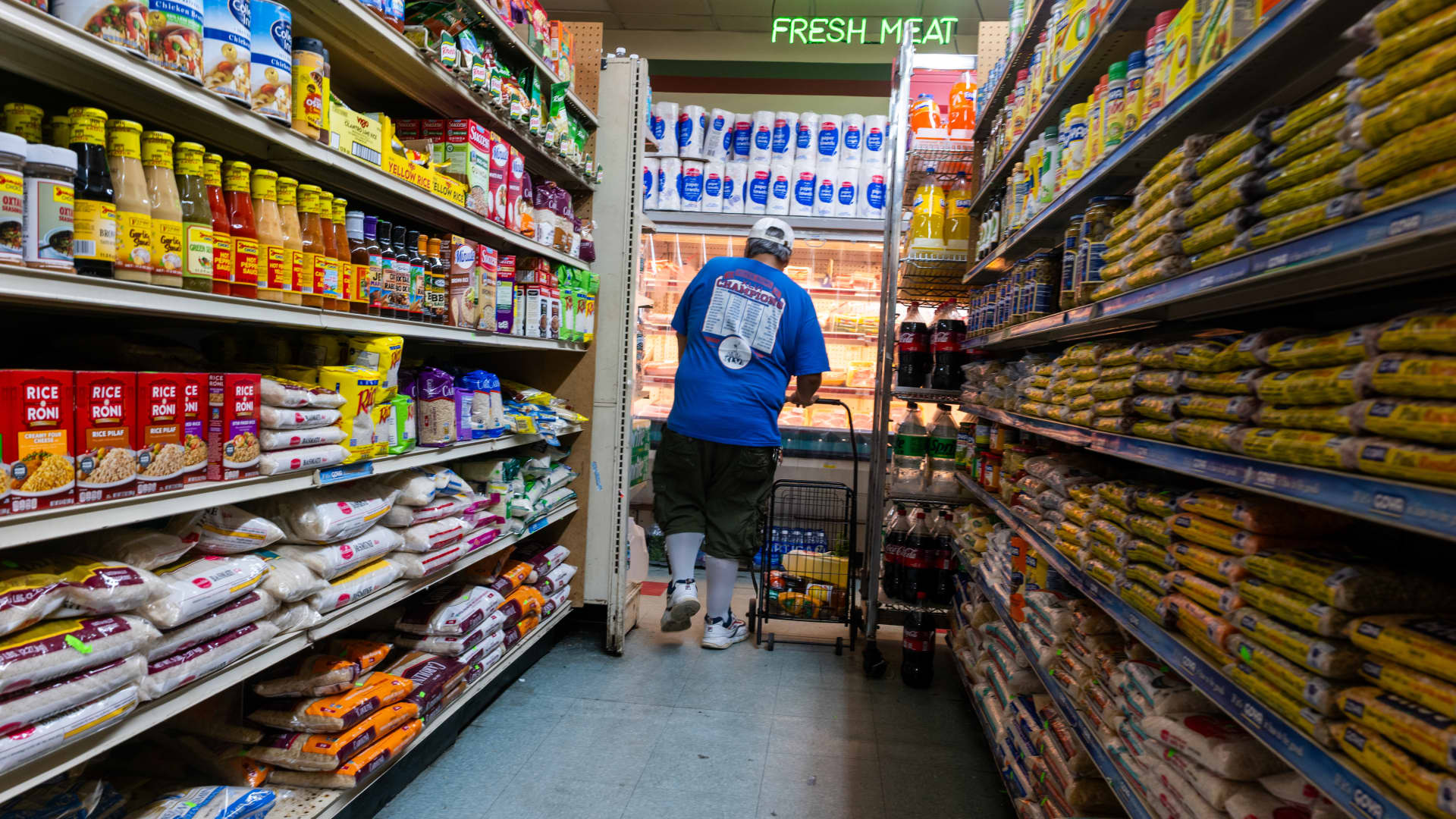
Americans are putting fewer items in their grocery carts, and that shift is starting to matter for food companies investors watch. New Bain & Company analysis of NielsenIQ grocery data found that falling unit sales are now more than offsetting price increases, which means the industry can no longer rely on inflation alone to lift revenue.
Grocery units, meaning the number of individual products sold, dropped 1.8% in June from a year earlier, according to Bain. That marked a reversal from June 2025, when unit sales rose 0.1% year over year.
Food prices are still rising about 2% to 3% from last year, Bain said. In recent years, higher prices helped grocers and packaged-food companies report bigger dollar sales even when shoppers bought less. Bain’s latest data suggests that cushion is getting thinner as consumers cut back more aggressively.
Kurt Grichel, head of Bain’s Americas retail practice, said a grocery trip that cost $300 in 2019 now costs about $400. He told CNBC that the dollar increase is large enough for even higher-income shoppers to feel sticker shock and compare prices more closely.
Shoppers trade down and hunt for deals
The pressure on household budgets comes from several places, according to Bain. Grocery prices are roughly 33% higher than in 2019, based on Federal Reserve data cited by the firm. Fuel costs have also risen, and some lower-income households are dealing with reduced Supplemental Nutrition Assistance Program benefits and tighter eligibility rules.
Bain’s U.S. Consumer Pulse Wave survey, conducted in May, found that 80% of Americans were still trying to spend less. The survey also found that 28% were actively reducing grocery spending.
Among shoppers cutting grocery costs, 56% said they were moving to cheaper brands, 49% said they were buying fewer products and 44% said they were using more coupons and promotions, according to Bain.
For investors, the key shift is from dollar growth to volume growth. Volume refers to how much product a company sells. If prices rise but volumes fall, companies may protect revenue for a while, but weaker demand can eventually pressure sales, margins or both.
Food companies and retailers adjust
PepsiCo is already seeing the change in consumer behavior. The company said in its second-quarter results that North American demand weakened. Its North America food revenue fell 2%, while volume was flat.
PepsiCo CEO Ramon Laguarta told investors on the company’s conference call that the consumer was weaker than the company expected, mainly because of gas prices. Company executives also pointed to lower effective pricing, a sign that PepsiCo used more promotions as shoppers became more price-sensitive.
Retailers are responding as well. Walmart has announced summer price cuts on beef, ice cream and other products, including items from PepsiCo, Coca-Cola and Walmart’s Great Value private label. Kroger has also emphasized value and promotions.
Joe Feldman, an analyst at Telsey Advisory Group, told CNBC that grocers have been pressing suppliers to lower prices where they can, and suppliers recognize the need to respond. He said the industry is trying to restore unit growth, not only dollar sales growth.
Grichel said grocers have an advantage when they price sharply on items shoppers notice, such as ground beef, chicken, milk and eggs. He said retailers are using promotions, loyalty programs, personalized offers and private-label products to build a value message customers can trust.
This story draws on original reporting from CNBC.