India Gen Z protests push Modi government into rare concessions
India’s government accepted student protest demands after exam paper leaks, raising questions about Modi’s grip on young voters.
By Theo Nakamura · Staff Writer
· 3 min read
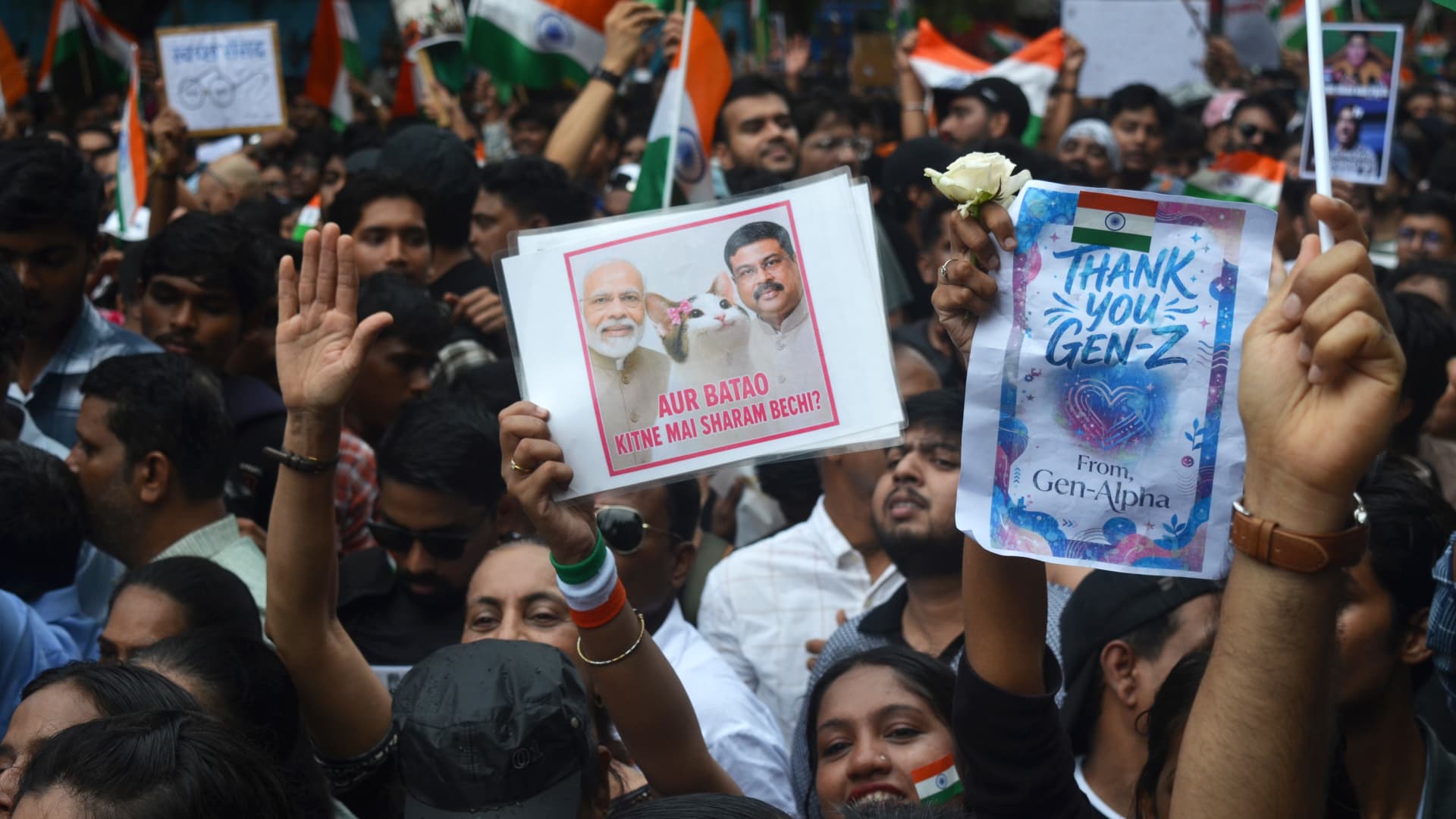
India Gen Z protests have pushed Prime Minister Narendra Modi’s government into a rare retreat, with Education Minister Dharmendra Pradhan resigning and officials accepting demands from a youth-led movement over exam paper leaks. For investors watching India, the episode matters because political pressure from younger voters is becoming harder to ignore ahead of major state elections and the 2029 national vote.
CNBC reported that the government agreed to the demands of the Cockroach Janta Party, or CJP, the youth movement leading the protests. Those demands included compensation for families of students who died by suicide after the exam paper leak in May, according to CNBC, citing public statements and local reporting.
Pradhan announced his resignation on Saturday. The resignation had been a central demand of the protesters, who blamed him for the exam leaks that triggered the movement.
What is the Cockroach Janta Party?
The Cockroach Janta Party is a youth movement launched on May 16 by Abhijeet Dipke, a political communications strategist and Boston University student, according to CNBC. The name came after Chief Justice of India Surya Kant referred in court to people attacking institutions as “parasites” and compared some unemployed young people and activists to “cockroaches.”
The chief justice later said his oral remarks had been misquoted, CNBC reported, but the label had already spread online. The CJP grew quickly on social media, reaching more than 22 million followers in a short period.
The group called for a June 6 protest demanding Pradhan’s resignation. The demonstrations gained momentum on July 20 after Delhi Police used force against students who crossed security barricades near the protest site while trying to march toward parliament, according to CNBC.
How did Modi respond to the student protests?
Modi, 75, posted his first Instagram reel as the protests grew online, CNBC reported. In a later reel on Sunday, he said a “HIGH POWERED TASK FORCE” led by Indian tech entrepreneur Nandan Nilekani would oversee examination reforms.
The move points to a political mechanism retail investors should understand: when public anger threatens a government’s voter base, leaders may respond with resignations, policy reviews or new oversight bodies. Those steps can reduce pressure, but they can also show where a government is vulnerable.
Michael Kugelman, senior fellow for South Asia at the Atlantic Council, told CNBC’s “Inside India” that the protesters’ language toward Modi and his government was unusually harsh, especially given the prime minister’s popularity. He described the comments as sharply critical and at times profane.
Arpit Chaturvedi, South Asia advisor at Teneo, told CNBC that the CJP movement may show Modi’s political and development message is not connecting as strongly with the next generation of voters. He said it also challenges the view that the government is politically unbeatable.
CNBC noted that several major state elections are due in 2027, including in Uttar Pradesh, India’s most populous state and one with a large youth voter base. By the 2029 general election, experts cited by CNBC said Gen Z will be the most influential demographic, pushing parties to focus more directly on their priorities.
The student movement may also encourage other campaigns. CNBC cited local media reports that a group called E20 Janta Party is seeking the resignation of Road Transport and Highways Minister Nitin Gadkari over India’s mandate to mix 20% ethanol with petrol. Farmers are also planning protests over concerns tied to the U.S.-India trade deal.
Kugelman told CNBC the CJP’s success could have a “galvanizing effect” on other civil society groups. CNBC noted that the last major climbdown by the Modi government came in 2021, when it agreed to repeal three farm laws after farmer protests that lasted more than a year.
This story draws on original reporting from CNBC.