Indonesian stocks enter bull market after five-year low
Indonesia’s main share index has rebounded from an early-June trough as cheaper valuations, ratings relief and regulator action lifted sentiment.
By Theo Nakamura · Staff Writer
· 3 min read
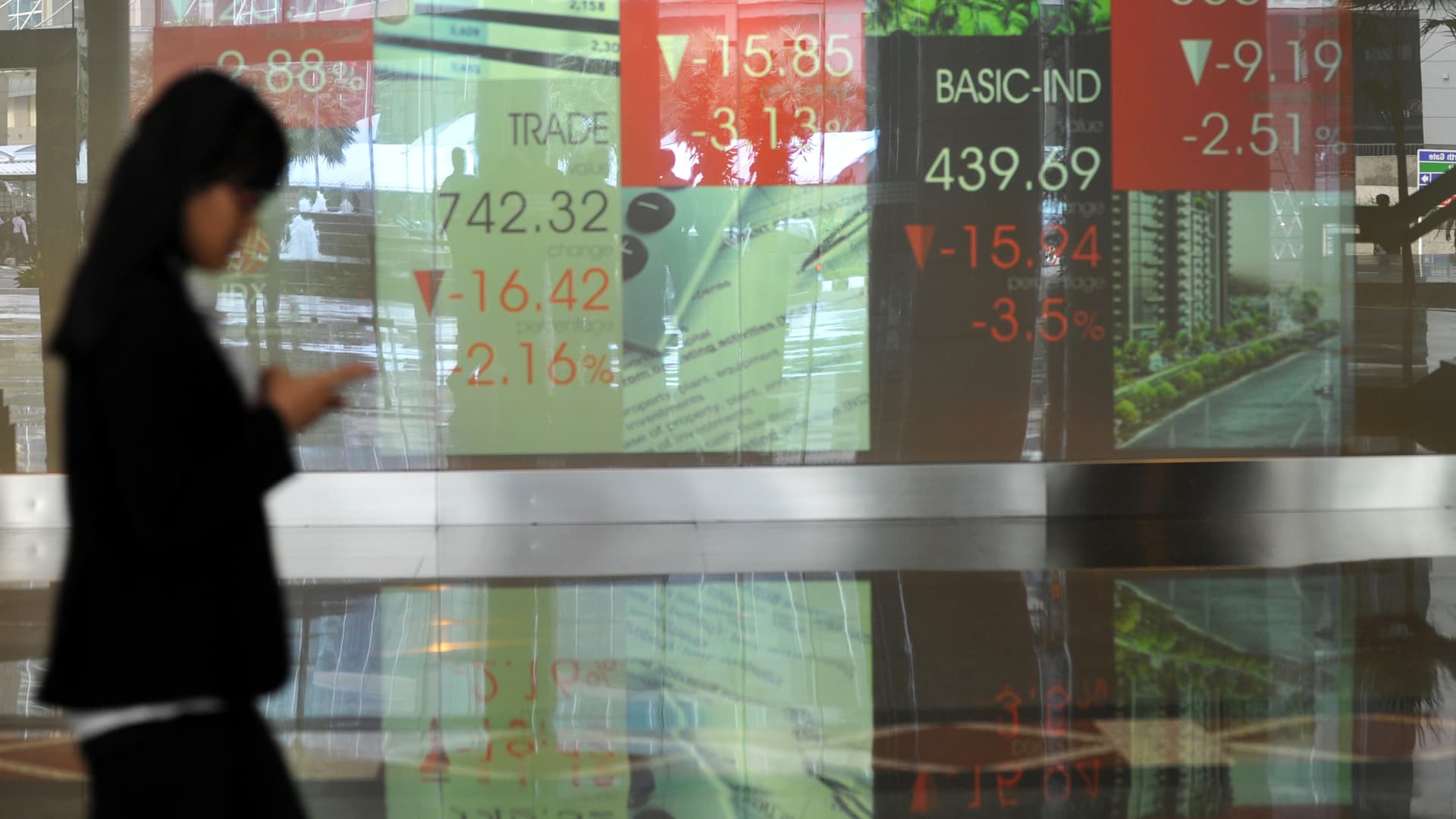
Indonesian stocks bull market momentum has arrived fast: the Jakarta Stock Exchange Composite Index has bounced more than 10% from an early-June five-year low, according to LSEG data cited by CNBC. The rebound matters for everyday investors because it shows how quickly sentiment can shift in emerging markets when valuations, ratings risk and foreign flows move together.
The index is still down about 29% for the year, according to LSEG data. That means the rally has not erased the damage from 2026’s selloff, but it has been strong enough from the recent bottom to mark a sharp turn in market tone.
A bull-market label means an index has climbed far enough from a recent low to signal a new upward phase. In this case, LSEG data cited by CNBC showed Indonesia’s benchmark clearing that line after its June trough, even while the year-to-date performance remains deeply negative.
Why are Indonesian stocks in a bull market?
Analysts pointed to several drivers behind the rebound: lower share prices that attracted buyers, faster action from local financial regulators, renewed foreign investor interest and relief around Indonesia’s sovereign credit profile.
S&P Global Ratings reaffirmed Indonesia’s BBB sovereign rating with a stable outlook a couple of weeks ago, which helped improve market confidence. Mohit Mirpuri, senior partner at SGMC Capital, told CNBC that the S&P decision removed a key macro concern and said the market had shifted from pricing in worsening conditions to pricing in stabilization.
Valuation also played a role. Liza Camelia, head of research at Kiwoom Sekuritas Indonesia, told CNBC that after months of heavy selling, Indonesian shares had become too inexpensive for investors to ignore.
Capital Economics senior economist Gareth Leather told CNBC that investors were also relieved after MSCI chose not to downgrade Indonesia from emerging-market status to frontier-market status. A frontier market is generally viewed as less developed, less liquid and riskier than an emerging market, so a downgrade can push some investors to reduce exposure.
MSCI had raised concerns about governance across many Indonesian stocks and had considered the downgrade because of issues including low free floats and concentrated ownership, according to CNBC. Free float refers to the portion of a company’s shares that can be traded by public investors, rather than held by insiders or controlling shareholders.
Leather said MSCI’s decision to hold off was a major relief for investors and helped stop panic selling. He also said some investors were taking profits from expensive artificial intelligence and technology stocks and looking for cheaper, more defensive markets.
What changed for foreign investors?
The return of foreign investors has been gradual, according to CNBC, but it has added support to the market. In emerging markets, foreign inflows can have an outsized effect because liquidity is often thinner than in larger developed markets.
Fiscal worries have also eased, Camelia told CNBC. She said government revenue came in better than expected, with tax collections recovering strongly in the first half of the year.
Regulatory steps helped as well. Jeemin Bang, associate economist at Moody’s Analytics, told CNBC that Indonesian regulators’ push for higher minimum free floats and stricter ownership disclosure requirements helped address thin liquidity, transparency concerns and ownership concentration, which had driven some investors away.
The rally leaves investors with a mixed picture: a market that has recovered quickly from a five-year low, but one that remains sharply lower for 2026. For now, the Indonesia rebound is a case study in how ratings reassurance, index-provider decisions and regulatory fixes can change the risk calculation in a beaten-down stock market.
This story draws on original reporting from CNBC.


