Jeffrey Gundlach says Fed rate pause clashes with bond market inflation signal
DoubleLine’s Jeffrey Gundlach said Treasury moves show investors want the Fed to act more forcefully on inflation.
By Theo Nakamura · Staff Writer
· 3 min read
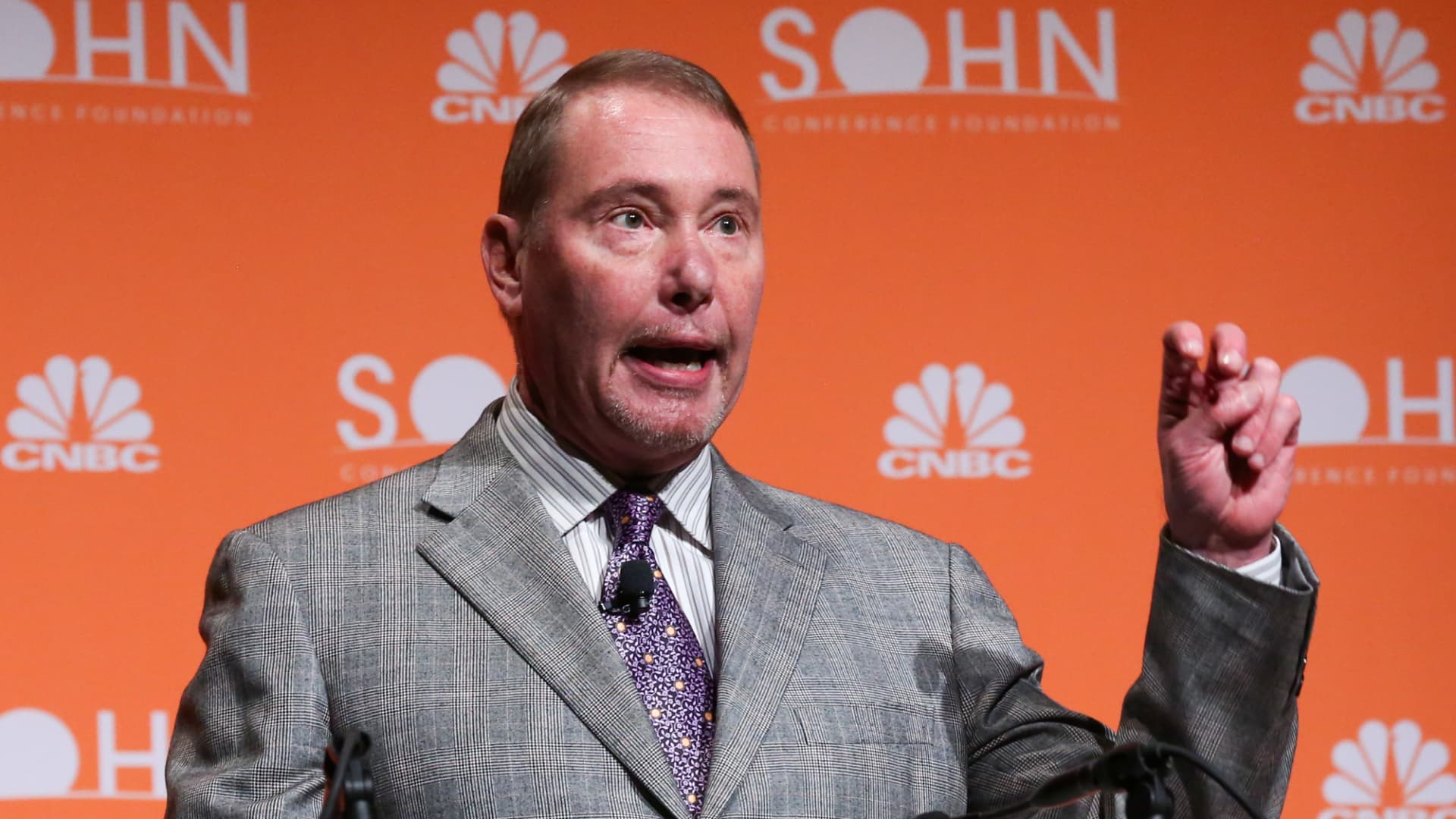
Jeffrey Gundlach said the Fed may have to raise interest rates if it wants investors to believe it can bring inflation back to 2%. For everyday investors, the message from the bond market matters because Treasury yields help set the tone for borrowing costs, stock valuations and income from fixed-income investments.
The DoubleLine Capital CEO spoke on CNBC’s “Closing Bell” after the Federal Reserve kept its benchmark interest rate at a range of 3.5% to 3.75%. CNBC reported that the hold was broadly expected, though three Fed policymakers dissented because they favored a quarter-point rate increase.
Gundlach argued that words from Fed Chairman Kevin Warsh were not enough to satisfy the Treasury market. “If you really want to get to 2%, I think you have to raise interest rates,” Gundlach said on CNBC, adding that reaching the Fed’s inflation target could take a long time and may not happen within the next couple of years.
Why does Jeffrey Gundlach think the Fed may need to raise rates?
Gundlach pointed to a split move in Treasury yields after the Fed decision. Short-term yields fell, while longer-term yields rose, a pattern he said showed investors doubting that the central bank is ready to back its inflation rhetoric with action.
The two-year Treasury yield, which tends to move closely with expectations for near-term Fed policy, fell 3 basis points to 4.244%, according to CNBC. A basis point is one-hundredth of a percentage point. Gundlach said the rally in the two-year Treasury reflected the market’s view that the Fed is moving slowly.
Longer-term yields moved the other way. CNBC reported that the benchmark 10-year Treasury yield climbed more than 7 basis points to 4.681%, while the 30-year Treasury yield rose to 5.213%, its highest level since 2007.
Longer-term bond yields are generally more sensitive to views about inflation and federal deficits. If investors think inflation will stay elevated, they often demand higher yields to lend money for longer periods, since inflation erodes the future value of fixed interest payments.
Gundlach described that reaction as a warning from bond investors. He said the long bond’s move after Warsh’s press conference showed that the market wanted the Fed to start acting if it wants its inflation message to be believed.
What did Kevin Warsh say after the Fed decision?
Warsh said the central bank remains focused on its 2% inflation goal and will respond if needed. CNBC quoted Warsh as saying Fed officials need to watch market reactions to developments “direct and unfiltered,” while emphasizing that the committee’s choices matter and that officials “will not hesitate to act” when they judge it necessary and appropriate.
The policy split gives investors a clearer read on the debate inside the Fed. Holding rates steady keeps current financial conditions in place for now, while the dissents show some officials wanted to tighten policy further to fight inflation.
For retail investors, the immediate takeaway is less about one Fed meeting and more about the signal in yields. If long-term rates keep rising while the Fed pauses, that can pressure rate-sensitive parts of the market and affect everything from bond fund prices to mortgage-rate expectations. Gundlach’s view, as stated on CNBC, is that the Treasury market is asking the Fed to prove its inflation commitment with policy, not just public comments.
This story draws on original reporting from CNBC.