Khanna Data Center Bill of Rights resolution calls for local control
Rep. Ro Khanna’s House resolution urges local control, utility-bill protections and disclosures for AI data centers, but it is not law.
By Theo Nakamura · Staff Writer
· 3 min read
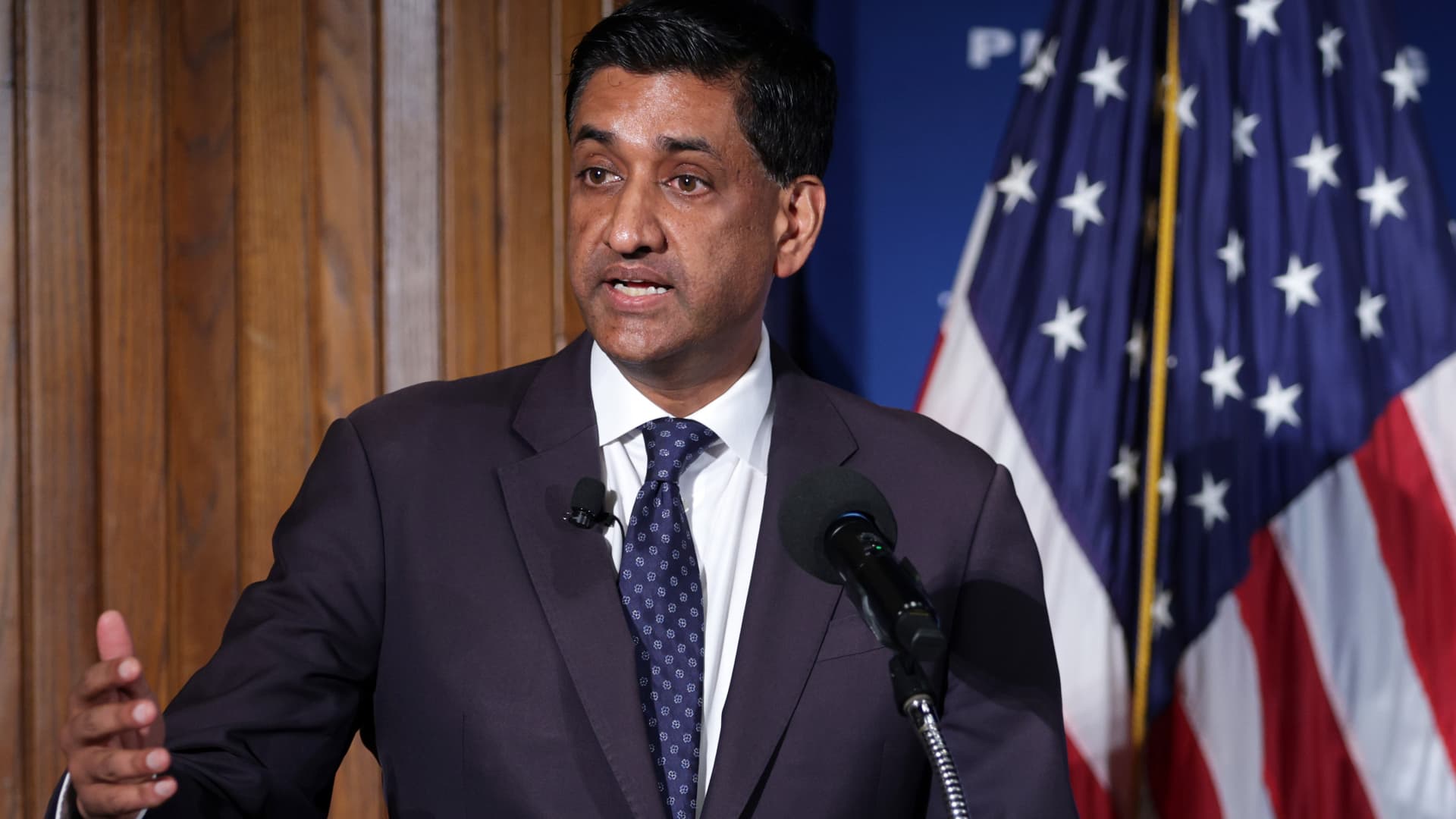
The Khanna Data Center Bill of Rights is now a formal House resolution, giving the debate over AI infrastructure a new focus on who decides where projects go and who pays for added power demand. For investors following the AI buildout, it shows that policy arguments are extending beyond chips and software to local approval, electricity bills, water use and project disclosure.
Rep. Ro Khanna, D-Calif., introduced H.Res. 1471 on Aug. 3. Its formal title says communities affected by artificial-intelligence data centers should have transparency and local autonomy. Congress.gov shows it was referred to the House Energy and Commerce and Judiciary committees that day, with no later action in the supplied legislative record.
The distinction matters: H.Res. 1471 is a resolution expressing the sense of the House. It does not itself create enforceable rights or impose new requirements on data-center developers. Instead, it says the House should enact a broader Data Center Bill of Rights.
What would Khanna’s Data Center Bill of Rights do?
The resolution calls for communities to have the ability to oppose AI data-center projects. Its proposed rights would allow restrictions in residential areas and within 2,500 feet of homes, schools, child-care facilities, hospitals and nursing homes.
It would also call for a transparent process through which a community could reject a proposal, and for counties and municipalities to retain authority to prohibit or regulate development without being preempted or overruled by the state.
On household costs, the resolution says communities should be able to demand no increase in electricity rates or fees for households and small businesses. It also backs statewide pauses on new facilities until states put protections in place for ratepayers, water supplies and meaningful local input.
Those provisions address a central concern in the current data-center policy debate: whether grid upgrades and added generation needed for large facilities raise costs for other utility customers. State Affairs has identified ratepayer protection and the allocation of utility costs as a major theme of state-level data-center bills.
What information and safeguards would projects face?
Khanna’s resolution calls for clean and reliable energy, along with strict noise and air-pollution limits. Before a project receives approval, it would seek an independent public impact report covering electricity demand, utility bills, health, noise, air pollution, rents, housing availability, expected jobs and the project’s 10-year economic effect on the community.
The measure also calls for enforceable community-benefit agreements, which could cover affordable housing, infrastructure, workforce training and permanent technology jobs. Operators would disclose projected water use to local providers, obtain a written compatibility determination before approval and file public water-use reports twice a year.
It further proposes conditions on tax breaks and public subsidies, including labor standards, transparency and provisions allowing governments to recover benefits when conditions are not met.
The resolution’s preamble makes several assertions, including that more than 4,400 registered data centers operate in the U.S. and that AI data centers could use up to 32 billion gallons of water a year by 2028. Those figures are statements within the resolution, rather than independent findings established in the legislative text.
How does it compare with the GRID Act?
Khanna’s resolution is broader than the Senate’s bipartisan Guaranteeing Rate Insulation from Data Centers Act, or GRID Act. Sens. Josh Hawley, R-Mo., and Richard Blumenthal, D-Conn., said in February that their bill would aim to prevent data-center-related utility-price increases, prioritize consumers on the grid, require new data centers to use separate power generation and require public reporting of utility use.
Khanna’s measure includes ratepayer protections but adds local siting, environmental, water, disclosure, community-benefit and subsidy provisions. It remains an introduced, nonbinding House resolution.
This story draws on original reporting from CNBC.