New York Fed’s Williams says inflation has peaked as rates hold steady
John Williams said the Fed’s current rate stance can bring inflation back to 2%, even as markets still look for another hike.
By Dev Ramirez · Crypto Correspondent
· 3 min read
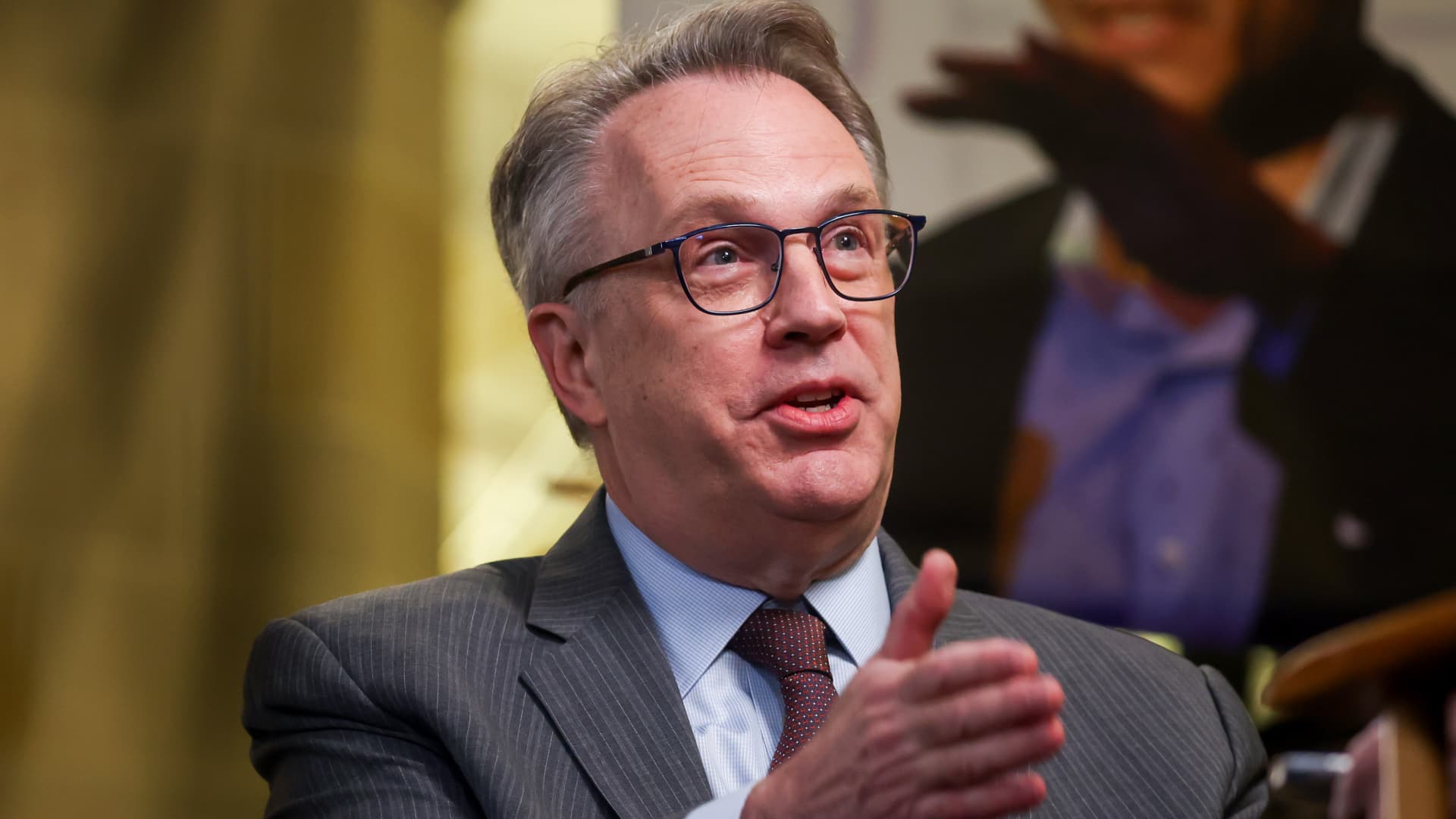
New York Federal Reserve President John Williams said Wednesday that inflation appears to have topped out, a signal that the central bank may not need to raise interest rates right away. For everyday investors, that matters because Fed rates help set the tone for credit-card costs, mortgage rates, savings yields and the prices investors are willing to pay for stocks.
Speaking to business leaders in the New York Fed’s district, Williams said he sees several reasons to believe the recent burst in prices is losing force. He said, “There are encouraging reasons to expect that inflation has peaked and should edge down in coming quarters.”
Williams said he expects overall inflation to fall to about 3.25% by the end of this year, then keep moving toward the Fed’s 2% target in 2027 and reach that goal in 2028. The Fed’s inflation target is the pace of price increases it considers consistent with a healthy economy over time.
The comments help explain why Williams sees current interest rates as restrictive enough. Higher rates slow inflation by making borrowing more expensive, which can cool demand for goods, services and labor. They can also weigh on stock valuations because future earnings become less valuable when safer yields are higher.
Why Williams thinks price pressure is cooling
Williams pointed to the February attacks by the U.S. and Israel on Iran as a major driver of this year’s inflation surge, saying the conflict pushed oil prices sharply higher. He also cited remaining effects from tariffs and a pickup in technology spending, including artificial-intelligence investment, as contributors.
He said those forces now look less likely to keep adding pressure. On tariffs, Williams said expiring duties are being replaced rather than expanded, which should limit any “significant additional impulse.” On energy, he said the oil-price jump has likely crested and should move closer to levels seen before the fighting.
Williams also said supply should catch up with demand in areas tied to AI investment, easing related “imbalances” over time. He added that the labor market is not adding inflation pressure and that inflation expectations remain “well-anchored,” meaning consumers and businesses still broadly expect price increases to return toward normal rather than spiral higher.
“Growth in the economy is solid and on trend, and the labor market is likewise solid and stable,” Williams said. “But with inflation running high, it is imperative that we restore it to the Federal Reserve’s 2 percent longer-run goal on a sustained basis. The current stance of monetary policy is well positioned to do that.”
Markets still see a possible hike
Williams’ view does not fully match market pricing. CNBC reported that markets still expect the Fed could raise rates as soon as September. In June, a narrow majority of officials on the Federal Open Market Committee, the Fed panel that sets interest-rate policy, projected one quarter-point increase by year-end.
The speech followed fresh inflation data from the Bureau of Labor Statistics. The agency reported Tuesday that consumer prices fell 0.4% in June, bringing the annual inflation rate down to 3.5%. CNBC said it was the largest one-month drop since April 2020, though inflation remained above the Fed’s 2% goal.
Fed Chairman Kevin Warsh told the House Financial Services Committee on Tuesday that the latest price decline should not be treated as proof the inflation fight is finished. “That is not my view,” Warsh said.
This story draws on original reporting from CNBC.


