Nvidia expands Japan AI push with Cosmos 3 Edge model
Nvidia introduced Cosmos 3 Edge and named Japanese partners across robotics, manufacturing, drug discovery and medical technology.
By Dev Ramirez · Crypto Correspondent
· 3 min read
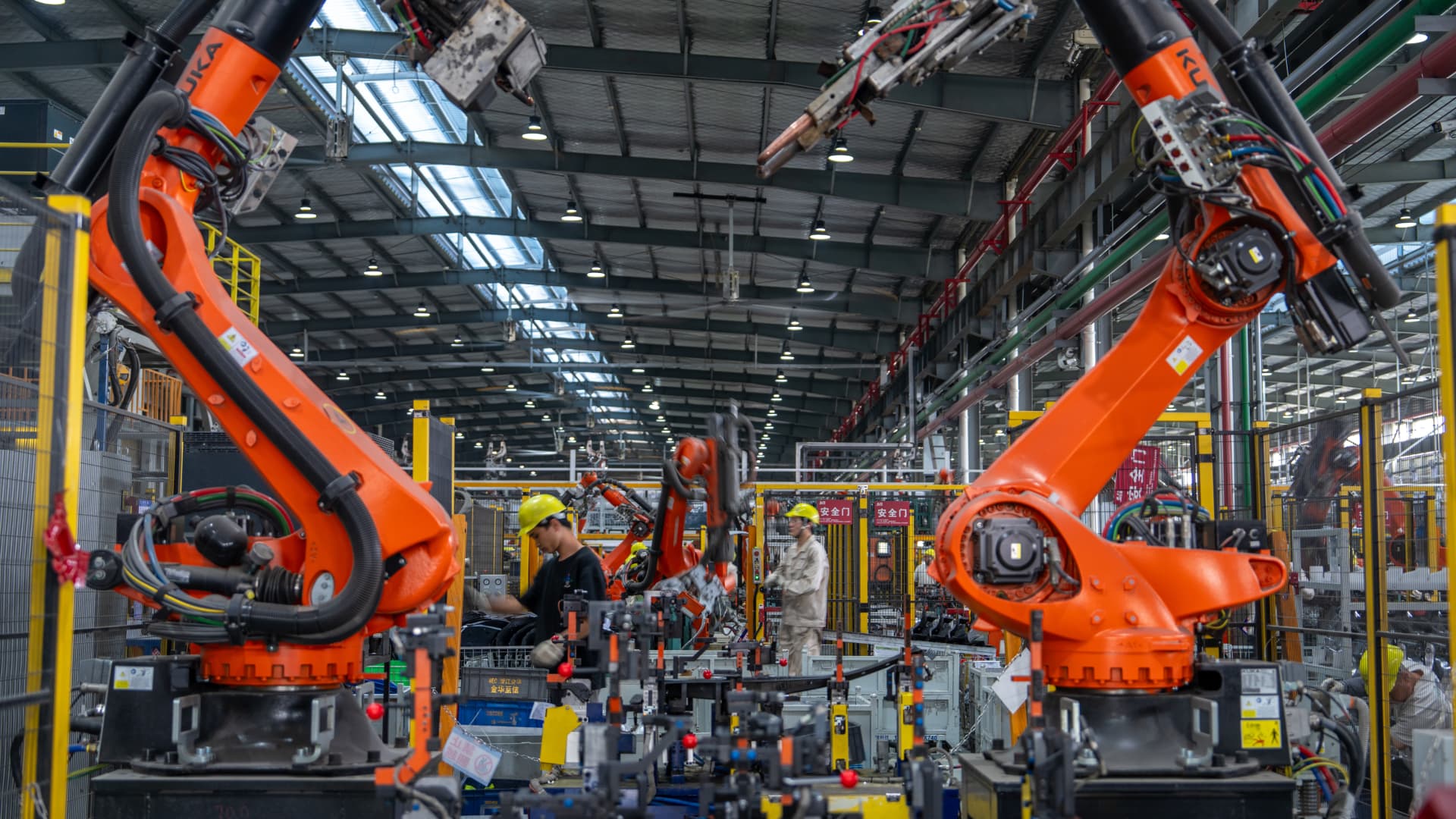
Nvidia is widening its AI strategy in Japan with a new model built for machines that operate in the real world, not just chatbots on screens. For investors, the move shows how the chipmaker is trying to turn demand for AI computing into business across factories, robots, drug research and medical tools.
The company said Wednesday it introduced Cosmos 3 Edge, an artificial intelligence model for robots and vision AI agents. Vision AI agents are systems that interpret camera or sensor data and use it to act or make decisions.
Nvidia described Cosmos 3 Edge as a “world model,” meaning software designed to learn how physical environments work from many kinds of inputs. That differs from a large language model, or LLM, which is mainly trained to process and generate text. Nvidia said Cosmos 3 Edge is built to help systems understand and respond to physical surroundings in real time.
The launch follows Nvidia’s May release of Cosmos 3, its open frontier foundation model for physical AI, according to the company. Physical AI refers to artificial intelligence used by machines that interact with the physical world, such as robots, industrial systems and medical devices.
Japan becomes a focus for physical AI
Nvidia tied the model rollout to CEO Jensen Huang’s two-day trip to Japan. The company said it is expanding its physical AI work in the country through a coalition that local industrial companies, including Fujitsu, Hitachi and Kawasaki Heavy Industries, intend to join.
“The next frontier of AI is in the physical world, and this is a once-in-a-generation opportunity for Japan,” Huang said in a Wednesday statement. “Japan invented modern manufacturing. Now, it has the opportunity to reinvent it for the age of intelligent industries.”
The Japan push places Nvidia in a market that has attracted major U.S. tech spending. Microsoft recently announced a $10 billion investment in Japan aimed at expanding AI infrastructure and strengthening cybersecurity, CNBC reported. SoftBank has also made large bets on AI and is looking to work with Microsoft and Sakura Internet on AI development in Japan, according to CNBC.
The International Trade Administration expects Japan’s AI market to reach $27.9 billion by 2029. The agency said the growth is supported by Tokyo’s efforts to encourage AI use across industries and by Japanese companies’ interest in international partnerships.
Ajay Rajadhyaksha, global chairman of research at Barclays, told CNBC last month that Japan has an advantage in Asia because of its mix of AI and clean structural growth themes.
Healthcare and industrial automation are part of the plan
Nvidia is also extending its Japan work into healthcare and biotechnology. The company pointed to the expansion of Tokyo-1, an AI drug discovery consortium operated by Xeureka, a Mitsui subsidiary.
Tokyo-1 uses Nvidia’s BioNeMo Agent Toolkit, which the company says is designed to speed up autonomous AI drug discovery. Agentic AI means software that can take steps toward a goal with less direct human prompting than a standard chatbot.
Nvidia said in a blog post that Astellas Pharma, Daiichi Sankyo and Ono Pharmaceutical are using its specialized biology toolkit to improve their drug research workflows.
The company also said it is building a presence in industrial automation through its partnership with Kawasaki Heavy Industries. That gives Nvidia another route into Japan’s manufacturing base as it tries to make physical AI a larger part of its business beyond data centers.
This story draws on original reporting from CNBC.