Oil climbs as Rubio says Iran is not serious about talks
Crude prices rose Wednesday as U.S.-Iran tensions kept the Strait of Hormuz in focus and revived worries about inflation and Fed policy.
By Theo Nakamura · Staff Writer
· 3 min read
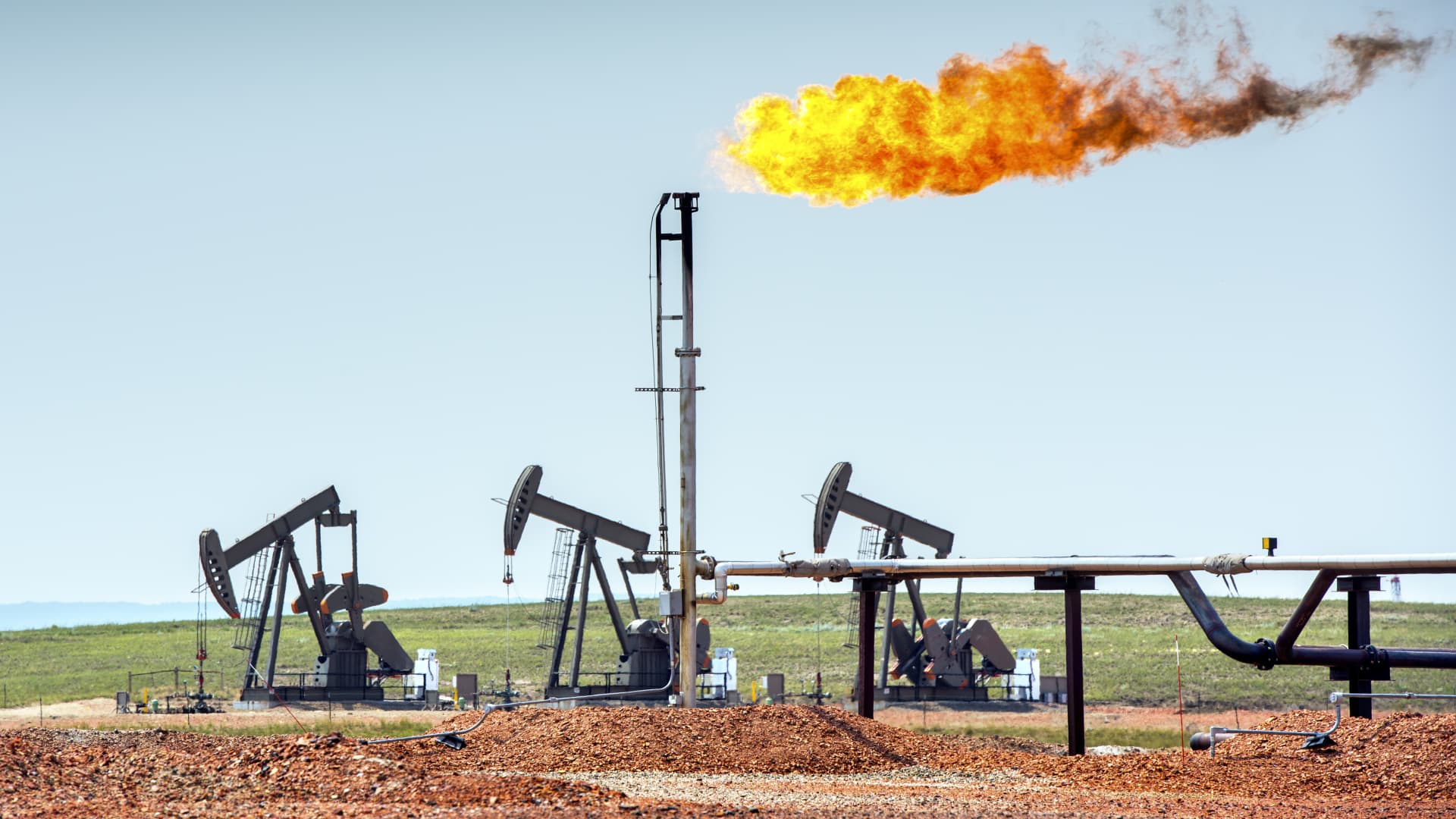
Oil prices rose Wednesday as the conflict between the U.S. and Iran kept traders focused on the Strait of Hormuz, a key route for moving crude and other commodities. For everyday investors, higher oil can show up in inflation data, company costs and expectations for Federal Reserve interest-rate decisions.
CNBC market data showed Brent crude, the global oil benchmark, up 4.01% at $94.66 at 8:50 a.m. BST. West Texas Intermediate, the main U.S. crude benchmark, was quoted 4.06% higher. Earlier, at 3:26 a.m. ET, Brent futures for July delivery were up 2.5% at $93.46, while front-month WTI futures, the nearest expiring contract, gained 2.5% to $86.46.
The move followed another night of U.S. military action against Iran. U.S. Central Command said its forces carried out an 11th consecutive evening of strikes, targeting Iranian military operations centers, maritime capabilities, aircraft hangars, drone storage facilities and military logistics infrastructure.
Centcom said the strikes were intended to reduce Iran’s ability to threaten commercial shipping in the Strait of Hormuz. The waterway is central to the oil market because disruption there can raise fears that barrels will be delayed or blocked, which can push futures prices higher as traders price in supply risk.
Hormuz remains the flashpoint
Speaking Wednesday at the ASEAN Foreign Ministers’ meeting in the Philippines, U.S. Secretary of State Marco Rubio said Washington still backed diplomacy, but accused Tehran of breaching an agreement over the Strait of Hormuz.
“The problem we’re having right now is that they’re not serious about talks,” Rubio said. “If they’re serious, we’re serious. If they’re not, then we will do what is necessary to protect our interests and also the interests of our allies.”
Rubio said the strait remained a major obstacle in talks and alleged that Iran wanted the right to control the waterway. He said allowing that would create “a very dangerous precedent” globally.
Deutsche Bank’s Jim Reid said in a Wednesday note that Brent closing above $90 a barrel for the first time in more than a month had revived concern about a broader stagflationary shock. Stagflation means weak growth paired with high inflation, a difficult mix for consumers, companies and central banks.
Reid also said market attention had moved back to inflation with no breakthrough on Iran. He wrote that the chance of a July Fed rate increase rose to 26% by Tuesday’s close, after falling as low as 10% following the latest U.S. consumer price index report.
As of Wednesday morning, money markets put the odds of a Fed rate hike this month at 24.1%, and the odds of at least a quarter-point increase in September at 69%, according to CME’s FedWatch tool. The tool tracks market-implied probabilities from futures pricing.
ING analysts said Wednesday that energy markets faced “mounting supply risks” as hopes for a temporary U.S.-Iran ceasefire weakened. They also pointed to pressure outside the Middle East, saying Russia’s CPC terminal in the Black Sea had stopped receiving oil from Kazakhstan and suspended loadings after attacks on tankers.
ING said the CPC terminal loaded about 1.7 million barrels per day in June. The analysts said a longer suspension would raise the chance that Kazakhstan would have to reduce upstream production, which refers to oil extraction before transportation and refining.
This story draws on original reporting from CNBC.