Semiconductor exports surpass oil and gas in global trade value
A Deutsche Bank analysis says chip exports overtook oil and gas in 2026, driven by AI demand and partly widened by disrupted oil flows.
By Theo Nakamura · Staff Writer
· 3 min read
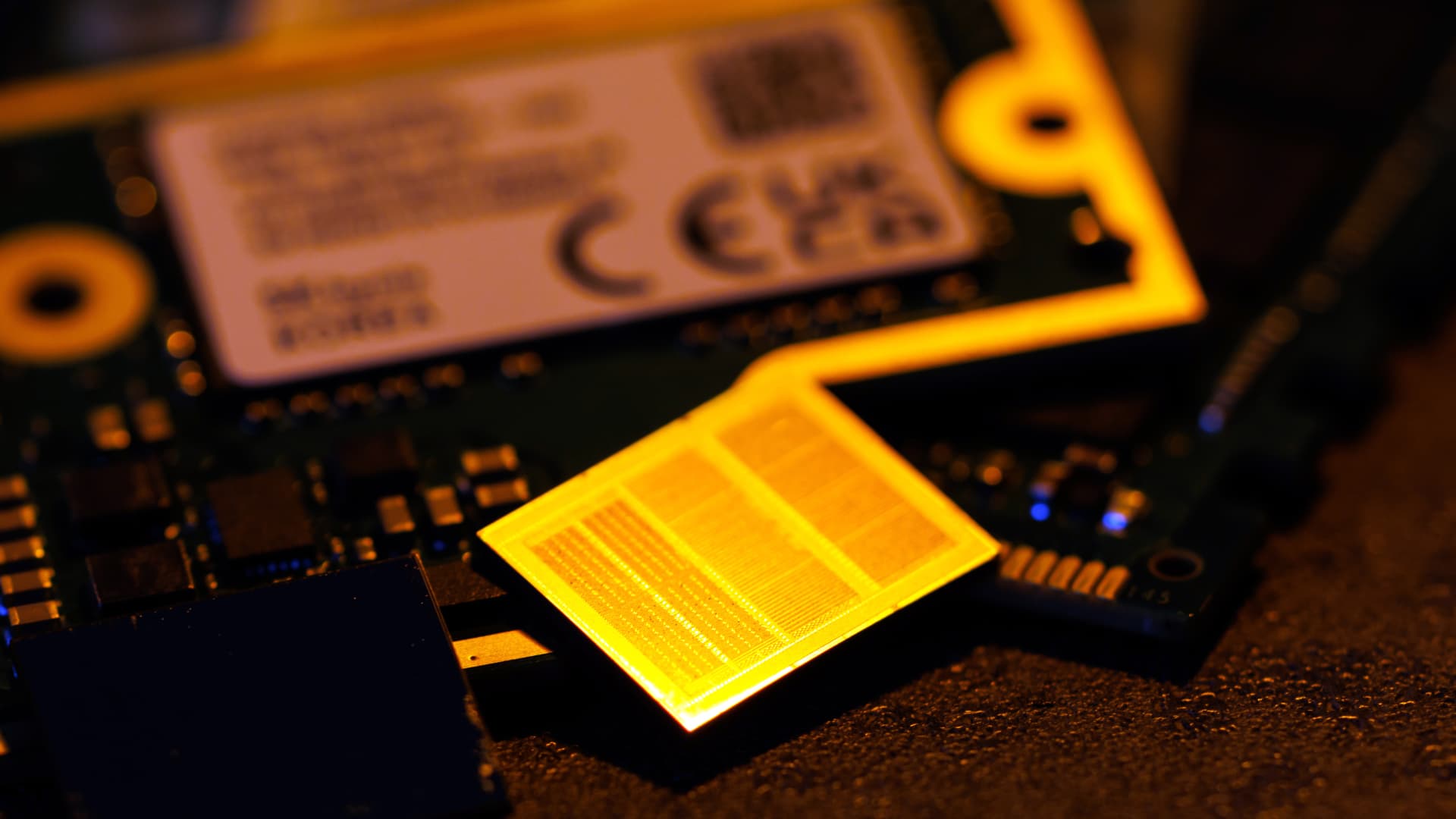
Semiconductor exports surpass oil and gas in global trade value for the first time, according to a Deutsche Bank analysis cited by CNBC. For investors, the milestone shows how AI-related computing has become a major force in global commerce, although it does not mean chip stocks will move in a straight line or that chips have replaced oil in the broader economy.
Using International Trade Centre data and four-quarter rolling totals, Deutsche Bank said semiconductor exports reached about $1.61 trillion in the January-to-March quarter of 2026. Oil and gas exports were about $1.53 trillion over the same measure, CNBC reported.
The difference grew in the second quarter. Semiconductor exports totaled about $1.60 trillion, compared with roughly $1.47 trillion for oil and gas, according to the analysis.
Why are semiconductor exports surpassing oil?
CNBC cited AI-computing and data-center demand as factors supporting chip trade. Companies building and running AI systems need substantial computing capacity, and the equipment behind that capacity includes specialized chips.
An AI workload is the computing and data-processing work required to develop, train or run an AI model. Google Cloud says these workloads often require high-throughput parallel accelerators, including graphics processing units, or GPUs, and tensor processing units, or TPUs, as well as fast storage and low-latency networking.
GPUs were originally developed to speed up graphics rendering, according to Intel. Their ability to process many pieces of data at the same time also makes them useful for machine learning and other compute-intensive work.
That hardware is installed in AI data centers. IBM defines these as facilities designed to train, deploy and deliver AI services, with advanced computing, networking, storage, power and cooling systems. IBM says high-intensity AI workloads can require more specialized infrastructure than conventional data centers.
The comparison with oil is about trade and strategic economic weight, rather than a claim that the two markets work alike. Deutsche Bank’s Jim Reid has described a possible move from the long-discussed “petrodollar” toward a “chip dollar.” He suggested that chip-export earnings in Asian economies, which he said have close ties to U.S. technology companies, could partly flow into U.S. technology stocks, startups and data centers.
That is a hypothesis about future financial flows, not an established result. The trade figures also reflect changes on the oil side of the comparison. CNBC reported that disrupted supplies through the Strait of Hormuz following the Iran war helped widen the second-quarter gap. Citing the U.S. Energy Information Administration, CNBC said daily oil flows through the strait fell nearly 77%, to 4.9 million barrels in the second quarter from 21.6 million barrels in the fourth quarter of 2025.
What does the crossover mean for chip investors?
The export milestone measures the value of goods traded globally. It does not establish that the semiconductor industry has equivalent economic importance to oil and gas, nor does it determine the performance of individual chip companies or their shares.
CNBC reported sharp volatility in semiconductor equities around the milestone. The PHLX Semiconductor Index had fallen more than 17% over a week, including nearly 11% on one Friday, before a subsequent rebound. The gap between rising chip trade and volatile share prices is a reminder that demand trends, trade values and stock-market returns measure different things.
This story draws on original reporting from CNBC.