Starbucks earnings 2026 beat estimates as CNBC club lifts target
Starbucks topped quarterly forecasts, raised guidance and saw shares rise after hours as Brian Niccol’s turnaround gained traction.
By Theo Nakamura · Staff Writer
· 4 min read
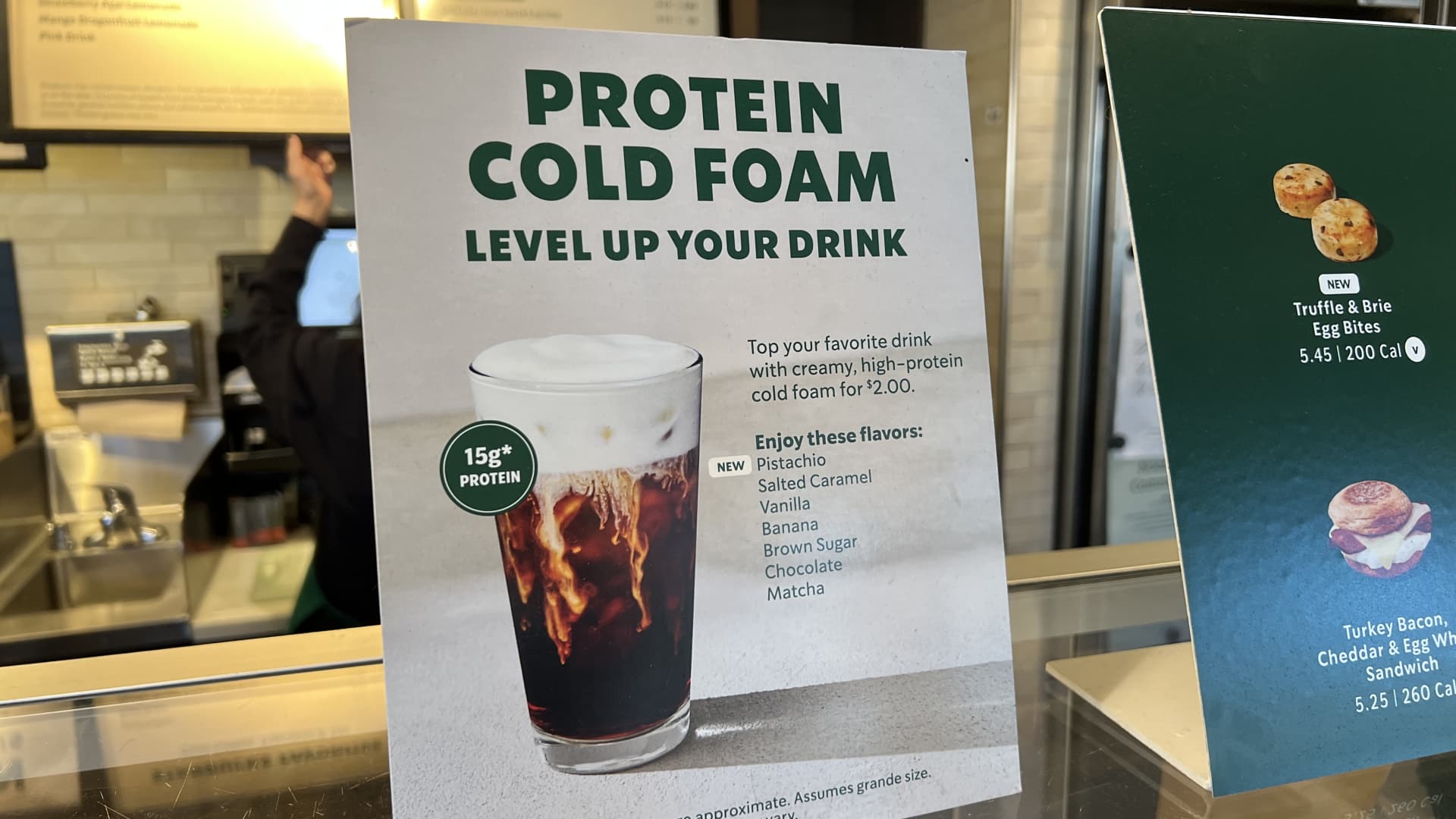
Starbucks earnings 2026 gave investors a cleaner read on Brian Niccol’s turnaround: sales and profit beat Wall Street forecasts, and the coffee chain lifted key full-year targets. CNBC’s Investing Club said after the report that it raised its Starbucks price target to $120 a share while keeping a hold-equivalent 2 rating.
For retail investors, the headline is that Starbucks is still drawing more customers even as households deal with higher costs. The stock rose more than 5% in extended trading Wednesday, near $110 a share, after closing the regular session up 23.7% for the year, according to CNBC.
What did Starbucks report in 2026 earnings?
Starbucks reported fiscal third-quarter revenue of $9.32 billion for the April-to-June period, above the $9.16 billion consensus estimate from LSEG, CNBC reported. Adjusted earnings per share were 85 cents, compared with the 66-cent consensus estimate from LSEG.
Global comparable store sales increased 7.9% from a year earlier, beating the 5.7% growth expected by analysts, according to FactSet. Comparable store sales, often called comps, measure sales at company-operated stores open at least 13 months, giving investors a cleaner view of demand without the noise of new store openings.
North America comps rose 8.1%, while U.S. comps increased 7.9%. CNBC reported that the U.S. gain came from both more transactions and higher average tickets, meaning customers visited more often and spent more per order.
The move in Starbucks shares also stood out against the broader market. CNBC reported that Starbucks had outperformed the S&P 500’s 6.9% year-to-date advance and the S&P 500 consumer discretionary sector index, which was down 6.5% for the year.
How is Brian Niccol’s Starbucks turnaround showing up?
Niccol, who joined Starbucks in 2024 after running Chipotle, has called his plan “Back to Starbucks.” CNBC reported that the strategy has included adding workers to reduce long wait times and spending to make stores more appealing to customers.
Niccol told investors that sales growth was balanced across generations, income levels and both rewards members and non-members, according to CNBC. He also said Starbucks has seen its strongest transaction growth in the morning, while afternoon demand is improving.
“If you look at where the business was, there’s still lots of space to add more transactions both in the morning and in the afternoon,” Niccol said, according to CNBC. “We’ve made tremendous progress on both day parts, but there’s still a lot of room for growth.”
Chief Financial Officer Cathy Smith said Energy Refreshers are helping afternoon sales, CNBC reported. She also said Starbucks is testing afternoon food items, including wraps, and that U.S. company-operated stores reached a third-quarter record for “food attach,” which refers to customers buying food along with a drink.
What changed in Starbucks guidance?
Starbucks raised several fiscal 2026 targets. CNBC reported that the company now expects consolidated net revenue growth to be “flat to slight,” compared with its prior view of “roughly flat.”
- Adjusted EPS is now expected at $2.55 to $2.65, up from $2.25 to $2.45.
- Global comparable sales growth is expected to approach 6%, above the prior target of at least 5%.
- U.S. comparable sales growth is expected to be slightly above 6%, up from at least 5%.
- Starbucks still expects 600 to 650 net new coffeehouses globally, including company-operated and licensed stores.
- For the fiscal fourth quarter, Starbucks said U.S. comps growth should be at least 6.5%.
Profitability remains a key part of the story. CNBC reported that adjusted operating margin beat expectations and that both companywide and North America operating margins expanded from a year earlier when excluding tariff effects.
Smith said Starbucks expects the same factors that supported third-quarter margin expansion to continue in the fourth quarter, citing cost savings, execution and sales leverage, according to CNBC. Sales leverage means higher revenue helps spread fixed costs such as rent and insurance over more sales.
CNBC also noted that this was Starbucks’ first quarter since moving its China operations into a joint venture with a Chinese private-equity firm. Starbucks used part of the transaction proceeds to repay $1.3 billion of debt during the quarter, according to CNBC.
This story draws on original reporting from CNBC.


