Strait of Hormuz shipping risks widen as drones threaten trade routes
Drone and missile threats are forcing ships to rethink key waterways, raising costs tied to energy, food and consumer goods.
By Theo Nakamura · Staff Writer
· 4 min read
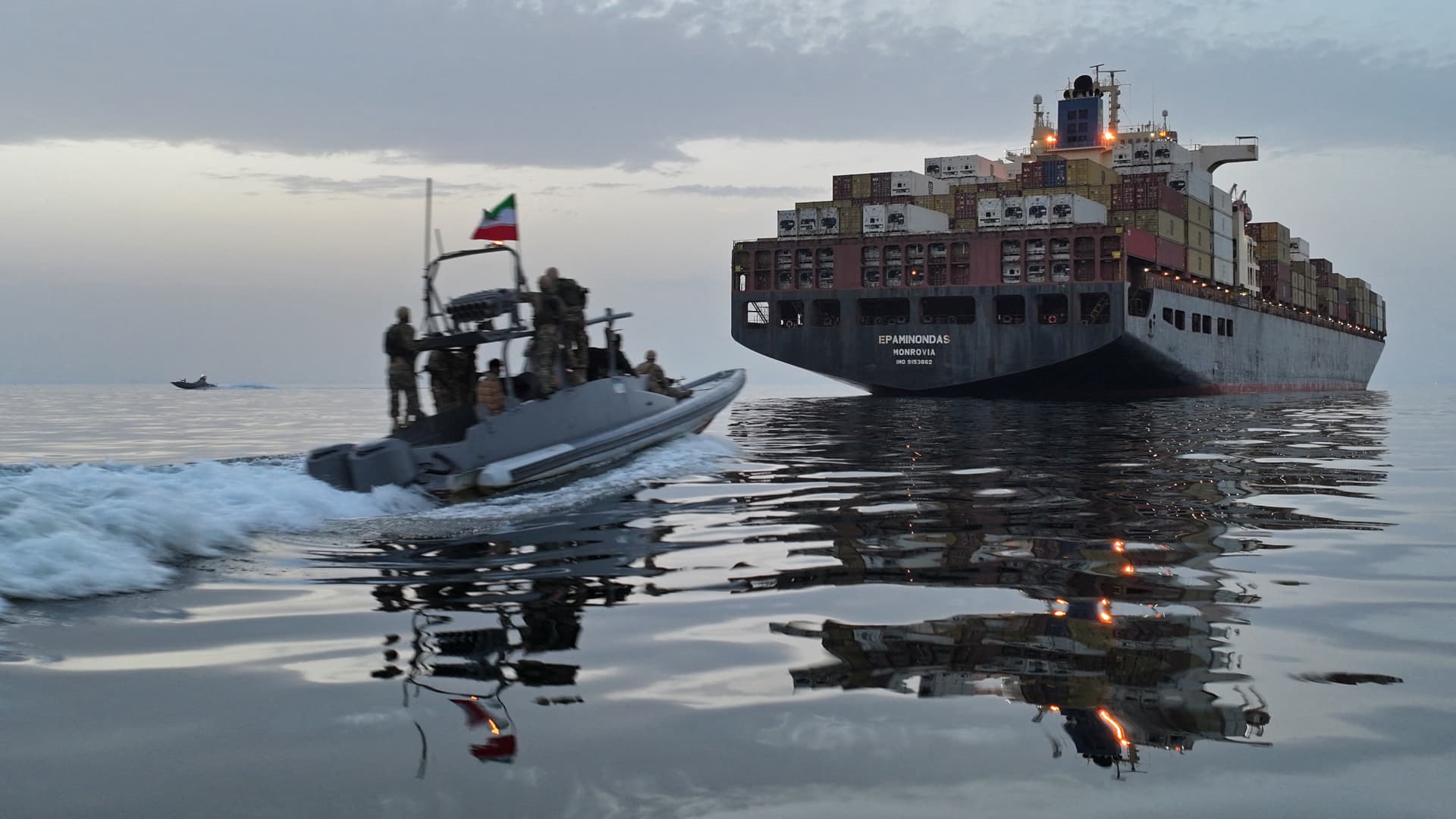
Strait of Hormuz shipping risks are becoming part of a wider problem for global trade: key sea lanes are turning into targets for drones, missiles and political pressure. For investors, that can show up through higher energy costs, food prices, freight bills and margins at companies that depend on reliable shipping.
CNBC reported that attacks and threats affecting the Strait of Hormuz, the Red Sea, the Black Sea and the Sea of Azov have disrupted commercial routes, pushed up insurance and freight costs, and made shipping companies reassess passages once viewed as dependable. About 80% of global merchandise trade by volume moves by sea, according to the report, so delays at one major maritime chokepoint can ripple into supply chains far from the conflict zone.
A chokepoint is a narrow route that many ships must use because the alternatives are longer, slower or more expensive. When traffic through one is threatened, companies may reroute cargo, hold more inventory, pay higher insurance premiums or pass higher transport costs along to customers.
Why are shipping risks rising in the Strait of Hormuz?
The immediate concern is that governments may say a waterway is open while shipowners still decide the trip is too dangerous for vessels and crews. CNBC reported that operators in the Strait of Hormuz are weighing attacks and changing signals about safe passage, with some choosing to avoid the area rather than accept the risk.
Kevin O’Marah, co-founder and chief research officer at supply chain intelligence firm Zero100, told CNBC that Iran found the threat of disrupting traffic in the Strait of Hormuz could be enough to halt movement. He said none of Zero100’s clients had been attacked there, but some were managing the risk by changing routes and inventory plans.
O’Marah said those steps have added cost and delays for some clients in energy, food and electronics. He also said traffic through the strait appeared to be running at roughly half its normal flow, and that supply chain teams were preparing for continuing uncertainty, rerouting costs, inventory buffers and shipping surcharges.
How drones are changing maritime warfare
David Roche, president and global strategist at Quantum Strategy, described the fighting around the Sea of Azov and Black Sea in a July report as a new kind of maritime conflict driven largely by drones and supported by missiles, CNBC reported. These weapons can give smaller forces a lower-cost way to threaten ships, ports and fuel infrastructure whose disruption has large economic effects.
Quantum estimated that around 25% of Russia’s grain exports and 25% to 30% of its Black Sea oil exports could face disruption. CNBC also reported that Russia accounts for more than a fifth of internationally traded wheat, which raises the stakes for global food prices.
Yevgeniya Gaber, a senior fellow at the Atlantic Council, told CNBC by email that Russia’s suspension of shipping through the Kerch Strait, which links the Sea of Azov and the Black Sea, had effectively closed an important maritime corridor. She said the Sea of Azov had been used to move sanctioned crude oil and petroleum products, as well as grain, coal and steel.
Ukraine says it has degraded about one-third of Russia’s Black Sea fleet since 2022, according to CNBC. Gaber told the network that Ukraine’s attacks on Russia’s maritime and economic weaknesses amount to one of the most significant blows to military and commercial fleets since World War II.
What companies are doing now
Shipping companies are responding with a mix of rerouting, insurance coverage and backup logistics. A Gallagher spokesperson told CNBC that war risk insurance, an add-on policy covering losses tied to war, terrorism and civil unrest, remains available, although rates have risen from levels owners and charterers were used to.
The spokesperson said only “a handful but not many” shipowners or charterers were choosing to pass through the Strait of Hormuz. Costs vary by vessel, cargo and route, according to Gallagher.
Lars Jensen, chief executive of Vespucci Maritime, told CNBC that the next flashpoint may be the Panama Canal, citing a geopolitical dispute involving the U.S., China and Panama, plus possible weather-related limits later this year and early next year that could reduce capacity.
Alain Bejjani, a Dubai-based investor and business executive, told CNBC that companies in the Gulf are designing around both Hormuz and Bab el-Mandeb with overland corridors, bypass pipelines and storage closer to major markets. He said shipping will keep its volume advantage, but businesses are likely to put a higher price on redundancy when certainty matters.
This story draws on original reporting from CNBC.


