Tech-heavy portfolios face a familiar dotcom-era risk
Advisors say investors drawn to AI and megacap tech should check concentration, risk tolerance and tax costs before chasing recent winners.
By Theo Nakamura · Staff Writer
· 3 min read
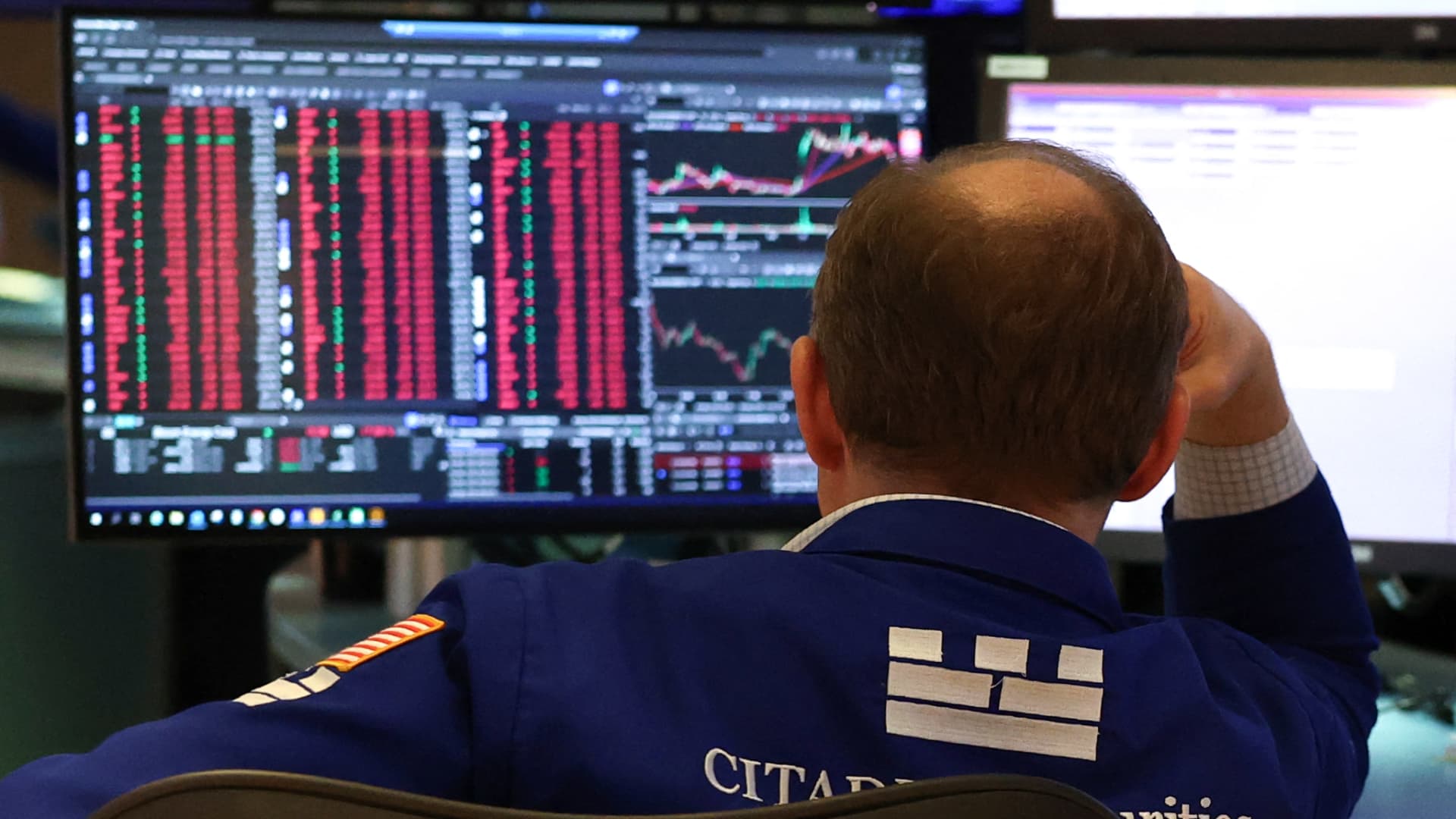
Tech stocks and the “Mag 7” have powered U.S. market gains, and advisors say that strength can quietly leave everyday investors with more risk than they think. The concern is concentration: when too much of a portfolio depends on one sector, a reversal can hit harder than expected.
Several market voices are warning that parts of today’s setup resemble the run-up before the dotcom crash, even though the current market has its own differences. Seth Hickle, chief investment officer at Mindset Wealth Management in Indianapolis, told CNBC that investors can get swept up after big gains, ignore valuations and misjudge how much volatility they can handle.
JPMorgan Chase CEO Jamie Dimon told CNBC’s Wilfred Frost on Monday that he would not buy stocks at current valuations, and said he also would not buy long-dated Treasurys. Warren Buffett recently told CNBC’s Becky Quick that “It’s tough to find values when everybody is preferring gambling.”
Broad index funds may already carry a big tech bet
Advisors cited by CNBC said one lesson from the early 2000s is that investors often do not realize how much technology exposure they already own. Aaron Ulrich, owner of Integra Financial Planning in Prospect, Kentucky, said clients ask about stocks such as Nvidia, Tesla and Apple without realizing those names may already sit inside their diversified holdings.
An ETF, or exchange-traded fund, is a basket of securities that trades like a stock. Shannon Saccocia, chief investment officer of wealth at Neuberger Berman in New York, said an S&P 500 ETF can be a starting point for many investors because it already offers “meaningful technology exposure” while spreading money across more companies. She also said investors can look beyond U.S. large-cap stocks to small caps, international companies, emerging markets and energy companies.
Ulrich told CNBC that trying to identify the next Nvidia is unrealistic because investors cannot know which single stock will rise twofold, fivefold or tenfold over the next several years. He added that the same stocks can also fall sharply.
Advisors point to limits on thematic bets
Hickle said roughly 80% of an investor’s equity exposure should be broadly diversified, with the exact mix depending on age, time horizon, risk tolerance and other personal factors. He said the remaining 20% can be used for themes or sectors an investor wants to emphasize.
That core allocation could include funds tied to the S&P 500 and the Russell 2000, according to CNBC. The Nasdaq 100 is also a common holding, though CNBC noted it excludes financial companies, is heavily tilted toward technology and has meaningful overlap with the S&P 500.
Neale Ellis, founding partner and co-chief investment officer at Fidelis Capital in Dallas, told CNBC: “I would never just own one sector ETF because you could be wrong.”
For investors seeking exposure with some protection against losses, CNBC reported that advisors pointed to hedged ETFs such as the JPMorgan Hedged Equity Laddered Overlay ETF, T. Rowe Price Hedged Equity ETF and Parametric Hedged Equity ETF. Hedging means using a structure designed to reduce downside risk, though it can also limit gains.
Taxes can complicate selling winners
Dan Sudit, partner at Crewe Advisors in Salt Lake City, told CNBC that investors need a plan before buying, including when they might sell. He said people should know what they own, why they own it and when exiting makes sense.
Sudit also said high-growth investments can create large capital gains. Short-term capital gains apply to assets held for one year or less and are taxed at ordinary income rates, while investments held longer than a year can qualify for long-term capital gains rates.
CNBC also noted that tax-loss harvesting may be available in some cases. That means selling securities at a loss to offset gains or reduce taxable income. Ulrich said that even when taxes are owed, reducing a risk level that no longer fits the portfolio may still make sense.
This story draws on original reporting from CNBC.


