Trump childhood vaccine executive order calls for fewer routine shots
Trump signed an order to reshape federal childhood vaccine guidance, including separate MMR visits, despite no evidence linking vaccines to autism.
By Theo Nakamura · Staff Writer
· 3 min read
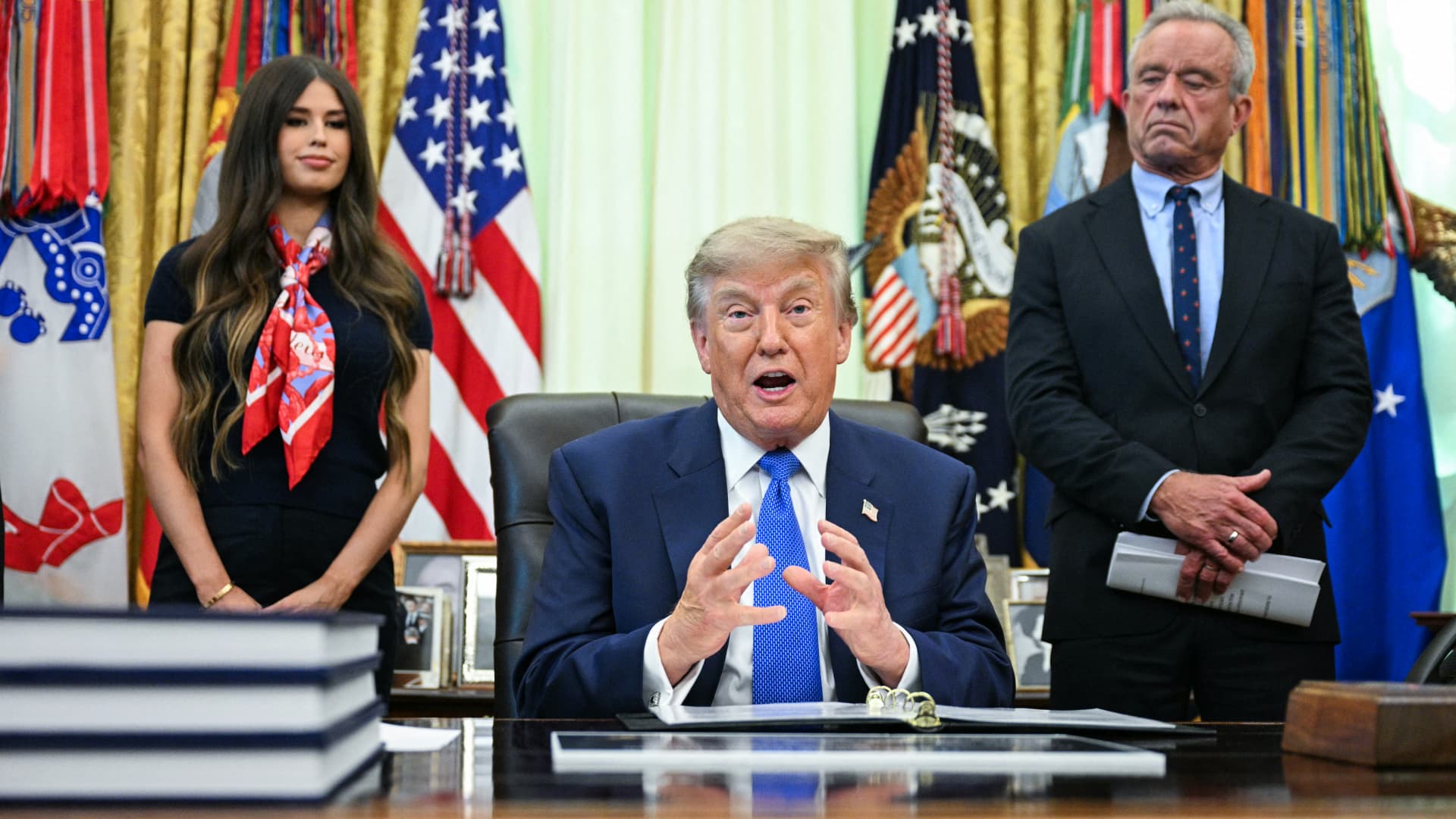
President Donald Trump on Aug. 10 signed a childhood vaccine executive order that seeks to reduce the federal schedule of routine recommendations and spread some shots across separate doctor visits. For parents and investors following health policy, the immediate distinction is that the order addresses federal guidance, while states still set school vaccination rules.
According to CNBC and CNN, Trump said the administration wants 11 vaccines to be routinely recommended for all children. He again suggested vaccines could be responsible for autism, a claim contradicted by decades of scientific research. CNN and the Associated Press report that extensive studies and scientific consensus have found no evidence that childhood vaccines cause autism.
The order is part of the administration's broader effort to revise the vaccine schedule under Health and Human Services Secretary Robert F. Kennedy Jr., who has long expressed skepticism about vaccines.
What would Trump’s childhood vaccine executive order change?
CNN, citing a draft of the order, reported that the recommendations for all children would cover measles, mumps, rubella, diphtheria, tetanus, pertussis, polio, Hib, pneumococcal disease, HPV and varicella, or chickenpox.
The draft would advise RSV monoclonal antibodies and immunizations for hepatitis A, hepatitis B, meningococcal B, meningococcal ACWY and dengue only for high-risk groups, CNN reported. It would place rotavirus, meningococcal disease, influenza and Covid-19 shots under shared decision-making, meaning parents and a child's doctor would discuss whether the immunization is appropriate.
Trump also called for the combined measles, mumps and rubella vaccine, known as MMR, to be separated into three single-disease shots and given at different visits. The Associated Press reported that separate pediatric measles, mumps and rubella vaccines are not currently available in the United States.
Public-health experts told CNBC and AP that recommending separate visits could lead to missed appointments or leave children exposed to vaccine-preventable illness for longer before later doses are received.
Would the order change school vaccine requirements?
No federal order directly sets school-entry vaccination rules. The Associated Press reported that states control those requirements. The order advises states with school vaccine mandates to consider bringing their laws in line with the administration's recommendations, according to AP.
CNBC also reported that the order directs the Justice Department to investigate whether states violate exemptions from childhood vaccine mandates, including exemptions involving parental authority, disability accommodations, religion and medical reasons.
The policy faces a recent legal backdrop. CNN reported that medical groups challenged an earlier HHS effort to reduce childhood vaccine recommendations, and a judge ruled for the groups. AP likewise reported that the prior reduction had been blocked in court.
The reports reviewed do not include the final text of the Aug. 10 order. The detailed vaccine categories described above come from CNN's account of a draft, while the signing, MMR proposal and state-level limits on school mandates were independently reported by CNBC and AP.
This story draws on original reporting from CNBC.


