Trump warns Iran as U.S. sanctions alleged Khamenei financier
Trump threatened military action if Iran targets him, while Treasury sanctions added pressure as talks over the Strait of Hormuz continued.
By Maya Okafor · Markets Writer
· 3 min read
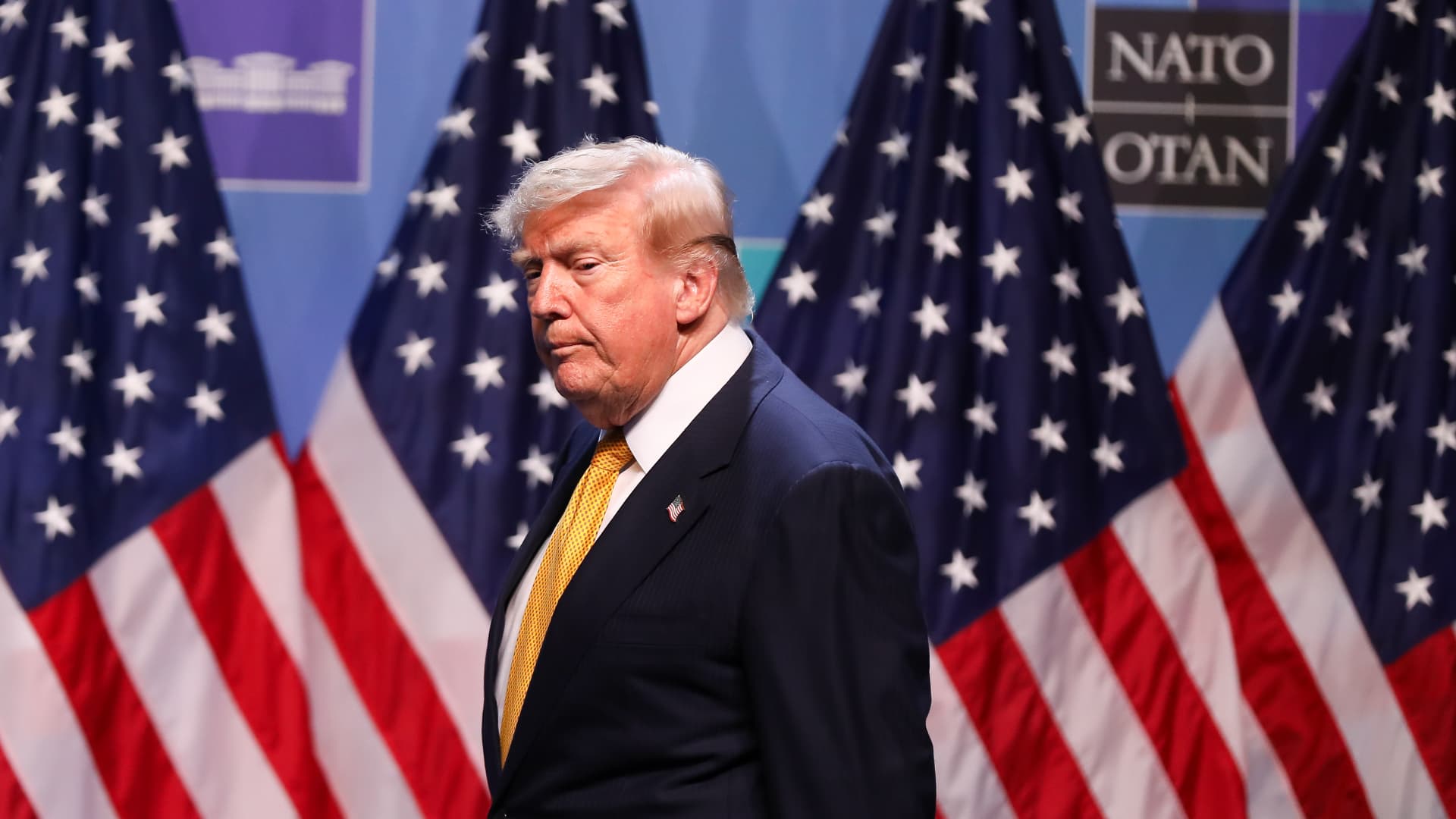
President Donald Trump warned Iran that the U.S. would strike if Tehran tried to assassinate him, adding a new flashpoint to a conflict already rattling energy markets. For investors, the pressure point remains the Strait of Hormuz, where disrupted shipping has sent oil prices higher, according to reports cited by CNBC.
Trump wrote on Truth Social late Friday U.S. time that “1000 Missiles are Locked and Loaded” and aimed at Iran if its government acts on threats to kill the sitting U.S. president. He added that orders had been given for the U.S. military to “decimate and destroy” areas of Iran for a one-year period, subject to extension.
The warning followed reports from The Wall Street Journal and other U.S. outlets that Israel had shared intelligence with the U.S. about an alleged Iranian plan to assassinate Trump. Reuters also reported that mourners at Thursday’s funeral for Iran’s slain Supreme Leader Ayatollah Ali Khamenei carried banners saying, “We Will Kill Trump.”
Mojtaba Khamenei, Ali Khamenei’s son and successor as supreme leader, said in a post on X that Iran would avenge those killed in U.S. strikes. “This vengeance is what our nation is demanding, and this must definitely be done,” he said, according to CNBC. He has not appeared publicly since the Feb. 28 attack that killed his father and other family members at the start of the war, CNBC reported.
Sanctions add pressure during talks
The U.S. Treasury Department separately announced sanctions on Ali Ansari, whom it described as an Iranian financial facilitator. Treasury’s Office of Foreign Assets Control, the unit that administers U.S. sanctions, accused Ansari of overseeing a global asset network that benefits Mojtaba Khamenei and other Iranian regime figures.
Treasury Secretary Scott Bessent said in the department’s statement that the agency would keep using its tools to cut Mojtaba Khamenei and other regime elites off from the global financial system. Bessent also said Treasury would “preserve these assets for the Iranian people.”
Iranian Foreign Minister Abbas Araghchi said on X that the sanctions violated the June memorandum of understanding between Washington and Tehran. He said Iran had kept its word and added that “there can only be mutual compliance.”
Iran’s semi-official Tasnim News Agency reported that Araghchi arrived in Oman early Saturday for talks. Oman has played a central mediation role in attempts to end the war, according to CNBC.
Hormuz remains the market pressure point
The Strait of Hormuz has been central to the conflict because shipping disruptions there affect Middle East energy flows. CNBC reported that traffic through the strait had nearly stopped after the war began, as Iranian forces restricted energy shipments and oil prices surged.
Under last month’s interim arrangement, Iran agreed to allow commercial ships safe passage through the strait and not charge tolls for 60 days. In return, the U.S. lifted its naval blockade of Iran and temporarily removed sanctions on Iranian oil sales, according to CNBC.
That arrangement has frayed. Reuters, citing Iranian state media, reported that Iran’s Islamic Revolutionary Guard Corps Navy said Sunday it had closed the strait after firing a warning shot at a vessel it said tried to travel on an unapproved route. Tehran has said ships receive safe passage only if they use a northern route through Iranian territorial waters, CNBC reported.
Trump said Friday on Truth Social that the U.S. and Iran had agreed to continue talks, while also saying the ceasefire was over. Iranian state media did not immediately confirm or deny that Tehran had asked to continue negotiations, according to CNBC.
This story draws on original reporting from CNBC.