U.S. condemns China after Filipino sailor hurt at disputed shoal
Washington backed Manila after the Philippines said a Chinese coast guard officer hit a navy sailor during a clash near Second Thomas Shoal.
By Theo Nakamura · Staff Writer
· 3 min read
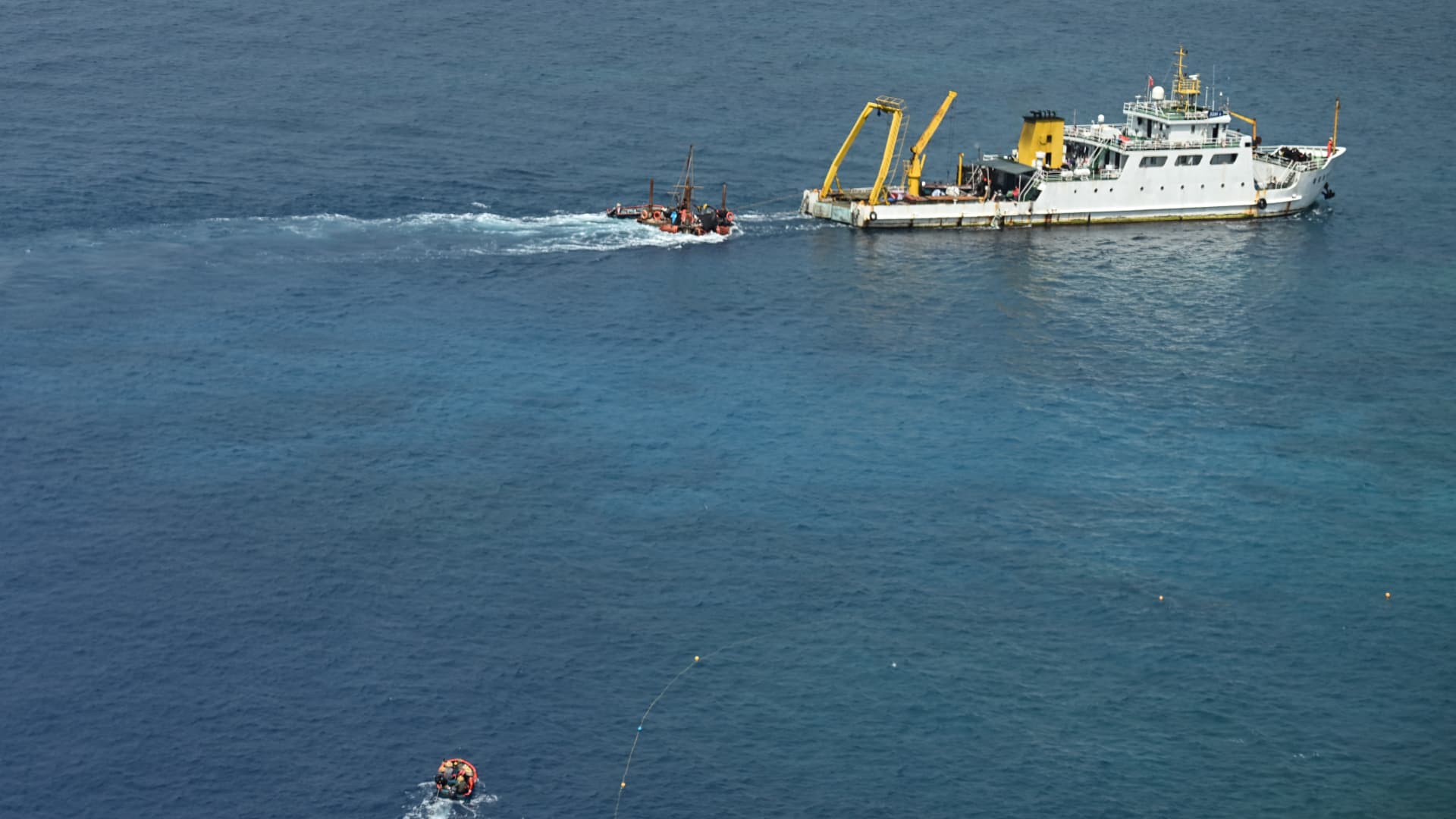
The U.S. condemned China after the Philippines said a Chinese coast guard officer injured a Filipino sailor during a confrontation in the South China Sea. For investors watching geopolitical risk, the clash adds pressure to U.S.-China relations just as top diplomats gather in Manila for regional meetings.
The State Department said Monday that Washington opposed what it called China’s “dangerous and aggressive” actions against Philippine navy personnel at Second Thomas Shoal, one of the most contested points in the South China Sea.
Manila said a Chinese coast guard officer repeatedly hit a Filipino sailor on the head with a wooden baton, injuring him and damaging a Philippine navy rubber boat. The Armed Forces of the Philippines said the encounter happened near the BRP Sierra Madre, a Philippine warship grounded on the shoal nearly 30 years ago to support Manila’s claim there.
State Department spokesperson Tommy Pigott said in a statement that the U.S. stands with the Philippines, calling it an ally. Pigott also urged Beijing to “immediately cease its destabilizing conduct” and reaffirmed a 2016 arbitral ruling that rejected China’s broad claims in the South China Sea under international law.
Two very different accounts
The Philippine military said a Chinese inflatable boat carrying eight people came close to the outpost. According to the Armed Forces of the Philippines, the Chinese side “reacted violently and aggressively” after two Philippine navy boats moved to push the vessel away.
China disputed Manila’s version. The China Coast Guard said Philippine dinghies were launched “illegally” from the Sierra Madre, ignored warnings and rammed a Chinese patrol vessel. It also accused Filipino personnel of attacking Chinese officers with oars and long sticks, according to a report carried by Xinhua.
The shoal sits inside the Philippines’ exclusive economic zone, a maritime area where a country has special rights to use natural resources. Beijing claims almost the entire South China Sea, even after the 2016 ruling found those claims had no basis in international law.
Second Thomas Shoal has been a recurring flashpoint since 2023. Chinese vessels have used water cannon, lasers and ramming to block Philippine resupply missions, according to the Council on Foreign Relations’ Global Conflict Tracker.
Why Washington is involved
The U.S. and the Philippines are linked by a mutual defense treaty signed in 1951. That agreement means a serious escalation involving Philippine forces could draw U.S. support, a key reason each new confrontation gets attention well beyond Manila and Beijing.
The timing is sensitive. U.S. Secretary of State Marco Rubio is scheduled to visit Manila this week for meetings of foreign ministers from the Association of Southeast Asian Nations, or ASEAN. Chinese Foreign Minister Wang Yi is also expected to attend.
South China Sea tensions are expected to be a major topic at the meetings. Rubio met Wang on the sidelines of last year’s ASEAN gathering in Malaysia, and the two spoke by phone after President Donald Trump’s visit to Beijing earlier this year.
Rubio’s trip also follows Trump’s accusation days earlier that Beijing substantially meddled in U.S. elections. The new confrontation at sea gives both Washington and Beijing another point of friction as they enter the regional talks.
For the Philippines, the incident complicates a week meant to highlight its ASEAN chairmanship. Wang is scheduled to meet Philippine Foreign Secretary Theresa Lazaro on the summit sidelines, the first meeting between the two countries’ top diplomats since 2024. Rubio is expected to meet President Ferdinand Marcos Jr., with South China Sea issues set to dominate both conversations.
This story draws on original reporting from CNBC.