U.S. and Iran exchange strikes as Hormuz status remains disputed
Washington says the Strait of Hormuz remains open, while Iran’s Revolutionary Guard says it has shut the key energy route to shipping.
By Dev Ramirez · Crypto Correspondent
· 4 min read
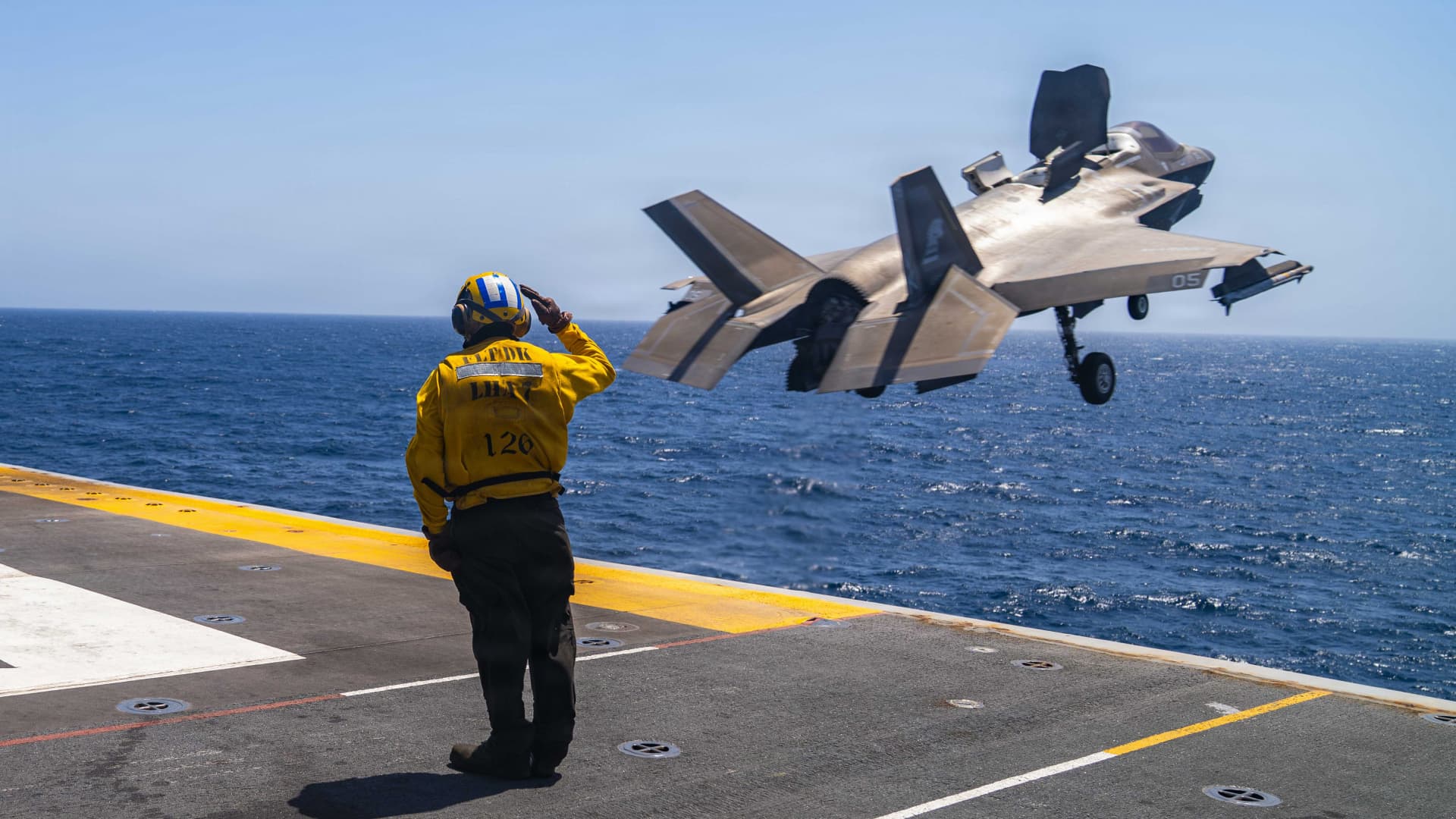
The U.S. and Iran carried out new missile and drone attacks Sunday as both sides argued over whether ships can safely pass through the Strait of Hormuz. The waterway is a key route for global oil and natural gas shipments, putting the conflict directly on investors’ radar because energy supply disruptions can feed into fuel costs, shipping expenses and market volatility.
U.S. Central Command said Sunday afternoon that American forces struck targets in Iran to reduce Tehran’s ability to threaten civilian sailors and commercial vessels moving through Hormuz. Iran, meanwhile, fired at U.S. facilities across several Gulf countries after earlier U.S. strikes, according to regional officials and statements cited by CNBC.
The dispute began escalating after Iran’s Islamic Revolutionary Guard said Saturday it had shut the strait to all shipping “until further notice,” according to Iranian state outlet PressTV. The Guard said no vessel would be allowed through the passage.
President Donald Trump challenged that claim in an interview with NBC News’ “Meet the Press,” saying commercial traffic was still moving through the strait. U.S. Central Command also posted on X that Hormuz was open to vessels making lawful transit through the international waterway, adding that “traffic is flowing.”
Commercial shipping becomes the flashpoint
U.S. officials said Trump ordered renewed strikes Saturday after Iran’s Revolutionary Guard attacked a commercial ship traveling through Hormuz. U.S. Central Command identified the vessel as the M/V GFS Galaxy, a Cyprus-flagged container ship.
According to Central Command, the attack left the ship unable to continue after a fire and major damage in its engine room. The command also said one civilian crew member was missing.
Iran has targeted ships using a southern route along Oman’s coast that is protected by the U.S. military, CNBC reported. Tehran wants ships to take a northern route through Iranian territorial waters instead.
The U.S. has now bombed Iran three times this week in response to attacks on commercial vessels traveling through Hormuz, according to CNBC.
Gulf states report missiles and drones
Qatar’s Ministry of Defense said its armed forces intercepted several ballistic missiles. Bahrain’s Interior Ministry told residents to seek shelter after issuing an alert. Kuwait’s army said it was responding to “hostile aerial targets.”
Qatar’s Foreign Ministry said Sunday it holds Iran “fully and legally responsible” for the attacks and their consequences. The ministry said continued attacks would worsen escalation and hurt diplomatic efforts to restore regional security.
The United Arab Emirates also condemned Iranian missile and drone attacks that it said targeted Bahrain, Kuwait, Qatar, Jordan and Oman.
A senior Gulf government official told MS NOW the region was on “high alert” after Iran’s strikes. The official described Iran’s effort to control the Strait of Hormuz as “fanciful and dangerous” and said Gulf countries would not permit it.
A deal with unresolved details
The U.S. and Iran signed a memorandum of understanding on June 17 aimed at reopening the strait. A memorandum of understanding is a formal agreement that outlines shared intentions, though it may leave key details unsettled.
Under that deal, Iran agreed to use its best efforts to help ships pass safely through Hormuz and not charge a toll for 60 days, CNBC reported. The agreement did not define the exact routes vessels should use, and Washington and Tehran now disagree over what reopening means in practice.
David Goldwyn, a former U.S. State Department special envoy for international energy affairs under President Barack Obama, told CNBC the agreement failed to settle how ship traffic would be managed. “It essentially punted that issue,” Goldwyn said.
Energy Secretary Chris Wright said at a New York conference on June 24 that the U.S. military would ensure energy kept moving out of the Gulf with or without an agreement with Iran. Wright said Iran would not be able to close the Strait of Hormuz going forward.
Diplomatic efforts continued over the weekend. Iran’s Tasnim News Agency said Foreign Minister Abbas Araghchi arrived in Oman for talks with Omani Foreign Minister Sayyid Badr bin Hamad Al Busaidi. Oman’s Foreign Ministry later said it summoned Iran’s ambassador after drone attacks on sites in Musandam and Al Wusta, delivering a protest note and calling for respect for state sovereignty.
A U.S. official told MS NOW that the American technical negotiating team was not part of the Oman discussions. A senior Middle East diplomat told MS NOW that France and the U.K. are reviewing Omani proposals that could allow navigational fees in the strait if they are voluntary and backed by the U.N.’s International Maritime Organization.
This story draws on original reporting from CNBC.