U.S. strikes Iran again as Hormuz disruption lifts oil prices
The U.S. carried out a ninth straight night of strikes on Iran while casualties rose and oil traders watched slowing traffic through the Strait of Hormuz.
By Theo Nakamura · Staff Writer
· 3 min read
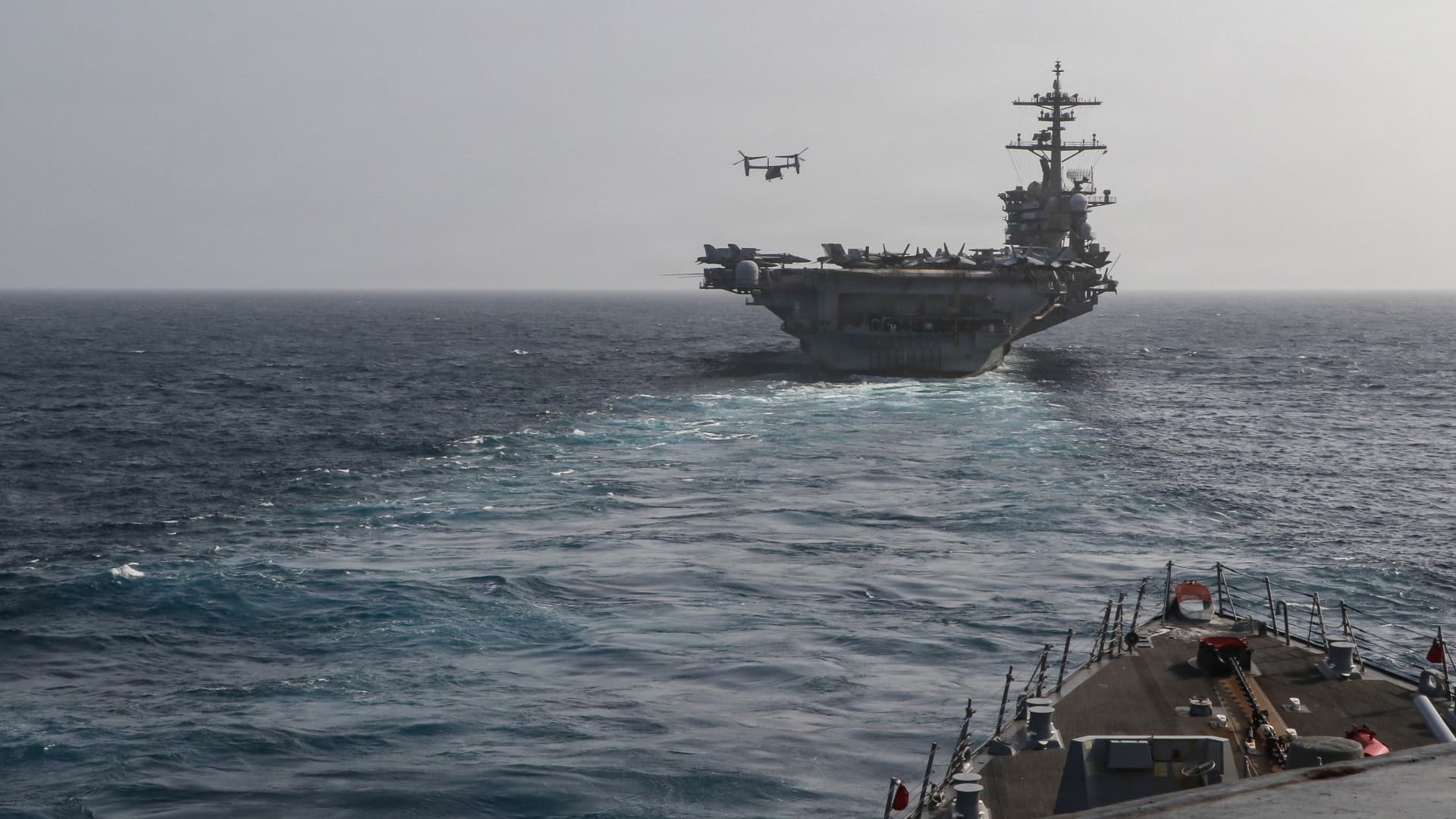
The U.S. military launched another round of strikes on Iran on Sunday, extending a campaign centered on the Strait of Hormuz, a key route for global oil shipments. For everyday investors, the immediate market link is energy: oil prices rose as traders weighed the risk that fewer barrels can move through the waterway.
U.S. Central Command said in a post on X that it began a new wave of strikes at 7 p.m. ET, marking the ninth night in a row of U.S. attacks. CENTCOM said the operation is aimed at reducing Iranian military capabilities used to attack vessels moving through the strait.
The Strait of Hormuz is a narrow sea passage between the Persian Gulf and the Gulf of Oman. Before the war, it handled about 20% of the world’s oil traffic, according to the figures cited by U.S. officials. A disruption there can affect oil futures, which are contracts tied to expected prices for delivery at a later date.
Brent crude futures, the global oil benchmark, climbed almost 3% to about $90.70 a barrel. U.S. West Texas Intermediate futures, the main U.S. crude benchmark, rose 2.5% to $84.60.
Casualties rise as fighting continues
The human cost also increased over the weekend. U.S. forces said Sunday that a third American service member was killed in recent fighting with Iran. U.S. officials also said unidentified remains had been found in Jordan after a service member was listed as missing in action.
Those developments bring the number of U.S. personnel killed in the nearly five-month conflict to 17, according to U.S. forces. The war began on Feb. 28, when the U.S. and Israel launched strikes on Iran.
Iranian authorities said Sunday that renewed U.S. strikes this month have killed at least 50 people and wounded more than 500.
The fighting has intensified despite a memorandum of understanding framework reached in June. Washington and Tehran have accused each other of violating that framework.
Michael Feller, chief strategist at Geopolitical Strategy, said the memorandum left major questions unresolved, including how contested incidents would be reviewed and how a violation in one area would affect obligations elsewhere. He said that ambiguity turned the first major dispute into a fight over whether the understanding was still in effect.
Infrastructure and shipping come under pressure
U.S. strikes have expanded in recent days to include civilian infrastructure, according to NBC News. One reported target was the Bonji desalination plant, which NBC News said cut off water supplies for about 10,000 people. Desalination plants turn seawater into drinking water, making them critical in Gulf countries with limited freshwater supplies.
Iran has also launched attacks across the Gulf, including in Bahrain, Saudi Arabia and Jordan. Kuwaiti officials said Friday that Iranian missile and drone strikes hit civilian infrastructure in Kuwait, including a water desalination plant.
The U.S. Embassy in Manama, Bahrain’s capital, said Monday that it had information suggesting Iran may target unspecified locations in central Manama. The embassy urged Americans in the city to remain vigilant.
Shipping data show the conflict is already affecting movement through Hormuz. Maritime intelligence firm Kpler said traffic through the strait fell to the lowest level in three weeks, with eight passings on Thursday compared with 15 the previous day.
U.S. officials said energy flows have not stopped. Energy Secretary Chris Wright said Sunday that about two-thirds of pre-conflict traffic, or roughly 14 million barrels a day, is still moving through the chokepoint. Before the conflict, about 20 million barrels of crude oil and refined products moved through the waterway.
In an interview with ABC on Sunday, Wright pushed back on public reports that most shipping had halted. “Not 100 percent yet, but two-thirds of flow right now,” he said.
This story draws on original reporting from CNBC.