Xiaohongshu helps Chinese fashion brands build attention as foreign rivals see mixed results
CNBC reports that emerging Chinese apparel labels are using Xiaohongshu, social content and pop-ups to reach consumers seeking value, quality and identity.
By Maya Okafor · Markets Writer
· 3 min read
Xiaohongshu Chinese fashion brands are gaining attention through social content, influencer promotion and in-person experiences, CNBC reported. For investors tracking Nike, Lululemon and Adidas in China, the development points to a competitive market where foreign brands are producing sharply different results and local labels are building visibility in ways that fit changing consumer tastes.
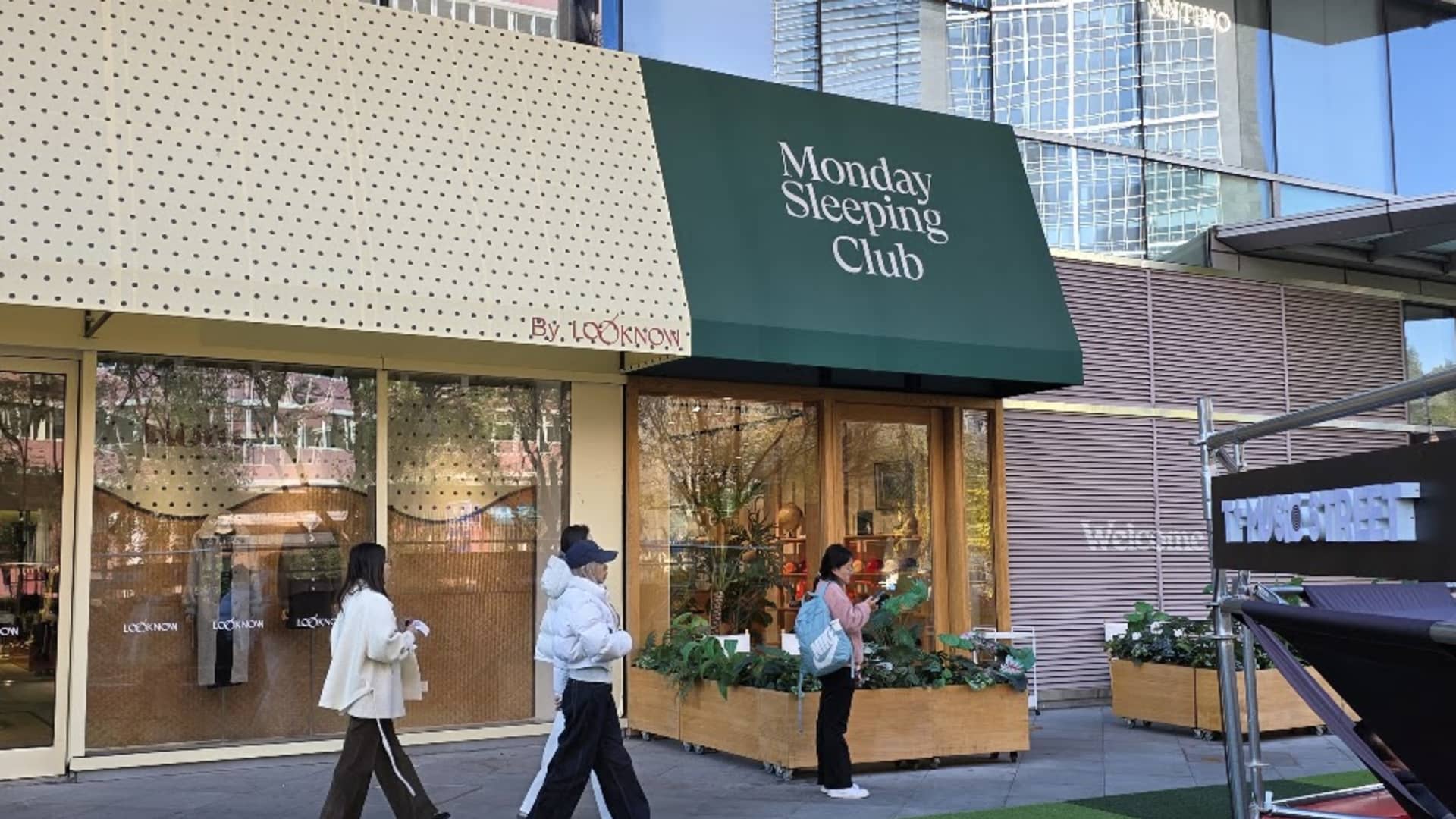
CNBC’s report focused on a group of newer Chinese apparel brands, including Liegee, Monday Sleeping Club and AW Project. Liegee co-founder Cocoa Lin told CNBC that the four-year-old womenswear brand’s sales rose about 160% during the latest Singles Day shopping period, reaching tens of millions of yuan. That figure was reported by a founder and was not independently audited in the report.
Lin said Liegee, founded in Hangzhou in 2022, targets early-career women looking for clothes that express personality. The company has more than 100,000 followers for its Taobao store, according to Lin, and uses influencers and celebrity product seeding to build awareness. CNBC reported that Liegee also has more than 22,000 Xiaohongshu followers, where it posts catalog-style images and marketing videos, and opened a pop-up called Liegee Motel in Shenzhen.
Why does Xiaohongshu matter for Chinese fashion brands?
Xiaohongshu, also known as RedNote, is a social platform whose layout combines elements of Instagram and Pinterest. It is smaller than China’s largest shopping and short-video apps by reported daily audience, but it has become relevant to product research. QuestMobile figures cited by CNBC put Xiaohongshu’s average daily users at 120 million in October, compared with 422 million for Taobao and 717 million for Douyin.
Jacob Cooke, chief executive of WPIC Marketing + Technologies, told CNBC that Xiaohongshu has been an important place for female consumers to discover and research products in beauty, skincare, lifestyle, fashion and health. He also said more purchases are taking place within the app. The larger sales engines remain elsewhere: Alibaba, JD.com and Douyin recorded combined Singles Day sales of 1.68 trillion yuan from Oct. 7 through Nov. 11, according to Syntun data cited by CNBC.
Cynthia Zhang, an analyst at Euromonitor International, described an approach used by these newer brands: establish an asset beyond the product itself, such as credible fabric quality, an emotional connection, an aesthetic reputation or proprietary fit data. Zhang said brands can then turn that into sales through founder-led content, Xiaohongshu discovery, tight supply chains and consumer interest in quieter branding and Guochao, a preference for domestic brands and cultural identity.
The pressure on international labels is uneven. CNBC reported that Nike’s Greater China sales fell 22% in the quarter ended Aug. 31, while Lululemon’s mainland China comparable sales fell 2% in the quarter ended Aug. 2. Adidas, by contrast, recorded a 20% increase. Those figures cover different measures and reporting periods.
Lululemon’s own second-quarter commentary adds nuance: China Mainland revenue rose 4% year over year to $407.1 million, but declined 2% on a constant-dollar basis. Comparable sales fell 2%, or 8% on a constant-dollar basis, for the period ended Aug. 2.
Christine Peng, UBS’s head of Greater China consumer research, told CNBC that consumers are placing more emphasis on identity, enjoyment, price and quality, while affluent shoppers are also increasingly choosing domestic brands. Separately, CNBC reported that Nike’s China business had declined 30% since 2021, amid domestic competition and questions of local relevance. The contrast with Adidas and Lululemon’s revenue result suggests the market is not moving uniformly against foreign brands.
This story draws on original reporting from CNBC.