Zoox paid rides in Las Vegas get NHTSA clearance
Amazon’s Zoox plans to charge for Las Vegas robotaxi rides after NHTSA granted a temporary exemption for its driverless shuttles.
By Theo Nakamura · Staff Writer
· 3 min read
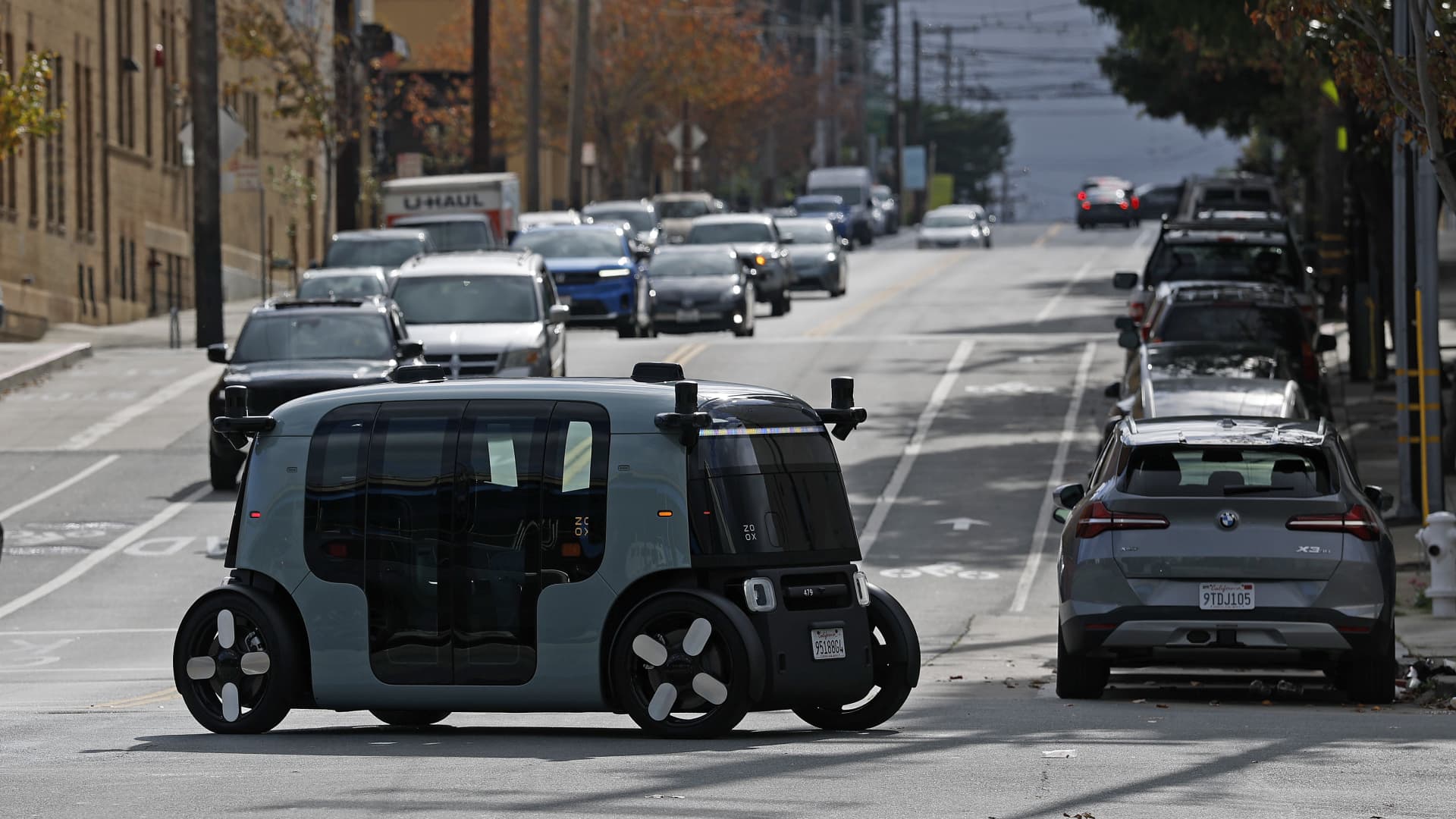
Zoox paid rides are set to begin in Las Vegas after the Amazon-owned robotaxi company won a temporary exemption from the National Highway Traffic Safety Administration. For Amazon investors, the decision moves Zoox from free public rides and road demonstrations toward a commercial service, while keeping the company under federal oversight.
The NHTSA said Thursday that its exemption lets Zoox put as many as 2,500 vehicles into service each year for two years. The agency said the approval comes with an “enhanced, adaptable” oversight framework that can change as Zoox’s automated-driving technology develops.
A Zoox spokesperson said the company will start charging riders in Las Vegas next month. The spokesperson said Zoox plans to enter more markets after it satisfies state-level requirements for commercial operations.
What did NHTSA allow Zoox to do?
NHTSA’s decision gives Zoox temporary relief from some federal vehicle-safety rules so it can operate its purpose-built robotaxis as a paid service. A robotaxi is a ride-hailing vehicle designed to drive without a human driver, using automated-driving software and sensors instead of a person behind the wheel.
Zoox CEO Aicha Evans called the decision an “important milestone” for Zoox and the broader autonomous vehicle industry. Evans said in a statement that Zoox was honored to receive what she described as the first commercial exemption from NHTSA for a purpose-built robotaxi, allowing the company to begin charging for service.
The new clearance follows an earlier NHTSA exemption issued last August that allowed Zoox to demonstrate its vehicles on public roads. That earlier approval did not let the company collect fares. Since then, Zoox has added testing locations in the U.S. and has offered free driverless rides to some members of the public in parts of Las Vegas and San Francisco.
Why Zoox needed a different kind of approval
Zoox has had a tougher regulatory route than some competitors because its vehicle was not built around a traditional driver seat. The company’s shuttle-like robotaxis do not have conventional steering wheels or brake pedals, which puts them under different federal motor vehicle safety rules than retrofitted passenger cars.
Alphabet’s Waymo, by contrast, uses vehicles that began as regular cars with traditional controls. That distinction matters because federal safety standards were written around vehicles built for human drivers, even as companies test and deploy cars meant to operate without one.
NHTSA has proposed changes that would remove requirements for driverless vehicles to include steering wheels and manual brake pedals. The agency has also pressed autonomous vehicle developers to address problems involving first responders.
Earlier this month, NHTSA Administrator Jonathan Morrison wrote in a letter that the agency had identified a pattern of driverless autonomous vehicles interfering with police, firefighters and other emergency workers. He cited incidents involving vehicles entering active emergency scenes, blocking ambulances or fire crews, or failing to respond properly to flashing lights, flares, smoke, fire and traffic cones.
Zoox recently recalled 105 robotaxis to fix a software problem tied to heavy-smoke detection. The company said one of its robotaxis drove into an active fire emergency scene in Las Vegas last month.
The exemption gives Zoox a commercial opening, but it also keeps the company’s rollout tied to regulators watching how its vehicles perform in real city conditions.
This story draws on original reporting from CNBC.