Bank of England keeps rates at 3.75% as energy shock clouds inflation
The U.K. central bank held rates steady, but officials and markets remain focused on whether energy-driven inflation will force a hike later this year.
By Sofia Marchetti · Columnist
· 4 min read
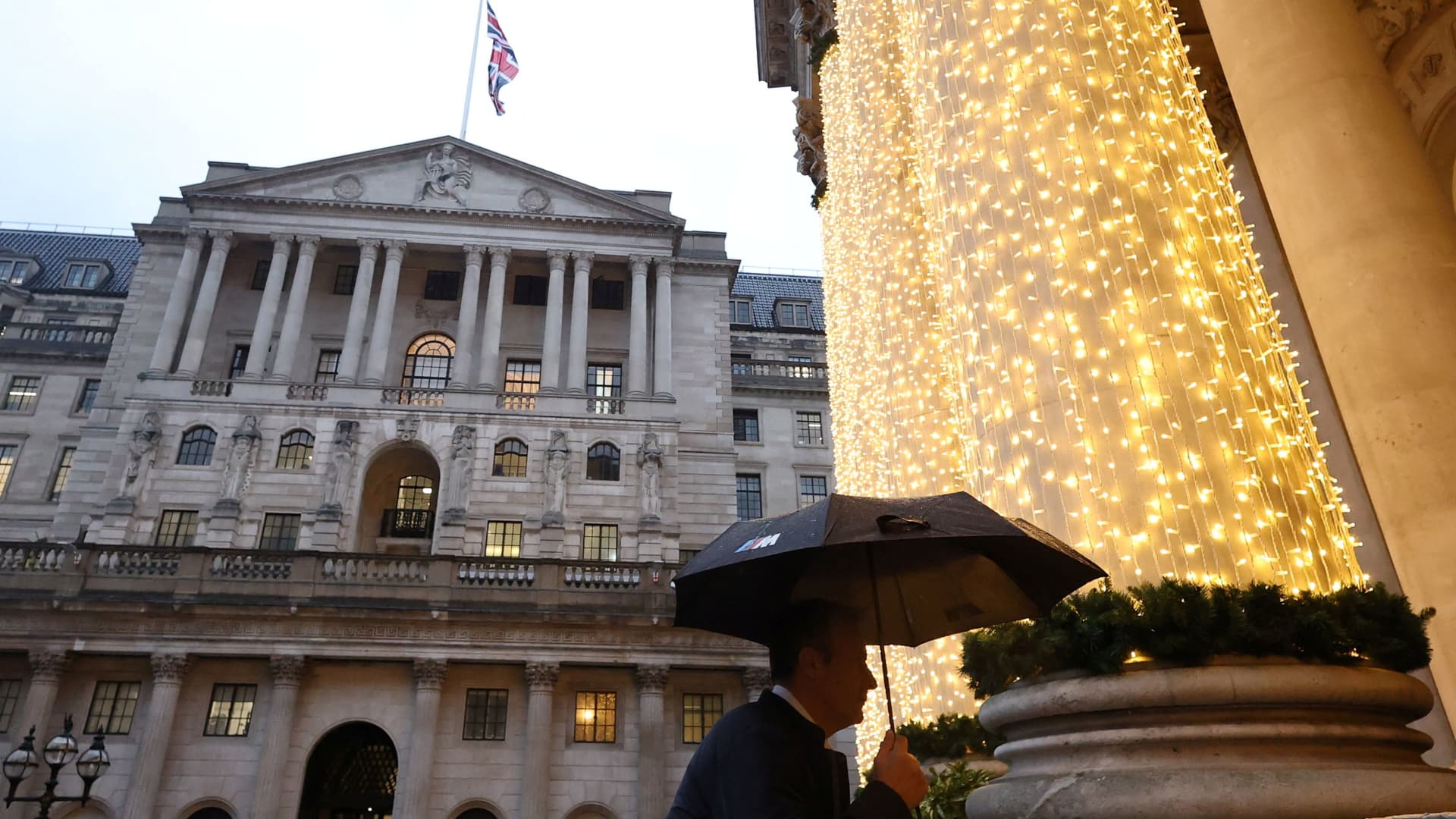
The Bank of England left its benchmark interest rate unchanged at 3.75% on Thursday, giving borrowers and investors a pause while inflation remains above target. For everyday investors, the decision keeps the focus on one question: whether higher energy prices from the Iran war will force the central bank to raise borrowing costs later this year.
The decision matched expectations from economists polled by Reuters. According to the Bank of England, seven of the nine members of its Monetary Policy Committee supported holding rates steady, while Chief Economist Huw Pill and external committee member Megan Greene voted to raise the base rate by 25 basis points to 4%. A basis point is one-hundredth of a percentage point, so 25 basis points equals 0.25 percentage point.
The base rate is the Bank of England’s main policy rate and serves as its benchmark for borrowing costs across the economy. Higher rates are typically used to cool inflation by making credit more expensive, while lower rates can support growth when activity is weak.
The Bank of England is trying to balance two problems at once: inflation that is still above its goal and an economy showing soft output. U.K. consumer price inflation held at 2.8% in May, cooler than expected, while official data published last week showed the economy contracted 0.1% in April.
Energy prices remain the key risk
The central bank said the Iran war has made the path for prices harder to judge, even though prices have eased from their first surge. The U.K. is a net importer of energy, which leaves it exposed when global fuel prices rise.
In its decision summary, the Bank of England said the war “makes it hard to predict what is going to happen” with prices. It added: “The impact on the economy and inflation will depend on how long energy prices stay raised.”
The bank also said monetary policy cannot bring down global energy costs directly. Its role, according to the statement, is to prevent a temporary burst of higher inflation from becoming more persistent across the economy.
Inflation fell to 2.8% in April, a move linked to a change in the U.K.’s regulated energy price cap. That relief may not last. The price cap is due to rise 13% later this summer, when energy costs are expected to reach a two-year high, according to CNBC.
Oil prices have stayed elevated during the conflict, with CNBC citing the effective closure of the Strait of Hormuz, a major Middle East oil shipping route. Washington and Tehran have also taken a step toward a possible settlement: U.S. President Donald Trump and Iranian President Masoud Pezeshkian electronically signed a 14-point memorandum of understanding on Wednesday aimed at supporting a durable peace deal, according to CNBC.
Markets still see a possible hike
Even after that diplomatic breakthrough, markets still expect the Bank of England to raise rates before year-end, according to LSEG figures cited by CNBC. Ahead of Thursday’s decision, LSEG data showed traders saw a 96% chance that the bank would hold rates steady.
The U.K. decision came during a tense week for global central banks. The Federal Reserve also kept U.S. rates unchanged, maintaining the federal funds rate at 3.5% to 3.75%. CNBC reported that investors reacted negatively to hawkish signals at Kevin Warsh’s first meeting as Fed chair.
The European Central Bank raised its key rate last week in response to the energy crisis tied to the Iran war, according to CNBC. The Bank of Japan followed on Tuesday, lifting its policy rate to a 31-year high of 1%.
Luke Bartholomew, deputy chief economist at Aberdeen, said he thinks the Bank of England can avoid the tightening already seen at the ECB and hinted at by the Fed. He added that if energy prices keep moderating, the discussion could shift back toward rate cuts, though that may wait until next year.
George Brown, senior economist at Schroders, said the bank is “playing for time” while inflation risks remain. Suren Thiru, chief economist at the Institute of Chartered Accountants in England and Wales, said U.K. monetary policy is now “at a crossroads,” with the U.S.-Iran peace framework raising hopes of softer inflation while renewed fighting could push policymakers back toward hikes.
This story draws on original reporting from CNBC.